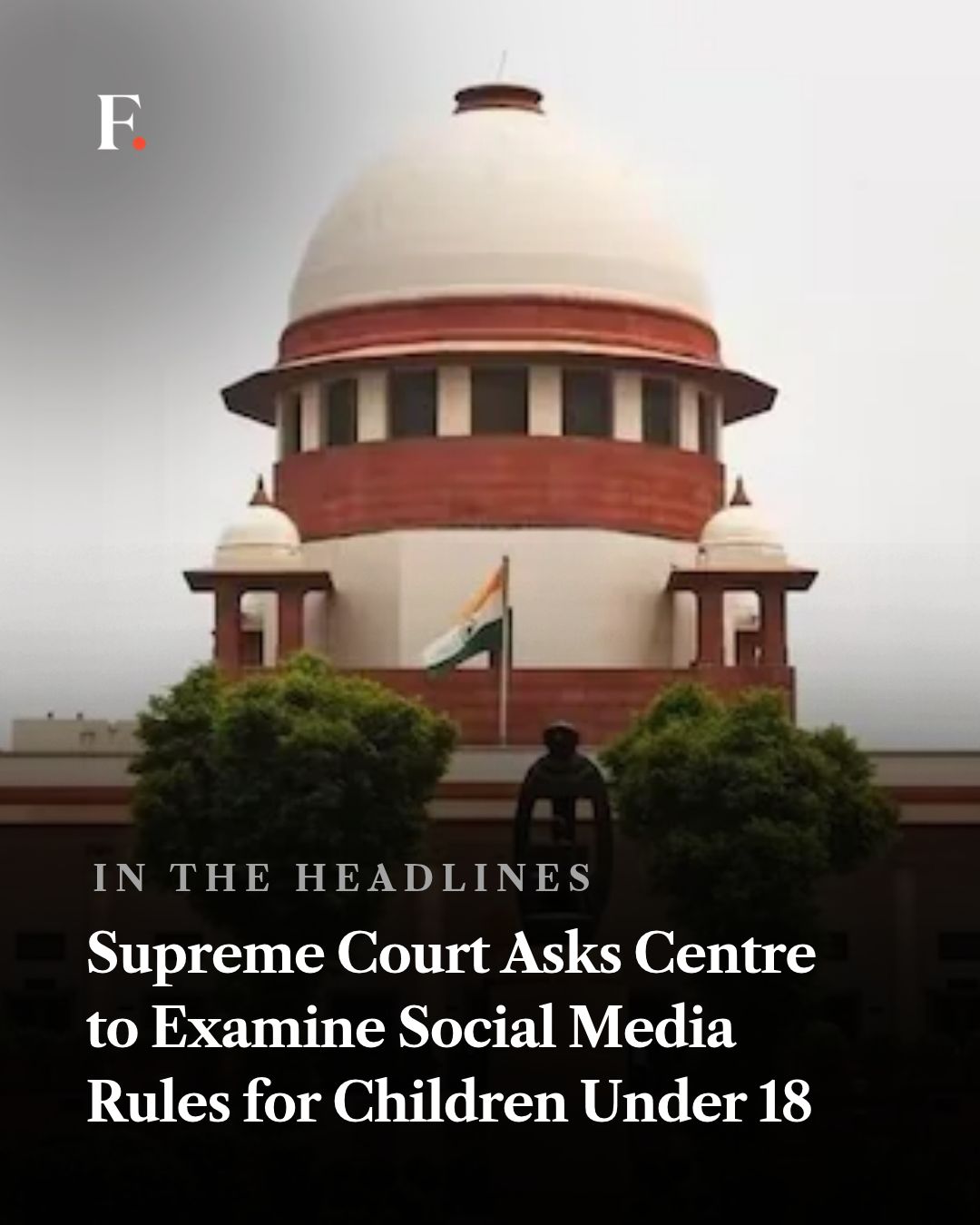
The Supreme Court of India has directed the Centre to scrutinize whether statutory guidelines can enforce social media platforms to adhere to Indian laws protecting minors. The review seeks to align platforms with India's governing laws governing minors, notably imposing a minimum age of 18 for minors who want to directly enter into contracts with social-media platforms.
India's First Judicial Review on Social Media Age Limits
The Supreme Court is requesting that the Centre assess whether statutory rules can enforce social media platforms to comply with Indian laws governing minors. This review comes amidst a Public Interest Litigation (PIL) filed by the NGO Just Rights For Children Alliance. This PIL specifically targets the protection of children under 18, who are currently able to independently create and use social media accounts despite the fact that in many legal contexts they are not considered fully-fledged contractual parties. This aligns with India’s legal framework, which mandates a minimum age of 18 for entering contracts independently. The scrutiny seeks to institute stricter safeguards and digital firewalls to prevent children below 18 from creating and using social media accounts without parental consent or supervision. While existing legal frameworks are designed to protect children in many industries, this specific directive about the social media age gate is being reviewed for the first time. Until now, the Supreme Court’s intervention focuses mostly on laws related to education, employment, and medical care. This decision marks a departure, bringing into the spotlight the necessity for stringent regulations on digital platforms. In line with India’s legal framework, which requires individuals to be at least 18 years old before entering a contract, the Supreme Court seeks to create similar regulations for social media platforms.
The Larger Issue of Child Online Safety
This review of proposed regulatory reforms aligns with a broader global conversation about child online safety. In many countries, tech companies are facing new requirements to protect children on their platforms. In the past, incidents of cyberbullying, data breaches, and inappropriate content meant for adults were frequently reported. Given that children under 18 are not considered fully-fledged contractual parties, this review aims to mitigate the risks and dangers associated with minors having unfettered access to social media. The ultimate goal is to bring about a statutory change that requires social media platforms to align with the children’s protection laws. The need to regulate teenage social media use is timely, given the ubiquity of social media in our world. Parents and teachers have long advocated for the curtailing of children’s access to social media. There have been media reports about cyberbullying, online grooming, and mental health issues related to social media usage among teenagers. With President Joe Biden signing the Kids Online Safety Act into federal law, we see the widespread movement towards protecting minors.
Who Calls for Reform ### Parents and Teachers
There is an ethical imperative for social media platforms to adapt its existing age verification tools to cater to the needs of both parents and teens. Compliance with existing age-related laws is essential for platforms to foster a safer digital environment for young users. Platforms need to create mechanisms for parents to monitor their children’s activity, giving them greater control and oversight. Parents are the frontline protectors of children, so ensuring they can access reports, block users, and provide necessary support is beneficial. Several NGOs and parent-teacher associations have voiced support for the move, suggesting new methods for platforms to comply with the minimum age requirements. The Supreme Court’s review will also consider whether websites can be legally held responsible for harmful content that reaches teenagers.
Platforms in the Spotlight ### What constitutes compliance?
Social media platforms like Facebook, Instagram, and Twitter are under pressure to improve their parental control tools. With new proposed regulations, platforms will need to prove they are compliant with India’s laws regarding minors. With government regulations increasingly focusing on child safety, companies will need to improve their verification of users' ages. Platforms need to ensure parental supervision and consent mechanisms. This could include setting up digital variations of traditional contracts that minors can’t sign. Age verification should be an active process and not a passive one.
The Development of Digital Firewalls ### Carving out online boundaries
The Supreme Court's directive isn't just about setting an age limit; it's also about creating digital firewalls for children. These firewalls safeguard minors by filtering out inappropriate content, monitoring potential cyberbullying, limiting access to online predators, and regulating the data collected on children. This might involve the use of artificial intelligence to create algorithms which can flag certain behaviors, thereby flagging potential danger. The implementation of digital firewalls might also involve the creation of specific content sections for minors in line with child protection laws. For this to be effective, the platforms are expected to create user-friendly interfaces, tailored for children, while making it clear the boundaries of the platform.
Practical Guidance for Parents
Approaching the topic of social media with a focus on practical steps for parents is essential. The review by the Supreme Court underlines the fact that even with policies in place, parents have an important role to play:
- Conversations about consequences: Parents should be transparent about the risks of social media and discuss content and data security with children.
- Education on privacy settings: They should educate children about privacy settings and how to use them effectively.
- Monitoring activity: Ultimately, parents can make use of the monitoring tools that platforms offer, but they should also be open about their usage. By following these steps, parents can create a safer and more transparent online environment for children. They play a crucial role in the digital ecosystem.
Enforcing Age Limits Online
The review of social media age limits by the Supreme Court is timely. Questions still remain about what compliance with age limits on social media platforms will look like. This review by a court represents a proactive approach to protecting minors and should serve as a reminder to companies and parents to take control. The outcome will have long-term implications for how platforms and governments approach digital safety. As scrutiny mounts, the review is likely to affect broader conversations about digital safety and how governments can collaborate with tech companies to ensure a safer online environment. With strict rules, platforms must implement tougher age-verification and parental control mechanisms, ensuring the safety of children’s online activities.
Watch the Reel
Questions readers ask
What prompted the Supreme Court of India to review the age limits for social media users?
The review was initiated by a Public Interest Litigation (PIL) filed by the NGO Just Rights For Children Alliance. The PIL highlights the risks minors face when they can create social media accounts without parental consent or supervision. The court is examining whether statutory regulations can enforce a minimum age of 18 for users, aligning with India's legal framework for contractual agreements.
How does the current legal framework in India treat minors and social media use?
India's legal framework mandates that individuals must be at least 18 years old to enter into contracts independently. This includes the creation of social media accounts, which are considered contractual agreements with the platforms. However, the enforcement of this rule on digital platforms is being scrutinized for the first time.
What are the potential risks if minors continue to have unrestricted access to social media?
Minors face several risks, including cyberbullying, online grooming, and exposure to inappropriate content. Additionally, data breaches and mental health issues related to social media use are significant concerns. The review aims to mitigate these risks by enforcing stricter safeguards and digital firewalls.
How does this review align with global efforts to protect children online?
This review is part of a broader global conversation about child online safety. Many countries are implementing new requirements for tech companies to better protect children on their platforms. The Supreme Court’s directive aligns with these global efforts, aiming to create regulations that ensure minors are protected online.
What role do parents and teachers play in advocating for these changes?
Parents and teachers have long advocated for curtailing children’s access to social media due to concerns about cyberbullying, online grooming, and mental health issues. Their advocacy, along with media reports highlighting these issues, has contributed to the push for stricter regulations on digital platforms. The ethical imperative for social media platforms to protect minors is a key factor in the ongoing review.
How does the Supreme Court's directive on social media age limits differ from its previous interventions?
The Supreme Court’s previous interventions have focused on laws related to education, employment, and medical care. This directive marks a departure, bringing into the spotlight the necessity for stringent regulations on digital platforms. The court is specifically examining whether statutory guidelines can enforce social media platforms to comply with Indian laws governing minors.
What specific changes are being proposed to protect minors on social media platforms?
The proposed changes include stricter safeguards and digital firewalls to prevent children under 18 from creating and using social media accounts without parental consent or supervision. The ultimate goal is to bring about a statutory change that requires social media platforms to align with children’s protection laws, ensuring that minors are protected online.
Related deep dives
Similar reads based on topic and creator.



Recent articles
Fresh deep dives from the latest Reels we unpacked.




Comments
Be the first to comment.