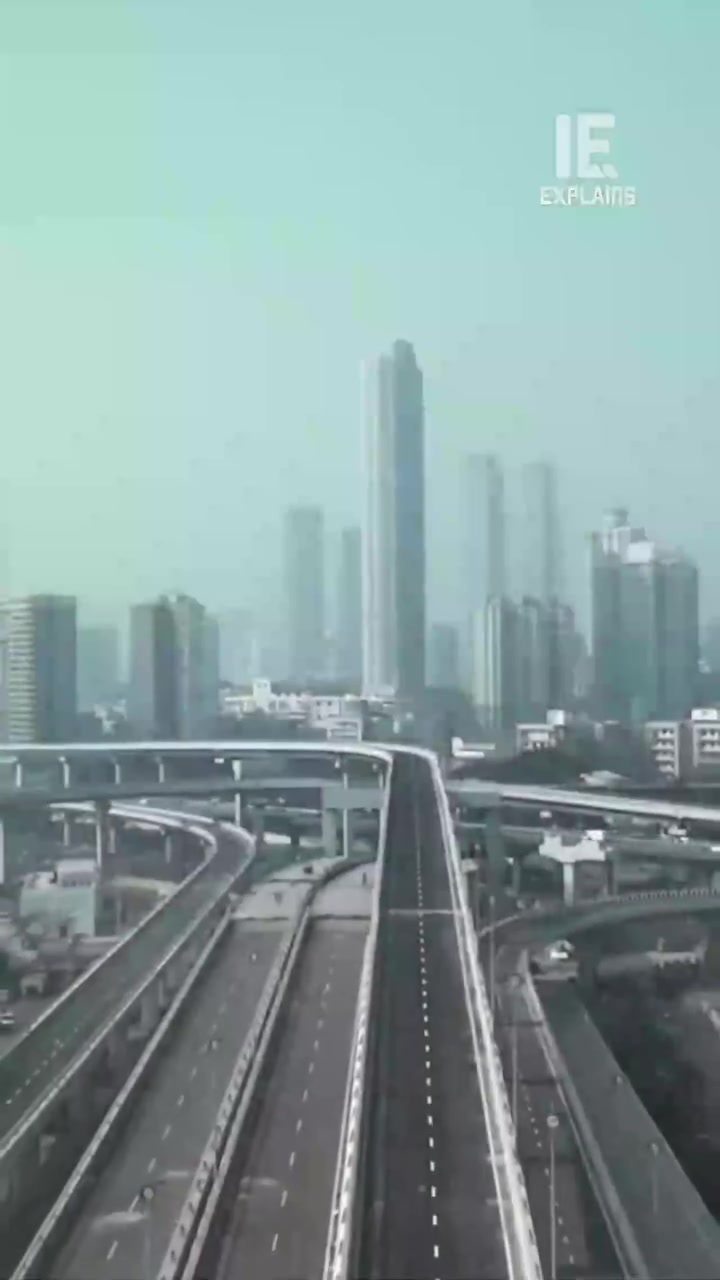
First of its kind track in India
India's high-speed rail journey began in 2015 and is on track to open its first bullet train corridor by 2029. The 580 km corridor, connecting Mumbai and Ahmedabad, is a study in international cooperation and technological adaptation. The corridor is built to Japanese high-speed rail standards, known as Shinkansen. The tracks, earthquake sensors, and even the trains are all based on Japanese technology. The project is funded largely by Japan, with an 81% loan from the Japanese International Cooperation Agency at an incredibly low interest rate of 0.1%. With a distinct focus on engineering and technology, the project includes four layers of reinforced concrete and pre-cast slabs for the track, known as J-slab. To cut through terrain and build the tunnel from Bandra–Kurla complex to Shilpata, the project will utilise a combination of the new Austrian tunnelling method and tunnelling machines. The trains, too, are set to be of Japanese make – the E10 model, which carries advanced features like anti-derailment guides and shorter braking distances. The project is phased to open in stages, with the first stretch of 50 km between Surat and Bilimora slated to open by August 15th, 2027.
Diversifying India's high-speed rail ambitions
India's bullet train project matters for more than just its speed and scale. The train corridor is a part of the country's broader ambition to upgrade its rail infrastructure and integrate cutting-edge technology. The project is a collaboration with Japan, which has extensive experience in high-speed rail. Japan's involvement includes funding, technology transfer, and the provision of critical components like tracks and trains. However, India's decision to opt for a German signaling system adds a layer of complexity. This choice may reflect a strategic move to diversify suppliers and avoid over-reliance on a single country for technology. This is particularly relevant as India looks to build more high-speed rail corridors in the future. The Mumbai-Ahmedabad High-Speed Rail (MAHSR) project is part of a larger Indian ambition to expand its network. The Indian government has floated tenders for new high-speed corridors and could be looking at building additional corridors with domestic and international partners.
How high-speed rail took root in Gujarat
The 508-km corridor between Mumbai and Ahmedabad is India’s first high-speed rail line, but it's not the only one in the works. The project, under the Mahatma Gandhi National Rural Employment Guarantee Scheme (MNREGA), is divided into multiple stages: nearly half the track is yet to be constructed, but India has already broken ground on the project. The project has seen India replicate technology that has never been used in the country. Since the corridor is being built to Japanese standards, it uses technology perfected in Japan and adapted for India’s unique needs. The corridor runs at 320 kilometers per hour and will connect many cities over 508 kilometers. The entire project is being funded as a public-private partnership, with Japan's aid and technology support. The project’s first phase is expected to launch in 2029, with the remaining areas to be completed subsequently. The focus will be on bringing world-class technology to India's rail infrastructure and integrating it with Indian engineering. The Mumbai-Ahmedabad corridor is not being built from scratch. It passes through existing cities like Surat and Vadodara, and new stations are being planned along the route. The project’s careful planning and phased execution are crucial to its success.
Japan's influence and India's independence
This isn't the first time Japan has shared its high-speed rail expertise. Japanese engineers have been instrumental in developing high-speed rail systems in countries like Taiwan and Turkey, and Japan's technological advancements have inspired similar systems in other nations. However, India's decision to use a German signaling system adds a layer of complexity. Initially, Japan offered both its trains and its signaling system, but India opted for a European standard, ETCS Level 2. This decision may reflect India's desire for technological independence and a willingness to integrate diverse technologies into its rail infrastructure. Hideki Mangihara, a Japanese rail consultant, noted that Japanese signaling systems are optimized for their trains' performance, and using a different system could affect reliability. This divergence highlights the tension between adopting proven technology and asserting national independence. The project's cost has also escalated significantly. Initially budgeted at around $11 billion, the current estimate is closer to $20 billion. The delay and cost escalation reflect the complexity of integrating Japanese technology with Indian conditions and workflows.
The technological backbone of the project
The high-speed rail corridor between Mumbai and Ahmedabad is built on a completely new technology — slabs laid on pre-cast concrete. The unique track bed, J-slab, is being used outside Japan for the first time. The track is made of four layers — reinforced concrete bed, pre-cast concrete slabs, rails, and fasteners. This method ensures stability and durability, especially at high speeds. The corridor also features a 21-kilometer tunnel as well as an underwater tunnel built using the new Austrian tunneling method and large tunneling machines. This ambitious project required heavy machinery launching from a 39-meter shaft to tunnel through western India. Most of the corridor is elevated, which is a significant change from traditional Indian rail infrastructure. The elevated tracks reduce the impact on urban landscapes and ensure smoother, more reliable service. The project has also involved the construction of new slab factories in Kim and Anand, Gujarat, to produce the necessary components locally.
Practical guidance
Building a high-speed rail corridor to international standards demands meticulous planning and implementation. Here are some key steps involved in the project:
- Construction technology: The project was planned to a three-phase timeline. The first phase included building the entire stretch from Bandra Kurla Complex to Shilpata, roughly 21 kilometers and of which 7 kilometers is underwater. The next phase, starting in 2025, will see the elevated tracks being built and raised on a viaduct.
- Tunneling methods: The construction involved both the new Austrian tunnelling method and large tunneling machines. The machines were designed for the project and manufactured in Japan. It launched from a 39-meter shaft and was used to dig through hard rock which made up the terrain in the area.
- Track bed: J-slab, a four-layer track bed, was used for the first time outside Japan. The track bed has a reinforced concrete bed, pre-cast concrete slabs, rails, and fasteners.
- Earthquake preparedness: Shinkansen-style earthquake sensors were installed to ensure the safety of the trains and passengers in case of an earthquake.
- Technology integration: While the project uses Japanese technology, India has opted for a German signaling system. This decision reflects India's desire for technological independence and a willingness to integrate diverse technologies into its rail infrastructure.
- Recommendations for future projects: As India looks to build more high-speed rail corridors, it must prioritize technological integration, cost control, and efficient project management. The experience gained from this project will be invaluable in shaping future high-speed rail endeavors It’s a complex project built on technology designed for a different terrain. Japanese technology has been adapted to suit Indian conditions. The corridor will have over 12 stations along the route, connecting cities like Surat and Vadodara. The project is a testament to India's ambition to build world-class infrastructure and its commitment to technological excellence, but it also highlights the challenges and complexities of such large-scale, international collaborations.
Watch the Reel
Questions readers ask
What makes the Mumbai-Ahmedabad bullet train project unique in India?
The Mumbai-Ahmedabad bullet train is unique because it's India's first high-speed rail corridor, covering 580 km and built to Japanese Shinkansen standards. It's also notable for its use of Japanese technology and German signaling systems, and it's being funded largely by Japan.
What role does Japan play in India's bullet train project?
Japan is a key partner in the project, providing 81% of the funding through a low-interest loan from the Japanese International Cooperation Agency. Additionally, Japan is supplying the technology, including tracks, trains, and engineering standards, which are all based on its high-speed rail system, the Shinkansen.
How does the Mumbai-Ahmedabad bullet train project benefit India beyond just speed and scale?
The project is part of India's broader plan to upgrade its rail infrastructure and integrate advanced technology. It also reflects India's strategic move to diversify suppliers, as shown by the use of a German signaling system alongside Japanese technology. This diversification could be crucial for future high-speed rail corridors.
What specific Japanese technologies are being used in the Mumbai-Ahmedabad bullet train project?
The project uses Japanese high-speed rail standards, known as Shinkansen. This includes tracks, earthquake sensors, and trains that adhere to Japanese technology specifications. The trains, specifically the E10 model, feature advanced safety mechanisms like anti-derailment guides and shorter braking distances.
Why did India choose to use a German signaling system for the bullet train project?
India's decision to use a German signaling system may be a strategic move to diversify its suppliers and avoid over-reliance on a single country for technology. This choice could be particularly relevant as India looks to build more high-speed rail corridors in the future, ensuring a broader range of technological expertise and reducing dependency on any one supplier.
Related deep dives
Similar reads based on topic and creator.




Recent articles
Fresh deep dives from the latest Reels we unpacked.


Comments
Be the first to comment.