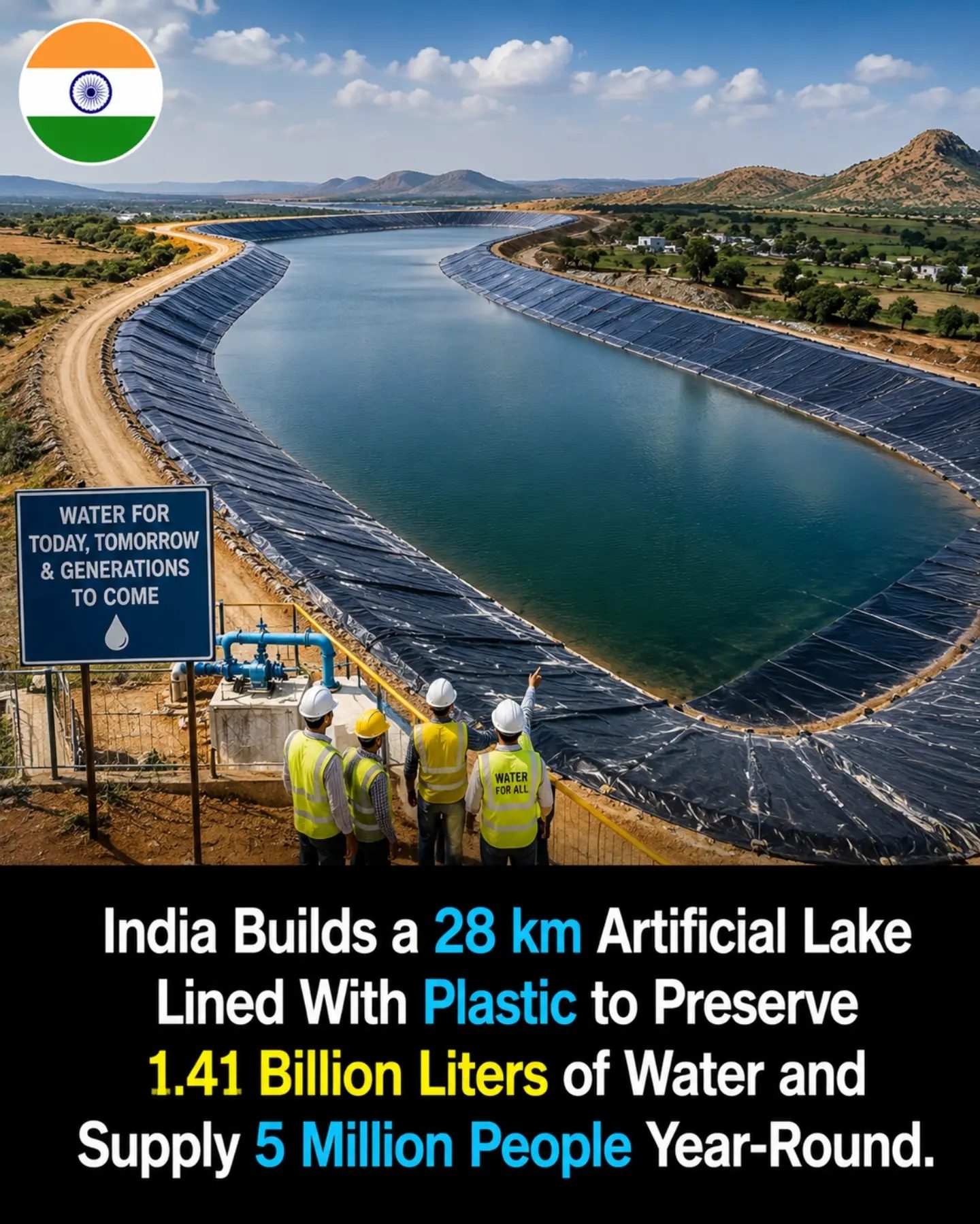
Artificial Lake Construction in India
Artificial lakes are vital for water storage, especially in regions facing water scarcity. India has recently undertaken an ambitious project to construct a 28 km artificial lake, showcasing the country's commitment to sustainable water management.
Context / Why This Matters
Water is a critical resource, and its availability is often a challenge, especially in densely populated regions. Artificial lakes play a significant role in addressing this issue by providing a reliable water source for various purposes, including drinking water, agriculture, and industrial use.
India, with its vast population and diverse geography, faces unique water management challenges. This 28 km artificial lake is a prime example of how infrastructure development can help mitigate these challenges. By storing 1.41 billion liters of water, this lake aims to supply water to 5 million people year-round, ensuring a consistent water supply for generations to come.
Main Discussion
The Scale of the Project
The construction of a 28 km artificial lake is a massive undertaking that requires meticulous planning and execution. Such a project involves various stages, from site selection and environmental impact assessments to the actual construction and water management strategies.
Construction Techniques
The lake is lined with plastic to preserve water, a technique commonly used in artificial lake construction. This lining helps prevent water loss due to seepage, ensuring that the stored water is available for use when needed. The use of plastic liners is also cost-effective and durable, making it a popular choice for large-scale water storage projects.
Environmental and Social Benefits
The environmental benefits of artificial lakes are numerous. They help in recharging groundwater levels, supporting local ecosystems, and mitigating droughts. Additionally, they provide recreational opportunities and enhance the aesthetic value of the surrounding areas.
Challenges and Considerations
While the benefits are clear, the construction of artificial lakes also poses several challenges. Environmental impact assessments are crucial to ensure that the project does not disrupt local ecosystems or wildlife habitats. Additionally, water quality management is essential to ensure that the stored water remains potable and safe for use.
Site Selection
Choosing the right location for an artificial lake is critical. Factors such as topography, soil type, and proximity to water sources are considered. The site should also be easily accessible for construction and maintenance purposes.
Water Quality Management
Maintaining water quality is a continuous process that involves regular monitoring and treatment. This ensures that the stored water is safe for drinking, irrigation, and other uses. Water quality management strategies may include the use of filtration systems, chemical treatments, and periodic testing.
Community Involvement
Engaging the local community is essential for the success of any infrastructure project. Regular communication and involvement ensure that the project meets the needs of the community and minimizes disruption.
Practical Tips
Building an artificial lake involves careful planning and execution. Here are some practical tips for anyone involved in such a project:
Planning and Design
- Conduct Thorough Environmental Impact Assessments: Before starting construction, it's crucial to assess the environmental impact and ensure that the project does not harm local ecosystems.
- Use Advanced Technologies: Employing modern technologies such as GIS (Geographic Information System) for site selection and 3D modeling for design can significantly enhance the efficiency and accuracy of the project.
- Community Engagement: Engage with local communities to understand their needs and concerns, and involve them in the planning process.
Construction and Maintenance
- Quality Materials: Use high-quality materials for lining and construction to ensure durability and longevity.
- Regular Monitoring: Implement regular monitoring systems to track water levels, quality, and any signs of damage to the infrastructure.
- Sustainable Practices: Adopt sustainable practices during construction and maintenance, such as using eco-friendly materials and minimizing waste.
Important Takeaways
The construction of a 28 km artificial lake in India highlights the country's commitment to sustainable water management. Key takeaways from this project include:
- Innovative Solutions: The use of plastic liners to preserve water and ensure long-term storage is an innovative solution that can be applied in other water management projects.
- Environmental Stewardship: The project underscores the importance of environmental stewardship in infrastructure development, ensuring that the lake supports local ecosystems and minimizes disruption.
- Community Involvement: Engaging the local community from the planning stages to implementation ensures that the project meets the needs of the people it aims to serve.
Conclusion
The construction of a 28 km artificial lake in India is a monumental project that showcases the country's dedication to sustainable water management. By storing 1.41 billion liters of water and supplying 5 million people year-round, this project sets a benchmark for future water management initiatives. It underscores the importance of innovative solutions, environmental stewardship, and community involvement in ensuring the success of large-scale infrastructure projects. As water scarcity continues to be a global challenge, such initiatives offer a valuable model for addressing water management needs in a sustainable and effective manner.
Watch the Reel
Questions readers ask
How will the 28km artificial lake benefit the local population?
The 28km artificial lake is expected to provide a year-round water supply to approximately 5 million people. This will support various needs, including drinking water, agriculture, and industrial activities, thereby enhancing the quality of life and economic opportunities in the region.
What makes this artificial lake project significant for India?
This project highlights India's dedication to addressing water scarcity and improving infrastructure. By creating one of the largest artificial lakes in the country, India is setting a benchmark for sustainable water management practices.
How does the artificial lake contribute to sustainable water management?
The lake will collect and store water, ensuring a consistent supply even during dry seasons. This reduces dependence on rainfall and helps in conserving water resources, making it a key component of sustainable water management strategies.
What are the primary uses of the water from this artificial lake?
The water from the artificial lake will be used for multiple purposes including drinking water, irrigation for agricultural lands, and supporting industrial activities. This multi-purpose use ensures that the water resource benefits various sectors of society.
What challenges did India face that led to the construction of this lake?
India's vast population and diverse geography pose unique water management challenges. Water scarcity, especially in densely populated areas, makes reliable water sources crucial. The construction of this massive artificial lake aims to mitigate these challenges by providing a consistent water supply.
How does this project compare to other water infrastructure developments in India?
The 28km artificial lake is one of the largest of its kind in India, surpassing many smaller projects. Its scale and capacity to provide water to 5 million people make it a significant milestone in India's water infrastructure development.
What is the capacity of the artificial lake and how much water will it hold?
The artificial lake has a capacity of 1.41 billion liters. This substantial volume ensures that it can meet the water needs of the region throughout the year, even during periods of low rainfall.
Related deep dives
Similar reads based on topic and creator.



Recent articles
Fresh deep dives from the latest Reels we unpacked.




Comments
Be the first to comment.