Economic Growth Forecasts for 2025 and 2026
The global economy is navigating through elevated levels of geopolitical uncertainty, leading to uneven growth patterns. As we look ahead to 2025 and 2026, several economies are poised to drive global growth, with India at the forefront. Let's explore the economic forecasts and the factors contributing to this dynamic landscape.
Context / Why this matters
Geopolitical uncertainty, trade tensions, and shifting economic policies are reshaping the global economic landscape. Understanding which economies are expected to grow the fastest can provide valuable insights for investors, policymakers, and businesses alike. The following forecasts provide a snapshot of where the world's economic momentum is headed.
Main discussion
India's Ascension
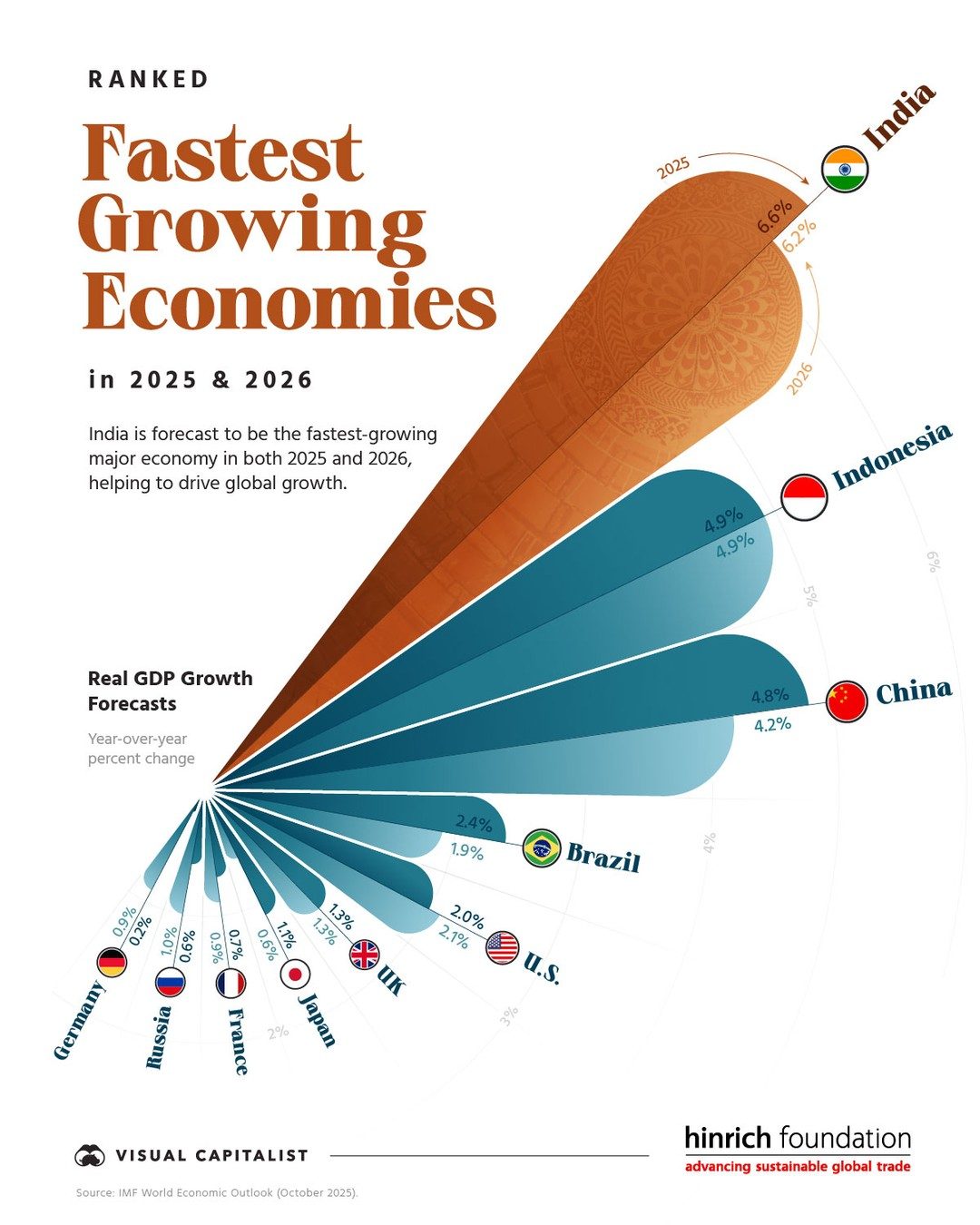
India is projected to be the fastest-growing major economy in both 2025 and 2026, with growth rates of 6.62% and 6.26% respectively. Several factors contribute to this impressive growth:
- Demographic Dividend: India's large and young workforce presents a significant demographic advantage.
- Policy Reforms: The Indian government has implemented various policy reforms aimed at boosting economic growth and improving the ease of doing business.
- Technological Advancements: India is rapidly adopting new technologies, which are driving innovation and productivity.
Other Key Players
While India is leading the charge, several other economies are also expected to show robust growth.
- Indonesia: With a growth rate of 5.5% in 2025 and 5.3% in 2026, Indonesia is poised to benefit from its abundant natural resources and strategic location in Southeast Asia.
- China: Although its growth rate is slowing compared to previous years, China is still expected to grow at a rate of 4.8% in 2025 and 4.6% in 2026. The country's continued focus on infrastructure development and technological innovation will be key drivers.
- Brazil: South America's largest economy is projected to grow at 3.5% in 2025 and 3.3% in 2026, bolstered by its robust agricultural sector and recent economic reforms.
- Germany, Russia, France, Japan, UK, and the U.S.: These advanced economies are expected to grow at a more modest pace, ranging from 1.5% to 2.5% in 2025 and 2026. While these rates are lower than those of emerging markets, they are still significant in the context of global economic growth.
Practical tips
For Investors
Investors looking to capitalize on these growth trends should consider:
- Diversifying Portfolios: Spreading investments across different regions and sectors can mitigate risks associated with geopolitical uncertainty.
- Emerging Markets: Allocating a portion of the portfolio to emerging markets, particularly India and Indonesia, can provide significant growth opportunities.
For Businesses
Businesses aiming to expand globally should:
- Explore New Markets: Focus on regions with high growth potential, such as India and Southeast Asia.
- Leverage Technology: Adopt new technologies to improve efficiency and stay competitive in rapidly evolving markets.
For Policymakers
Policymakers can foster economic growth by:
- Implementing Reforms: Continuing to implement policies that promote economic growth and attract investment.
- Investing in Infrastructure: Prioritizing infrastructure development to support long-term economic growth.
Important takeaways
- India is set to be the fastest-growing major economy in 2025 and 2026, driven by its demographic dividend, policy reforms, and technological advancements.
- Emerging markets like Indonesia, China, and Brazil are expected to show robust growth, while advanced economies will grow at a more modest pace.
- Investors, businesses, and policymakers should tailor their strategies to capitalize on these growth trends and navigate the evolving global economic landscape.
Conclusion
As the global economy adapts to geopolitical uncertainty, understanding the economic growth forecasts for 2025 and 2026 is crucial. India's remarkable growth, along with the contributions of other key economies, will shape the global economic landscape in the coming years. By staying informed and adapting to these trends, investors, businesses, and policymakers can position themselves for success in this dynamic environment.
Watch the Reel
Questions readers ask
What factors are driving India's economic growth in 2025 and 2026?
India's economic growth is primarily driven by a youthful workforce, comprehensive policy reforms, and rapid technological advancements. These factors collectively enhance productivity, innovation, and economic efficiency, setting the stage for sustained growth.
How does India's projected growth rate compare to other major economies?
India's projected growth rates of 6.62% in 2025 and 6.26% in 2026 are among the highest globally. While China and Indonesia are also poised for growth, India is expected to outpace them, making it the fastest-growing major economy during this period.
What role do policy reforms play in India's economic momentum?
Policy reforms in India focus on deregulation, improving the ease of doing business, and enhancing infrastructure. These reforms are crucial for attracting investments, fostering a business-friendly environment, and ensuring that India's economy remains dynamic and resilient.
How does India's youthful workforce contribute to its economic growth?
India's large and youthful workforce is a significant asset, providing a steady supply of labor and fostering a culture of innovation. This demographic advantage enables India to leverage its human capital effectively, driving productivity and economic expansion.
What is the impact of technological advancements on India's economy?
Rapid technological advancements in India are transforming various sectors, including manufacturing, IT, and services. These advancements enhance operational efficiency, spur innovation, and create new economic opportunities, thereby boosting the overall economic output.
How do geopolitical uncertainties affect India's economic growth trajectory?
Geopolitical uncertainties can pose challenges, but India's robust domestic demand and self-sufficient policies mitigate these risks. By focusing on internal strengths and strategic partnerships, India aims to maintain its growth trajectory despite global turbulence.
What insights can investors and policymakers gain from India's economic forecast?
Understanding India's projected economic growth provides valuable insights for investors and policymakers. It highlights opportunities for investment in sectors poised for growth, informs strategic planning, and guides policy initiatives to support sustainable economic development. This knowledge can help stakeholders make well-informed decisions in an uncertain global landscape.
Related deep dives
Similar reads based on topic and creator.


Recent articles
Fresh deep dives from the latest Reels we unpacked.




Comments
Be the first to comment.