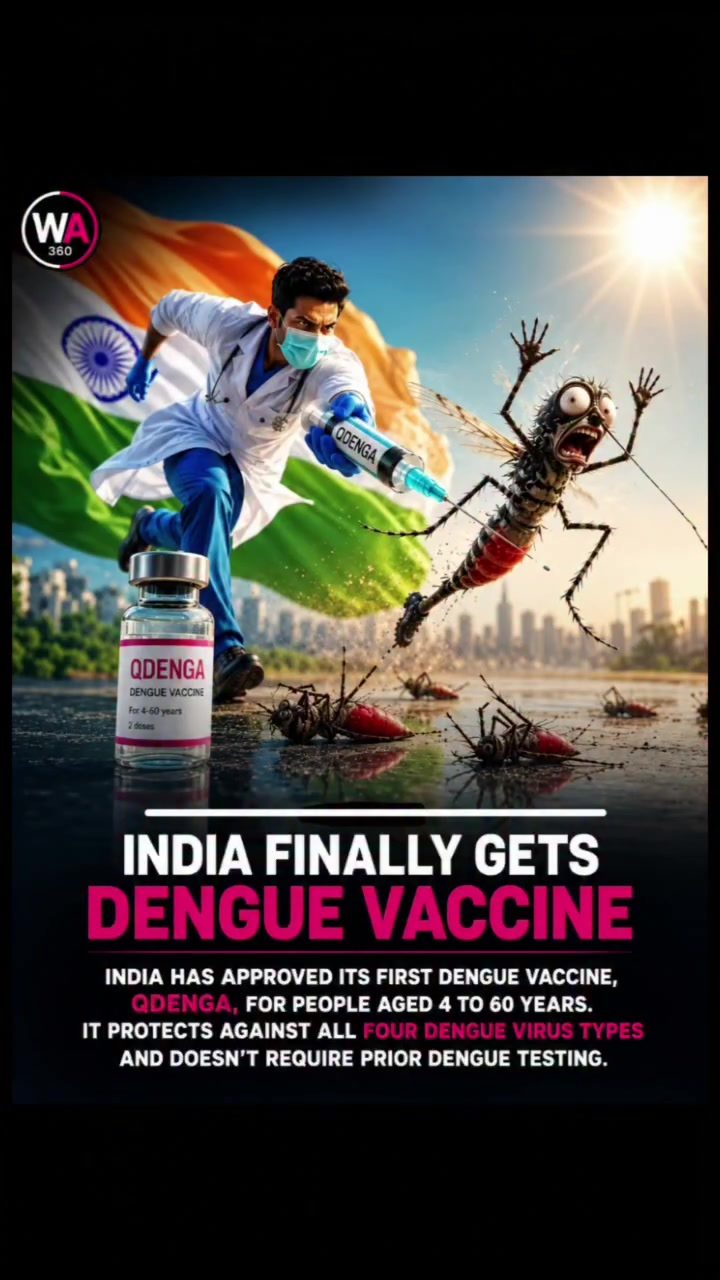
QDenga: India's First Dengue Vaccine
India has introduced QDenga, the country's first dengue vaccine, marking a major advancement in public health and disease prevention. The vaccine, approved for individuals aged 4 to 60 years, is designed to protect against all four dengue virus serotypes, which are predominantly responsible for outbreaks in the region.
Dengue fever is a significant public health concern in India, with widespread mosquito-borne transmission. The disease can cause severe symptoms, particularly in children, making the approval of QDenga a particularly crucial development. This vaccine represents a significant stride in the fight against dengue, offering a preventive measure that can complement existing strategies to reduce the impact of the disease.
Why This Matters
Dengue fever, transmitted by mosquitoes, is a significant public health issue in India. The disease can cause severe symptoms, particularly in children, making the approval of QDenga a particularly crucial development. This vaccine represents a significant stride in the fight against dengue, offering a preventive measure that can complement existing strategies to reduce the impact of the disease.
What is Dengue Fever?
Dengue fever is caused by any one of four related viruses—DEN-1, DEN-2, DEN-3, and DEN-4. These viruses are transmitted to humans through the bite of an infected female mosquito. The primary mosquito vectors are Aedes aegypti and Aedes albopictus, both of which are common in many parts of the world, including India.
Symptoms of Dengue Fever
Dengue fever symptoms typically develop 4-7 days after being bitten by an infected mosquito. The most common symptoms include:
- High fever
- Severe headache
- Pain behind the eyes
- Joint, muscle, and bone pain
- Rash
- Mild bleeding (such as nose or gum bleeds, or easy bruising)
In severe cases, dengue fever can develop into dengue hemorrhagic fever, which can be life-threatening. Symptoms of this severe form include:
- Severe abdominal pain
- Persistent vomiting
- Rapid breathing
- Bleeding from the nose, mouth, or gums
- Blood in vomit or stool
- Fatigue and restlessness
The QDenga Vaccine: A Comprehensive Solution
The QDenga vaccine is a tetravalent vaccine, meaning it protects against all four dengue virus serotypes. This is a critical feature, as previous dengue infections can sometimes exacerbate the severity of subsequent infections if they are caused by a different serotype. The vaccine does not require prior dengue infection or testing before vaccination, making it accessible to a broad range of individuals.
Benefits of the QDenga Vaccine
- Broad Protection: QDenga offers protection against all four dengue virus serotypes, providing comprehensive coverage against the disease.
- Age Range: The vaccine is approved for individuals aged 4 to 60 years, covering a significant portion of the population most at risk of severe dengue symptoms.
- No Prior Testing Required: Unlike some other vaccines, QDenga does not require prior dengue infection or testing, simplifying the vaccination process.
Preventive Measures: Beyond Vaccination
While the introduction of QDenga is a major step forward, it is essential to remember that vaccination should complement, not replace, existing preventive measures. Some effective strategies for reducing the risk of dengue fever include:
Eliminating Mosquito Breeding Sites
Mosquitoes that transmit dengue fever breed in standing water. Common breeding sites include:
- Old tires
- Buckets
- Flower pots
- Birdbaths
- Clogged gutters
Regularly inspecting and emptying these potential breeding sites can significantly reduce the mosquito population in an area.
Using Repellents
Mosquito repellents containing DEET (N,N-Diethyl-meta-toluamide) are highly effective in preventing mosquito bites. These repellents can be applied to the skin or clothing and are available in various forms, including sprays, lotions, and wipes. Natural repellents, such as citronella and eucalyptus, can also be effective but may require more frequent application.
Maintaining Clean Surroundings
Keeping surroundings clean and free of debris can help reduce the risk of mosquito breeding. This includes:
- Removing garbage and other waste that can collect water
- Clearing overgrown vegetation that can provide shelter for mosquitoes
- Installing window and door screens to keep mosquitoes out of buildings
Wearing Protective Clothing
Wearing long-sleeved shirts, long pants, and socks can provide a physical barrier against mosquito bites. Clothing treated with permethrin, an insecticide, can offer additional protection.
Practical Tips for Dengue Prevention
- Regularly Clean and Clear: Regularly clean and clear your surroundings to remove any potential mosquito breeding sites.
- Use Repellents: Apply mosquito repellents containing DEET to exposed skin and clothing. Reapply as needed, especially after swimming or sweating.
- Wear Protective Clothing: Wear long-sleeved shirts, long pants, and socks when outdoors, especially during peak mosquito hours (dawn and dusk).
- Install Screens: Install window and door screens to keep mosquitoes out of your home and workplace.
Important Takeaways
The approval of QDenga marks a significant milestone in India's battle against dengue fever. By providing protection against all four dengue virus serotypes, QDenga offers a comprehensive solution to reducing the burden of this widespread mosquito-borne disease.
However, it is crucial to remember that vaccination should be part of a broader strategy that includes preventive measures such as eliminating mosquito breeding sites, using repellents, and maintaining clean surroundings. Community participation and awareness are key to building a healthier and dengue-resilient future.
Conclusion
QDenga represents a significant advancement in the fight against dengue fever in India. By offering comprehensive protection against all four dengue virus serotypes, this vaccine provides a vital tool in reducing the impact of the disease. However, it is essential to remember that vaccination should complement, not replace, existing preventive measures. Through a combination of vaccination, community participation, and preventive strategies, we can work towards a future where dengue fever is a manageable and less devastating public health concern.
Watch the Reel
Questions readers ask
What makes QDenga unique compared to other dengue vaccines?
QDenga is unique because it is the first dengue vaccine approved for a wide age range, from 4 to 60 years. It is also notable for providing protection against all four dengue virus serotypes, which are the primary causes of outbreaks in India
How does QDenga help in the fight against dengue fever in India?
QDenga offers a preventive measure against dengue fever, which is a significant public health concern in India. The vaccine can help reduce the severity of symptoms, particularly in children, and complement existing strategies to control the disease.
Why is the approval of QDenga significant for dengue prevention in India?
The approval of QDenga is significant because it provides a much-needed tool for preventing dengue fever, a mosquito-borne disease that affects millions in India. Its broad age approval and protection against all four dengue serotypes make it a crucial addition to public health efforts.
Can QDenga be used as a preventive measure for children against dengue fever?
Yes, QDenga is an important preventive measure for children as it is approved for ages 4 and above. Children are particularly vulnerable to severe symptoms of dengue fever, and this vaccine can provide significant protection.
What are the benefits of a vaccine that covers all four dengue virus serotypes?
A vaccine that covers all four dengue virus serotypes, like QDenga, provides broad protection against the most common causes of dengue outbreaks. This is particularly important in regions like India, where different serotypes can co-circulate and cause severe disease.
How does QDenga contribute to public health efforts in India?
QDenga contributes to public health efforts by offering a preventive vaccine that can reduce the incidence and severity of dengue fever. This helps to alleviate the burden on healthcare systems and improves overall community health, especially in areas with high mosquito-borne disease transmission.
What are the next steps for implementing QDenga in India?
With the approval of QDenga, the next steps involve widespread dissemination and awareness campaigns to ensure that eligible individuals receive the vaccine. Health authorities will also focus on integrating the vaccine into routine healthcare services and monitoring its impact on dengue fever prevalence.
Recent articles
Fresh deep dives from the latest Reels we unpacked.




Comments
Be the first to comment.