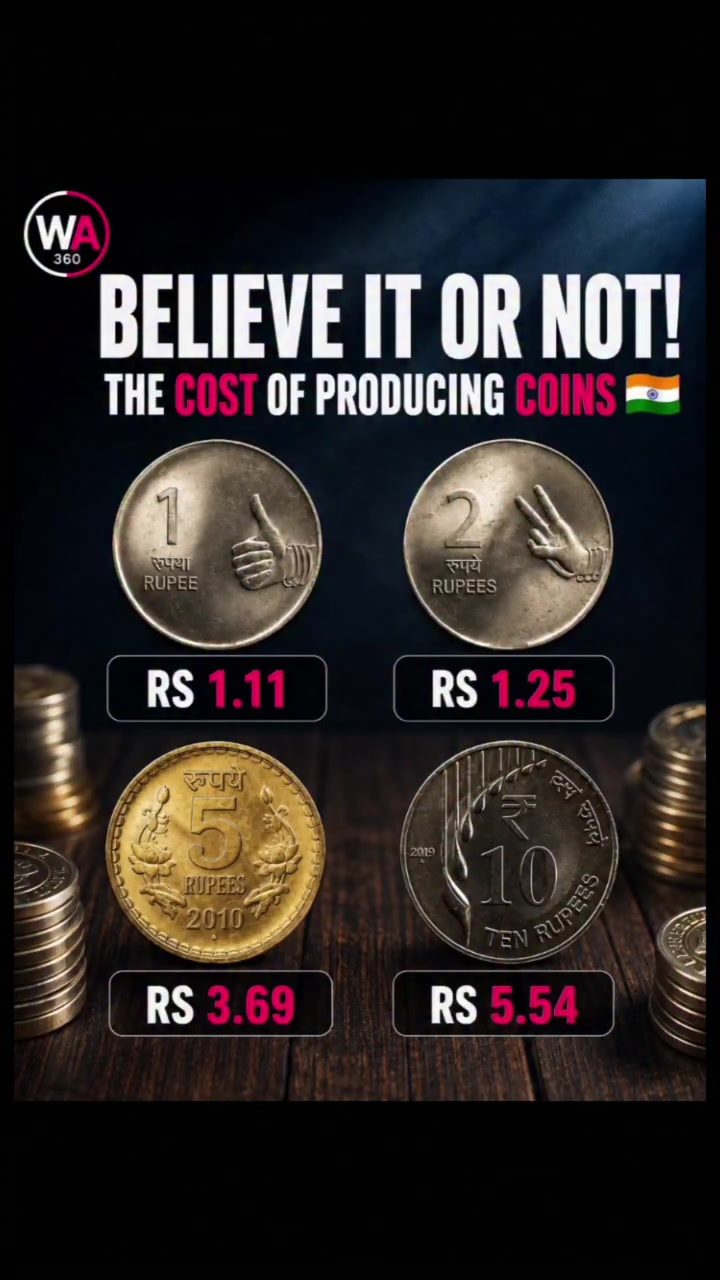
Cost of Producing Indian Coins
Coins are a ubiquitous part of daily transactions, but have you ever considered the intricate process and costs involved in their production? The cost of manufacturing coins in India is surprisingly high, often exceeding their face value. This revelation offers a unique glimpse into the economic and engineering challenges involved in currency production.
Why This Matters
The cost of producing coins is a critical aspect of a nation's currency management. Understanding these costs helps in appreciating the economic decisions made by governments. For example, the production of coins involves several stages, including the procurement of high-quality metals, precision minting, transportation, security measures, and quality control. Each of these steps adds to the overall cost, which can sometimes surpass the coin's value.
The Manufacturing Process
Materials and Minting
The production of coins begins with the selection of high-quality metals. These metals are chosen for their durability and resistance to wear and tear. The most common metals used in Indian coins are copper, nickel, and zinc. The cost of these materials is subject to market fluctuations, which can significantly impact the overall production cost.
Once the raw materials are procured, the minting process begins. This involves the use of advanced machinery to press the metal into the desired shape and design. Precision is crucial in this stage to ensure that the coins meet the required standards of weight, size, and design. This precision minting process is a significant factor in the high cost of production.
Security and Quality Control
Coins must be produced with several security features to prevent counterfeiting. These features, which may include unique markings or special materials, add to the production cost. Additionally, each coin undergoes rigorous quality control to ensure it meets the necessary standards. This includes checks for weight, size, and design accuracy, as well as inspections for any defects.
Transportation and Logistics
Once the coins are minted, they need to be transported to banks and other financial institutions. This transportation process involves security measures to prevent theft or loss. The logistics of moving large quantities of coins from the mint to various distribution points across the country also add to the overall cost.
Cost Breakdown
Let's look at the cost of producing some of the most commonly used Indian coins:
-
1 Rupee Coin: The cost of producing a 1 Rupee coin is approximately 1.11 Rupees. This means that the production cost is slightly higher than its face value.
-
2 Rupee Coin: The production cost for a 2 Rupee coin is about 1.25 Rupees. Similar to the 1 Rupee coin, this cost is higher than the coin's value.
-
5 Rupee Coin: The cost of producing a 5 Rupee coin is 3.69 Rupees. This is significantly higher than the coin's face value, highlighting the economic challenges in producing smaller denominations.
-
10 Rupee Coin: The highest production cost among the commonly used coins is for the 10 Rupee coin, which stands at 5.54 Rupees. This cost reflects the complexity and precision required in the minting process for higher denominations.
Practical Tips for Coin Management
For Individuals
When handling coins, it's important to be mindful of their value and the effort involved in producing them. Here are a few tips:
- Use Coins Wisely: Since the production cost of coins is high, it's beneficial to use them for smaller transactions. For larger purchases, consider using notes or digital payment methods.
- Store Coins Properly: Proper storage of coins can help maintain their quality and extend their lifespan. Avoid storing coins in environments that could cause corrosion or damage.
For Governments and Financial Institutions
Governments and financial institutions need to consider various strategies to manage the cost of coin production:
- Explore Cost-Effective Materials: One way to reduce production costs is by exploring alternative materials that are durable and cost-effective. Some countries are already experimenting with materials like plastics or other alloys to lower the cost of minting coins.
- Digital Payment Systems: Encouraging the use of digital payment systems can also help reduce the need for physical coins, thereby lowering the overall production cost. Digital payments are becoming increasingly popular and can offer a more efficient and secure alternative to physical currency.
Important Takeaways
- The cost of producing coins in India can be higher than their face value, highlighting the economic and engineering challenges in currency production.
- The production process involves several stages, including material procurement, precision minting, security measures, and quality control.
- The transportation and logistics of coins also add to the overall production cost.
- Governments and financial institutions are exploring cost-effective materials and digital payment systems to manage these costs.
Conclusion
Coins are an integral part of our daily transactions, and their production involves a complex and costly process. Understanding the economics behind coin production provides valuable insights into the challenges and decisions made by governments in managing currency. By appreciating the effort and cost involved in producing coins, we can handle them more effectively and explore alternative methods to minimize the economic burden. Whether through the use of cost-effective materials or the promotion of digital payment systems, there are several ways to manage the cost of coin production efficiently.
Watch the Reel
Questions readers ask
Why do the costs of producing coins in India often surpass their face value?
The high costs are due to several factors, including the procurement of high-quality metals, precision minting, transportation, and stringent security and quality control measures. The intricate process and the need for durability and security in the coins contribute to the elevated production costs.
What materials are typically used in the production of Indian coins?
Indian coins are typically made from metals such as copper, nickel, zinc, and aluminum. The choice of metal depends on the denomination and the required durability of the coin. Higher denomination coins often use more valuable metals to ensure longevity.
How does the Indian coin minting process work and what are the key stages involved?
The Indian coin minting process involves several key stages including designing the coin, procuring high-quality metals, and precision minting. This is followed by transportation, implementing security measures to prevent counterfeiting, and finally quality control to ensure the coins meet the required standards.
Why is understanding the cost of producing coins important for the Indian economy?
Understanding these costs helps in making informed economic decisions. For instance, the government can decide whether to produce certain denominations, adjust coin specifications, or even consider alternative payment methods to save costs. This knowledge also ensures that the currency remains viable and cost-effective for daily transactions.
What challenges are involved in the production of Indian coins?
Challenges in Indian coin production include maintaining high-quality metals and ensuring precision in the minting process. Additionally, implementing robust security measures to prevent counterfeiting and ensuring efficient transportation and distribution are crucial. The balance between cost and durability of the coins also poses a significant challenge.
How do Indian coin production costs compare to other countries?
While the exact costs vary by country, India's coin production costs are notably high. This is due to factors like the cost of raw materials, labor, and the stringent quality and security standards. However, the specifics can differ based on the economic conditions, technological advancements, and the value of the currency in each country.
What measures are in place to ensure the quality of Indian coins?
Indian coins undergo rigorous quality control measures to ensure they meet the required standards. This includes testing for durability, precision in minting, and adherence to the specified design. Security features are also incorporated to prevent counterfeiting, enhancing the overall quality and reliability of the coins.
Related deep dives
Similar reads based on topic and creator.




Recent articles
Fresh deep dives from the latest Reels we unpacked.




Comments
Be the first to comment.