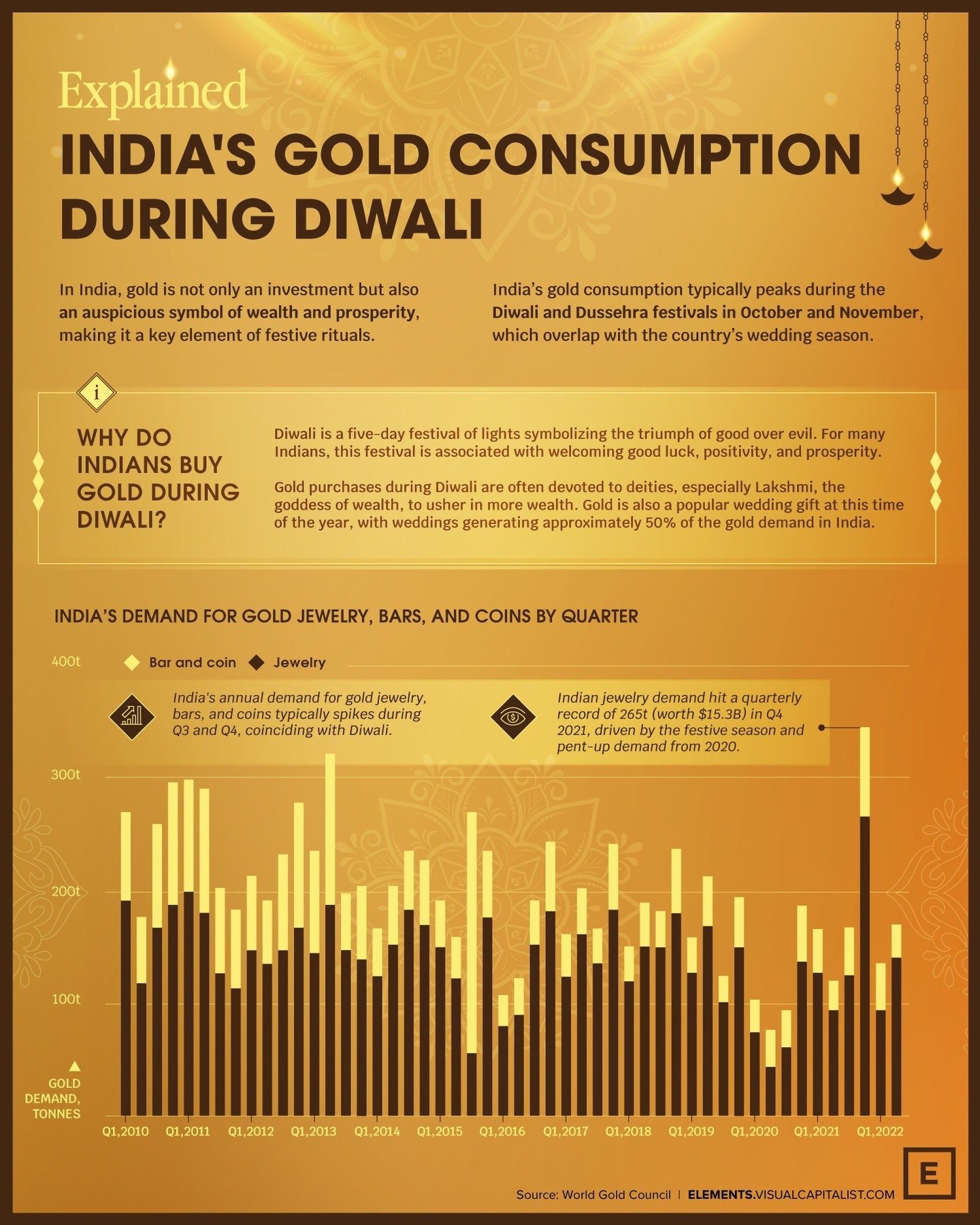
India's Gold Consumption During Diwali
Diwali, the festival of lights, is a time of joy, celebration, and significant cultural traditions in India. One of the most notable aspects of this festival is the surge in gold consumption. Understanding the patterns and reasons behind this increase provides insights into the cultural and economic dynamics of India.
Context / Why this matters
Cultural Significance
Gold holds immense cultural significance in India. It is often associated with deities, particularly Lakshmi, the goddess of wealth and prosperity. During Diwali, which is a five-day festival symbolizing the triumph of good over evil, gold purchases are considered auspicious and are believed to bring good fortune and prosperity.
Economic Impact
The spike in gold consumption during Diwali has a profound economic impact. India is one of the world's largest consumers of gold, and the demand during this period is a significant driver of the global gold market. The festival season, which includes Diwali and Dussehra, overlaps with the country's wedding season, further amplifying the demand for gold jewelry, bars, and coins.
Main discussion
Historical and Cultural Context
Diwali has always been a time for gold purchases. The festival's cultural significance and the belief that gold brings luck and prosperity drive this tradition. Gold is not just a commodity; it is a symbol of wealth, status, and cultural heritage. The tradition of gifting gold during Diwali and weddings is deeply ingrained in Indian culture.
Seasonal Demand Patterns
India's annual demand for gold typically spikes during the third and fourth quarters of the year, coinciding with Diwali and the wedding season. This period sees a significant increase in the purchase of gold jewelry, bars, and coins. The demand for gold jewelry alone accounts for a substantial portion of the total gold consumption in India.
Market Drivers
Several factors drive the seasonal demand for gold. The festival season, which includes Diwali and Dussehra, is a time when families come together to celebrate and exchange gifts. Gold is a popular choice for gifts due to its cultural significance and economic value. Additionally, the wedding season, which overlaps with the festival season, sees a surge in gold purchases as families invest in gold jewelry for their brides and grooms. Approximately 50% of India's gold demand is related to weddings, making this period crucial for the gold market.
Key Statistics
According to the World Gold Council, gold consumption in India typically peaks during the months of October and November, which include the Diwali and Dussehra festivals. This period sees a significant spike in the demand for gold jewelry, bars, and coins. The demand patterns are consistent year after year, reflecting the enduring cultural and economic significance of gold in Indian society.
Practical tips
For Investors
Investors looking to capitalize on India's gold market should pay close attention to the annual demand patterns. The third and fourth quarters of the year are particularly important, as gold prices may experience significant fluctuations due to the surge in demand.
For Jewelry Buyers
For those looking to purchase gold jewelry during Diwali, it is advisable to plan in advance. The spike in demand can lead to higher prices and potential shortages. Buying in advance can help secure better prices and ensure availability. Additionally, understanding the different types of gold jewelry available—ranging from traditional designs to modern styles—can help buyers make informed decisions.
Important takeaways
Gold consumption during Diwali is a cultural and economic phenomenon. It reflects the enduring significance of gold in Indian society and the deep-rooted traditions associated with the festival. The surge in demand has a profound impact on the global gold market, making it a crucial period for investors and market observers.
Additionally, the overlap of the festival season with the wedding season further amplifies the demand for gold. Understanding these patterns and factors can provide valuable insights for investors, buyers, and market analysts.
Conclusion
Gold consumption during Diwali is more than just an economic trend; it is a cultural tradition deeply rooted in India's heritage. The spike in demand during the festival season is driven by cultural beliefs, economic factors, and market dynamics. Whether you are an investor, a jewelry buyer, or simply interested in understanding this fascinating phenomenon, recognizing the significance of gold during Diwali can offer valuable insights into the complex interplay of culture, tradition, and economics.
Watch the Reel
Questions readers ask
Why does gold demand in India peak during Diwali?
Gold demand in India surges during Diwali due to the festival's cultural significance and economic impact. Gold is viewed as auspicious during this time, and buying it is believed to bring wealth, prosperity, and good fortune. Additionally, Diwali coincides with the wedding season in India, further driving demand for gold jewelry.
What forms of gold are commonly purchased during Diwali?
During Diwali, Indians commonly purchase gold jewelry, as well as gold bars and coins. These items are not only considered auspicious but are also popular choices for gifting during the festival. Gold bars and coins are also favored for investment purposes, as they are seen as a safe and valuable asset.
How does the gold buying tradition during Diwali impact the Indian economy?
The surge in gold demand during Diwali significantly impacts the Indian economy. It boosts the sales and revenue of jewelry retailers and other businesses in the gold industry. Furthermore, it drives economic activity in related sectors, such as manufacturing and transportation, and contributes to job creation. Additionally, the Reserve Bank of India's gold reserves influence the country's economy and monetary policy.
What is the significance of gold in Indian culture, especially during Diwali?
Gold holds immense significance in Indian culture, often symbolizing wealth, prosperity, and good fortune. This is particularly true during Diwali, a festival that celebrates the triumph of good over evil. Buying gold during this time is believed to bring auspiciousness and blessings from goddess Lakshmi, the deity of wealth and prosperity.
Why is investing in gold during Diwali considered a wise decision?
Investing in gold during Diwali is considered a wise decision for several reasons. Firstly, gold prices tend to rise during this period due to high demand, which can lead to potential profits for investors. Secondly, gold is seen as a safe and stable investment, especially during uncertain economic times. Lastly, buying gold during Diwali aligns with cultural traditions and beliefs, making it a meaningful and profitable choice.
Related deep dives
Similar reads based on topic and creator.
Recent articles
Fresh deep dives from the latest Reels we unpacked.




Comments
Be the first to comment.