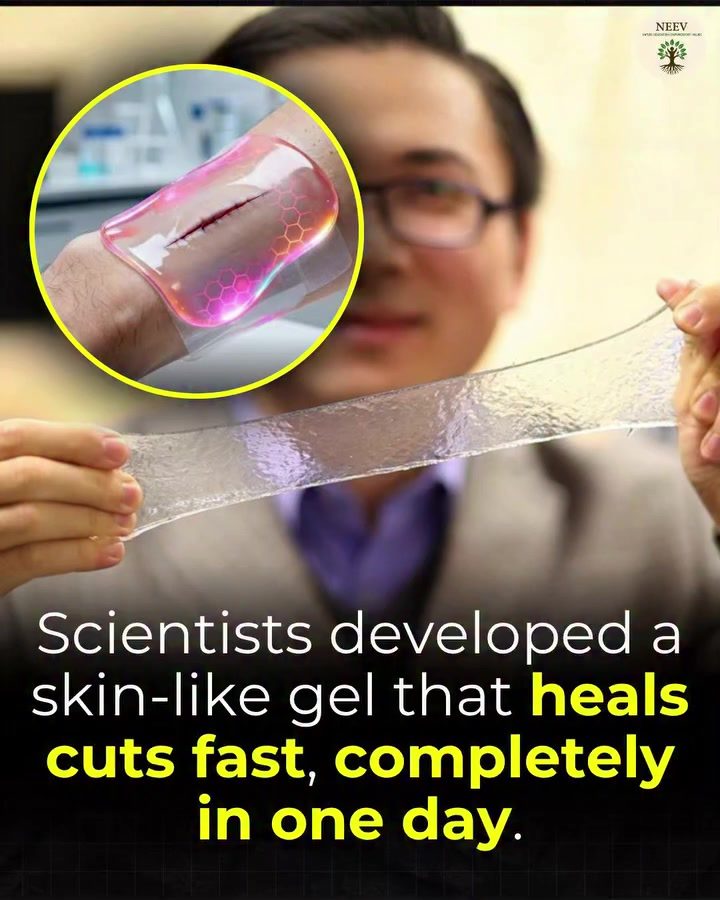
Self-Healing Skin Gel
There's a groundbreaking innovation in the field of medical technology: a self-healing skin-like gel developed by scientists at Aalto University and University of Bayreuth. This hydrogel, which behaves surprisingly like human skin, has the remarkable ability to repair up to 90% of damage within just 4 hours and fully restore itself in around 24 hours.
Context / Why This Matters
The development of this hydrogel signifies a pivotal moment in medical technology. Inspired by the human body itself, this innovation could revolutionize various fields, including future medicine, burn treatment, artificial skin, and even soft robotics. The hydrogel's unique properties make it a versatile material with immense potential for practical applications.
Main Discussion
Composition and Structure
The hydrogel is built using flexible polymers and ultra-thin clay nanosheets. These components give the material its impressive strength, flexibility, and stretchability. Despite being only 1 mm thick, it contains around 10,000 nanoscale layers. This layered structure allows the hydrogel to reconnect its structure when damaged, similar to how gel nail polish hardens under UV light. The UV light not only helps to strengthen the repair process but also ensures that the hydrogel can withstand further damage.
Healing Properties
The hydrogel's self-healing capabilities are one of its most notable features. When damaged, the material can repair up to 90% of the damage within 4 hours and fully restore itself in around 24 hours. This rapid healing process is due to the hydrogel's unique composition, which allows it to reconnect its structure and regain its original strength and flexibility.
Applications
The potential applications of this self-healing hydrogel are vast. In medicine, it could be used to treat burns and other skin injuries, providing a protective layer that heals itself and promotes faster recovery. In the field of artificial skin, the hydrogel could be used to create more realistic and functional prosthetics. Additionally, its self-healing properties make it an ideal material for soft robotics, where durability and flexibility are crucial.
Future Implications
The development of this hydrogel is a reminder that some of the most advanced technologies are now being inspired directly by the human body itself. As research continues, we can expect to see even more innovative materials and technologies that mimic the human body's natural abilities. The potential for this hydrogel to revolutionize various fields is immense, and its development is a testament to the power of scientific innovation.
Practical Tips
While the hydrogel is still in the development phase, its potential applications are already clear. Here are some practical tips for researchers and innovators looking to explore this technology further:
- Explore Medical Applications: The hydrogel's self-healing properties make it an ideal material for medical applications. Researchers should focus on developing treatments for burns and other skin injuries.
- Develop Artificial Skin: The hydrogel's ability to mimic human skin makes it a promising material for artificial skin. Innovators should explore its potential for creating more realistic and functional prosthetics.
- Investigate Soft Robotics: The hydrogel's durability and flexibility make it an ideal material for soft robotics. Researchers should explore its potential for creating more advanced and versatile robots.
- Collaborate with Experts: The development of this hydrogel involved collaboration between scientists from different universities. Researchers should seek out experts in the field and collaborate to advance the technology further.
Important Takeaways
The development of this self-healing hydrogel is a significant milestone in medical technology. Its unique properties make it a versatile material with immense potential for practical applications. As research continues, we can expect to see even more innovative materials and technologies that mimic the human body's natural abilities.
The potential for this hydrogel to revolutionize various fields is immense, and its development is a testament to the power of scientific innovation. Researchers and innovators should explore its potential further and collaborate to advance the technology.
Conclusion
The self-healing skin-like gel developed by scientists at Aalto University and University of Bayreuth is a groundbreaking innovation with immense potential. Its unique properties make it a versatile material with applications in medicine, artificial skin, and soft robotics. As research continues, we can expect to see even more innovative materials and technologies that mimic the human body's natural abilities. The development of this hydrogel is a testament to the power of scientific innovation and a reminder that the most advanced technologies are often inspired by the human body itself.
Watch the Reel
Questions readers ask
How does the self-healing skin gel mimic human skin?
The hydrogel mimics human skin through its ability to repair damage rapidly. Just like human skin, it can heal up to 90% of damage within 4 hours and fully restore itself in 24 hours. This mimicry is key to its potential applications in medicine and burn treatment.
What makes this gel revolutionary for burn treatment?
The hydrogel's fast-acting repair capabilities make it revolutionary for burn treatment. It can significantly reduce healing time and improve outcomes by mimicking the body's natural healing processes. This could potentially decrease the need for repeated treatments and reduce patient discomfort.
What is the process behind the hydrogel's self-repair mechanisms?
The self-repair mechanism involves the unique chemical and physical properties of the hydrogel. Developed at Aalto University and the University of Bayreuth, the hydrogel uses dynamic bonds that allow it to reconnect and heal when damaged, similar to how human skin repairs itself.
Can this hydrogel be used in fields beyond medicine?
Yes, the potential applications extend to soft robotics and artificial skin. Its ability to mimic human skin and rapidly repair damage makes it an excellent material for creating durable, flexible robotic components and realistic artificial skin for prosthetics or other uses.
How was the hydrogel developed, and what inspired its design?
Scientists at Aalto University and the University of Bayreuth developed the hydrogel. Inspired by the natural healing processes of human skin, they designed a material that could mimic these properties, leading to a hydrogel with remarkable self-repair capabilities.
What are the potential benefits for future medicine?
The hydrogel's ability to repair skin damage quickly and efficiently opens up numerous possibilities in future medicine. It could be used in wound healing, burn treatment, and even in developing advanced materials for medical implants and devices, enhancing patient outcomes and recovery times.
What research institutions are involved in developing the hydrogel?
The revolutionary hydrogel was developed through a collaboration between Aalto University and the University of Bayreuth. These institutions conducted extensive research to create a hydrogel that could mimic human skin's natural repair processes, leading to this groundbreaking innovation.
Recent articles
Fresh deep dives from the latest Reels we unpacked.




Comments
Be the first to comment.