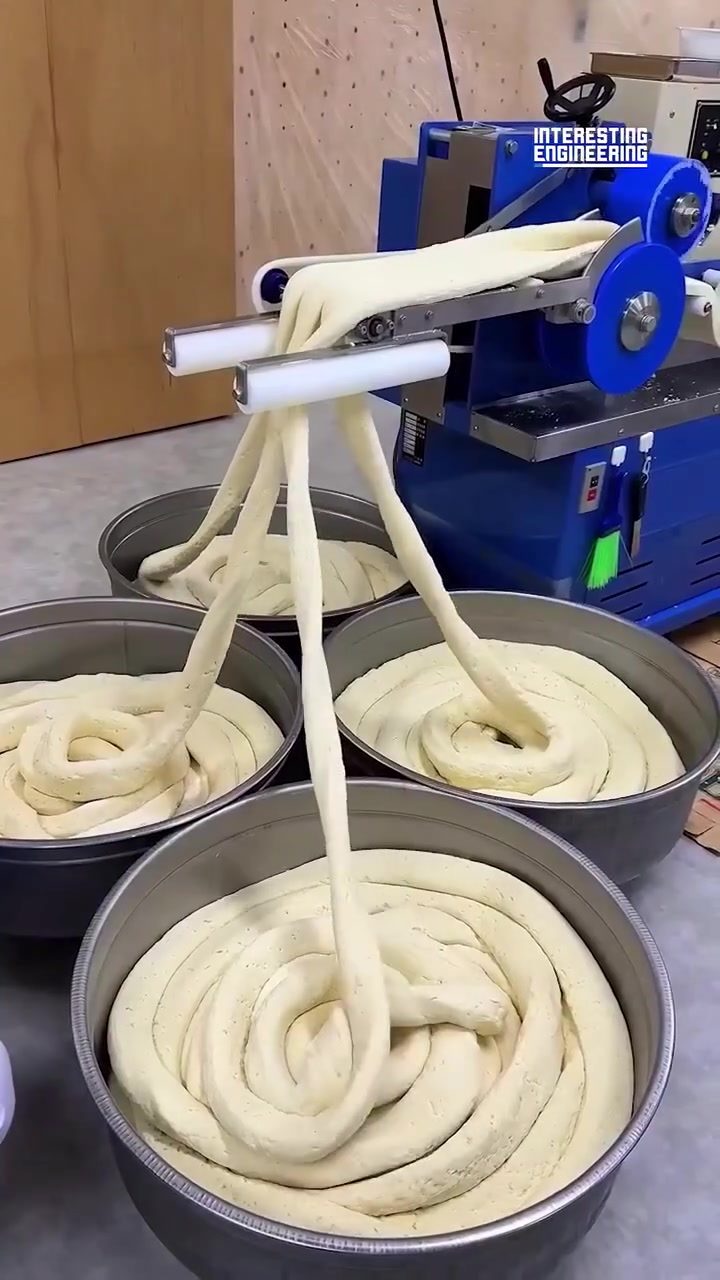
Industrial Noodle Making Machines: A Fusion of Tradition and Automation
Industrial noodle making machines represent a remarkable fusion of traditional noodle craftsmanship and modern automation. These machines transform simple wheat dough into perfectly shaped, ultra-thin noodles, ensuring consistent quality and high production speeds. This process involves several key stages, each crucial for achieving the desired noodle texture and appearance.
Why This Matters
The significance of industrial noodle making machines lies in their ability to produce large quantities of noodles with consistent quality. This is particularly important in the food industry, where uniformity and efficiency are key to meeting high demand. These machines ensure that every batch of noodles maintains the same thickness, texture, and overall quality, making them essential for both small-scale and large-scale food production.
The Noodle Making Process
Extrusion and Initial Shaping
The process begins with the extrusion of wheat dough into thick ropes. This step is crucial as it sets the foundation for the noodles' thickness and texture. The dough is carefully extruded to ensure uniformity, which is essential for the subsequent stages of the process.
Stretching and Folding
Once extruded, the thick ropes of dough are carefully stretched and folded. This step transforms the thick ropes into thousands of ultra-thin strands. The stretching and folding process requires precision to ensure that the noodles are uniformly thin and flexible. This step is where traditional noodle craftsmanship meets modern engineering, as it combines the art of noodle making with automated machinery.
Drying and Alignment
The ultra-thin strands are then hung on large frames, gradually elongated, and dried in controlled conditions. This drying process is critical as it ensures the noodles retain their shape and texture. The controlled environment helps prevent warping or breaking, which could affect the final product's quality.
Cutting and Packaging
After drying, the noodles are aligned, cut, and packaged. This final stage ensures that the noodles are ready for distribution. The automated cutting and packaging process is designed to maintain the noodles' uniformity and quality, making them suitable for mass production.
Practical Tips for Maintaining Noodle Quality
Maintaining Equipment Cleanliness
Keeping the noodle making machine clean is essential for maintaining noodle quality. Regular cleaning prevents contamination and ensures that the dough is free from impurities. Cleaning the machine after each use helps maintain the equipment's longevity and ensures consistent noodle production.
Monitoring Dough Consistency
The consistency of the dough is crucial for producing high-quality noodles. Monitoring the dough's moisture content and texture helps achieve the desired thickness and flexibility. Automated systems can measure and adjust the dough's consistency, ensuring uniformity in the final product.
Controlling Drying Conditions
The drying process significantly impacts the noodles' texture and appearance. Controlling the drying environment, including temperature and humidity, is vital for achieving the desired noodle quality. Modern machines often come with built-in sensors and controls to maintain optimal drying conditions.
Regular Maintenance
Regular maintenance of the noodle making machine is essential for its efficient operation. This includes checking for wear and tear, lubricating moving parts, and replacing worn-out components. Regular maintenance ensures that the machine operates at peak performance, producing high-quality noodles consistently.
Important Takeaways
Industrial noodle making machines are a testament to the blending of traditional craftsmanship and modern automation. They ensure consistent quality and high production speeds, making them indispensable in the food industry. The key stages, from extrusion to packaging, require precision and attention to detail to achieve the desired noodle texture and appearance.
Conclusion
The industrial noodle making machine is a marvel of modern engineering and a crucial tool in the food industry. By combining traditional noodle craftsmanship with advanced automation, these machines ensure consistent quality and high production speeds. Understanding the process and maintaining the equipment properly are essential for producing high-quality noodles that meet the demands of the market.
Watch the Reel
Questions readers ask
How do industrial noodle making machines create such thin noodles?
Industrial noodle making machines use a process called extrusion to create thin noodles. The dough is forced through small openings in a die, which shapes the noodles and ensures they are uniform in size and thickness.
What is the purpose of the stretching process in noodle production?
The stretching process, also known as sheeting, is essential for improving the texture of the noodles. It involves repeatedly rolling and stretching the dough to develop the gluten, which gives the noodles their characteristic chewiness and helps them maintain their shape during cooking.
Why is drying important in the industrial noodle making process?
Drying is a critical step in industrial noodle production because it removes moisture from the noodles, making them easier to store and transport. Proper drying also helps to preserve the noodles' texture and flavor by preventing spoilage and ensuring consistent quality.
How do noodle making machines ensure consistency in large-scale production?
Noodle making machines automate the production process, using precise controls to maintain consistent dough thickness, extrusion rates, and drying times. This ensures that every batch of noodles is uniform in size, shape, and quality, even when producing large quantities.
What is the role of wheat in industrial noodle production?
Wheat is a primary ingredient in industrial noodle production due to its high gluten content, which gives noodles their elasticity and chewiness. The quality of the wheat flour, including its protein content and milling process, significantly impacts the final noodle texture and appearance.
What are the key stages in the industrial noodle making process?
The key stages in the industrial noodle making process include: mixing and kneading the dough, extrusion to form the noodle shape, stretching to develop the gluten, and drying to reduce moisture and preserve quality. Each stage is carefully controlled to ensure consistent, high-quality noodle production.
How do industrial noodle making machines contribute to efficiency in the food industry?
Industrial noodle making machines enable food manufacturers to produce large quantities of noodles quickly and efficiently. By automating the production process, these machines reduce manual labor, minimize waste, and ensure consistent product quality, helping manufacturers meet high demand and maintain efficiency.
Recent articles
Fresh deep dives from the latest Reels we unpacked.




Comments
Be the first to comment.