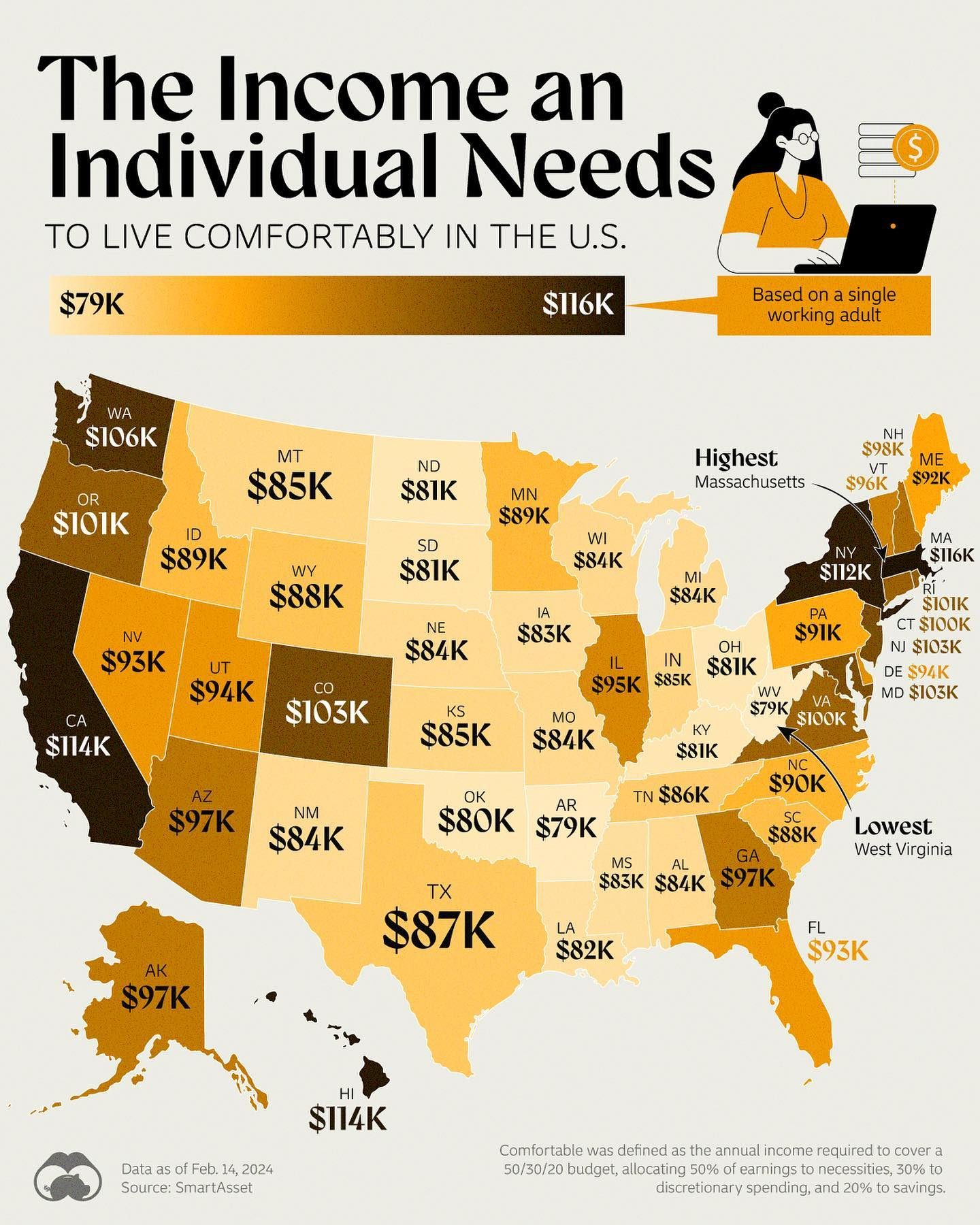
Individual Income Needs by State
Living comfortably as a single adult in the United States varies greatly depending on the state. To achieve a balanced 50/30/20 budget—with 50% allocated to necessities, 30% to discretionary spending, and 20% to savings—single adults in the top 11 most expensive states need to earn six-figure incomes. This analysis, based on SmartAsset calculations from the MIT Living Wage Calculator, provides a clear picture of the financial landscape across the nation.
Why This Matters
Understanding the income requirements for a comfortable lifestyle is crucial for financial planning. Whether you're considering a move, planning for retirement, or simply aiming to improve your financial well-being, knowing the income thresholds for different states can help guide your decisions. This information is especially valuable for those seeking financial freedom and a balanced lifestyle.
Main Discussion
The 50/30/20 Budget Allocation
The 50/30/20 budgeting method is a widely used strategy for managing personal finances. It allocates 50% of your income to essential needs like housing, utilities, and groceries; 30% to discretionary spending such as dining out, entertainment, and hobbies; and 20% to savings and investments. This method ensures financial stability and long-term savings. Let's explore how this budgeting method applies to the most expensive states in the U.S.
Highest Income Needed
Massachusetts tops the list as the state where a single adult needs the highest income to live comfortably. According to the data, an individual in Massachusetts requires approximately $116,000 annually to maintain a 50/30/20 budget. This high cost of living is driven by factors such as housing prices, healthcare costs, and the overall expense of living in a densely populated, high-demand area. Living in a state with a high cost of living means that essential expenses like rent, groceries, and transportation take up a larger portion of your income, leaving less room for discretionary spending and savings.
States with Lower Income Needs
On the opposite end of the spectrum, West Virginia has the lowest income requirement for a single adult to live comfortably. An annual income of around $79,000 is enough to cover a 50/30/20 budget in West Virginia. This state offers a lower cost of living compared to Massachusetts, with more affordable housing, utilities, and essential goods. As a result, a single adult can allocate a larger portion of their income to discretionary spending and savings.
Middle Ground: Balancing Cost and Comfort
States like Iowa, Indiana, and Ohio fall in the middle range of income requirements. These states require an annual income of around $81,000 to $91,000 for a single adult to live comfortably. While not as expensive as Massachusetts, they still have a moderate cost of living that balances essential needs, discretionary spending, and savings. Living in these states offers a good quality of life without the financial strain that comes with the highest-cost areas.
Practical Tips
Assess Your Current Budget
Before deciding on a move or making significant financial changes, assess your current budget to determine if you are meeting the 50/30/20 allocation. This will give you a clear understanding of your financial situation and help you plan for any necessary adjustments.
Research Local Costs
When considering a move to a new state, research the local costs of living. Look into housing prices, utilities, groceries, and transportation to get a realistic picture of what your expenses will be. This research will help you determine if the state's income requirements align with your financial goals.
Plan for Savings
Aim to save at least 20% of your income, regardless of where you live. This financial cushion can protect you during emergencies, help you achieve long-term financial goals, and provide peace of mind. Consider setting up automatic transfers to a savings account to ensure consistent savings.
Explore Financial Assistance
If you find yourself in a state with a high cost of living but a lower income, explore financial assistance programs and local resources that can help you manage your expenses. This could include government assistance, community programs, or employer benefits.
Important Takeaways
Location Matters
Your location significantly impacts your financial needs and lifestyle. States with a high cost of living require higher incomes to live comfortably, while those with lower costs offer more financial flexibility.
Budgeting is Key
Adopting a 50/30/20 budgeting method can help you achieve financial stability and long-term savings. This approach ensures that you allocate your income wisely, covering essential needs, discretionary spending, and savings.
Plan Ahead
Financial planning is crucial for maintaining a comfortable lifestyle. Researching local costs, assessing your budget, and planning for savings can help you make informed decisions and achieve your financial goals.
Conclusion
Whether you're living in a high-cost state like Massachusetts or a more affordable one like West Virginia, understanding the income requirements for a comfortable lifestyle is essential. By adopting a 50/30/20 budgeting method and planning ahead, you can achieve financial stability and enjoy a balanced lifestyle. Use this information to guide your decisions and improve your overall financial well-being.
Watch the Reel
Questions readers ask
What is the 50/30/20 budget rule and how does it apply to comfortable living?
The 50/30/20 budget rule allocates 50% of income to necessities, 30% to discretionary spending, and 20% to savings. For comfortable living, this budget helps balance essential expenses, personal spending, and financial goals, ensuring long-term financial stability.
Which states require a six-figure income for a single adult to live comfortably?
The top 11 most expensive states, including Massachusetts, require a six-figure income for a single adult to maintain a comfortable lifestyle. These states have higher costs of living, necessitating higher incomes to balance essential expenses, savings, and discretionary spending.
How does the income needed to live comfortably vary by state?
The income needed to live comfortably varies significantly by state due to differences in cost of living. States like Western Virginia have lower income requirements compared to high-income states, highlighting the importance of state-specific financial planning.
What factors contribute to the high income needs in certain states?
High income needs in certain states are due to elevated costs of housing, healthcare, and other essentials. Additionally, higher discretionary spending and savings goals contribute to the increased income requirements for comfortable living.
Why is it important to understand the income thresholds for different states?
Understanding income thresholds for different states is crucial for effective financial planning. Whether considering a move, planning for retirement, or aiming for financial freedom, knowing the income needed to live comfortably helps guide decisions and set realistic financial goals.
How can I determine the income needed to live comfortably in my state?
To determine the income needed to live comfortably in your state, consider your essential expenses, discretionary spending, and savings goals. Use tools like the MIT Living Wage Calculator and SmartAsset calculations to get a clear picture of the financial landscape in your area. This information helps balance your budget and achieve a comfortable lifestyle.
Recent articles
Fresh deep dives from the latest Reels we unpacked.




Comments
Be the first to comment.