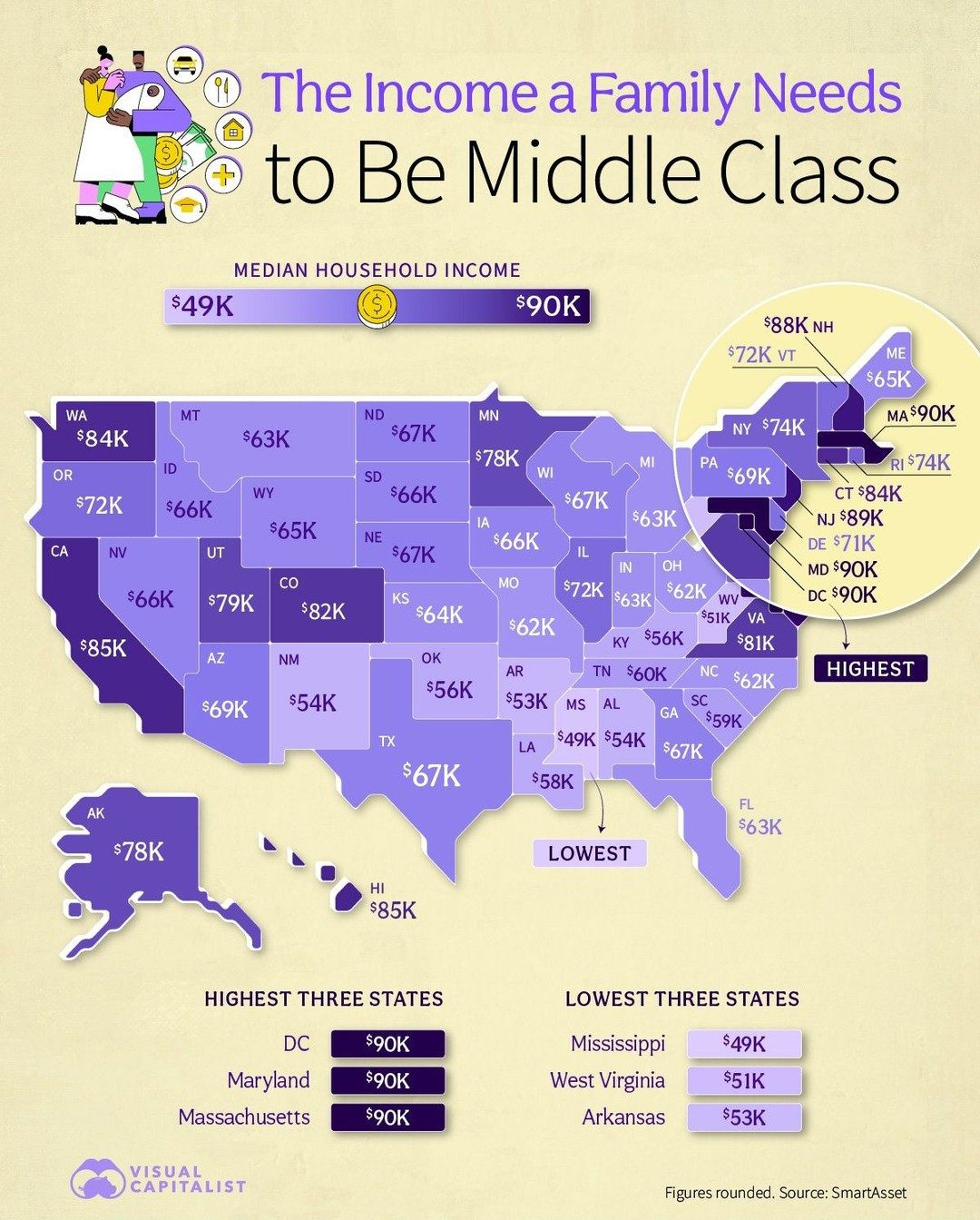
Income by State
Income disparity across different states in the U.S. can be stark, with some regions boasting significantly higher median incomes compared to others. In 2024, Maryland, Washington D.C., and Massachusetts led the pack with median household incomes exceeding $90,000 annually. On the other end of the spectrum, Mississippi lagged behind with a median income below $49,000 a year. This income gap highlights the vast differences in cost of living and economic opportunities across the country.
Why this matters
Understanding the income disparity by state is crucial for several reasons. It provides insights into the cost of living, economic opportunities, and overall quality of life in different regions. This information is particularly valuable for families who are considering relocation, as it helps them gauge the financial demands of their new environment. Additionally, it offers policymakers a clearer picture of where to focus resources to bridge economic gaps and foster more equitable growth.
The Middle Class Income Across States
The infographic visualizes the income a family needs to be considered middle class in each state, based on data from SmartAsset. By examining these figures, we can better understand the economic landscape and the financial pressures faced by families in different locations.
-
New Hampshire: Families in New Hampshire need an annual income of $88,000 to be considered middle class. This is a significant amount, reflecting the state's relatively high cost of living.
-
Vermont: In Vermont, the middle-class income threshold stands at $72,000. This figure is influenced by factors such as housing costs and the overall economic environment in the state.
-
Maine: The middle-class income for Maine is $65,000. This state offers a mix of urban and rural living, with various cost implications.
-
Washington: Families in Washington need $84,000 annually to be considered middle class. The state's strong job market in sectors like tech and aerospace contributes to this higher income requirement.
-
Montana: Montana families need an annual income of $63,000 to be considered middle class. The state's natural beauty and outdoor recreation opportunities are balanced against higher living costs in more populated areas.
-
North Dakota: Families in North Dakota need $67,000 annually to be considered middle class. The state's strong agricultural and energy sectors influence this figure.
-
Minnesota: The middle-class income in Minnesota is $66,000. The state, known for its strong economy and high quality of life, has a balanced cost of living.
-
Kansas: Families in Kansas need an annual income of $72,000 to be considered middle class. The state's agricultural and manufacturing sectors contribute to this income requirement.
-
Michigan: The middle-class income in Michigan is $67,000. The state's automotive and manufacturing sectors, as well as its urban and rural areas, influence this figure.
-
New York: Families in New York need an annual income of $69,000 to be considered middle class. The state's high cost of living in major cities like New York City significantly impacts this figure.
-
Connecticut: The middle-class income in Connecticut is $74,000. The state's affluent communities and high cost of living in areas like Fairfield County contribute to this requirement.
-
New Jersey: Families in New Jersey need an annual income of $89,000 to be considered middle class. The state's high cost of living and proximity to major metropolitan areas influence this figure.
-
Rhode Island: The middle-class income in Rhode Island is $74,000. Similar to other New England states, the high cost of living in Rhode Island contributes to this requirement.
-
California: Families in California need an annual income of $66,000 to be considered middle class. The state's varied economy and high cost of living in major cities like San Francisco and Los Angeles significantly impact this figure.
-
Nevada: The middle-class income in Nevada is $79,000. The state's growing economy and attractions like Las Vegas and Reno drive this higher income requirement.
-
Utah: Families in Utah need an annual income of $66,000 to be considered middle class. The state's strong job market and economic growth contribute to this figure.
-
Colorado: The middle-class income in Colorado is $63,000. The state's vibrant economy and high quality of life, particularly in areas like Denver, influence this figure.
-
Iowa: Families in Iowa need an annual income of $66,000 to be considered middle class. The state's agricultural and manufacturing sectors play a significant role in this economic landscape.
-
Illinois: The middle-class income in Illinois is $62,000. The state's diverse economy and urban centers like Chicago impact this figure.
-
Ohio: Families in Ohio need an annual income of $62,000 to be considered middle class. The state's industrial and manufacturing sectors influence this figure.
-
Arkansas: The middle-class income in Arkansas is $56,000. The state's agricultural and manufacturing sectors, along with a generally lower cost of living, contribute to this figure.
-
Tennessee: Families in Tennessee need an annual income of $60,000 to be considered middle class. The state's diverse economy and relatively lower cost of living influence this income requirement.
-
North Carolina: The middle-class income in North Carolina is $62,000. The state's strong economy and growing job market in sectors like technology and finance contribute to this figure.
-
South Carolina: Families in South Carolina need an annual income of $59,000 to be considered middle class. The state's economic growth and relatively lower cost of living play a significant role in this figure.
-
Louisiana: The middle-class income in Louisiana is $67,000. The state's petroleum and healthcare sectors, as well as a lower cost of living in certain areas, contribute to this requirement.
-
Mississippi: At the lower end of the spectrum, Mississippi families need an annual income of $49,000 to be considered middle class. The state's lower overall income levels and cost of living significantly influence this figure.
-
Alabama: Families in Alabama need an annual income of $54,000 to be considered middle class. The state's industrial and agricultural sectors, along with a relatively lower cost of living, contribute to this figure.
-
Texas: The middle-class income in Texas is $67,000. The state's strong economy and diverse job market, particularly in sectors like technology and energy, influence this figure.
-
Florida: Families in Florida need an annual income of $58,000 to be considered middle class. The state's thriving tourism industry and lower overall cost of living in rural areas influence this figure.
-
Maryland, Washington D.C., and Massachusetts: These states have the highest median household incomes, all above $90,000 annually. These figures highlight the strong job markets and high cost of living in these regions.
Important Considerations
When interpreting the data, it’s essential to consider the broader context of each state. Focusing solely on income figures can sometimes be misleading without understanding the cost of living, job market, and overall economic environment. For instance, while Massachusetts has one of the highest incomes, its cost of living is also among the highest in the country. Conversely, states like Mississippi have lower incomes but also a lower cost of living, which can sometimes balance out the financial pressures on families.
Practical Tips
Considering a Move
If you are considering relocating, it's important to research the specific economic conditions of the state you are interested in. Look at factors such as housing prices, job opportunities, and overall cost of living. Websites like SmartAsset and the U.S. Bureau of Labor Statistics can provide valuable data to help inform your decision.
Managing Finances
Regardless of where you live, managing finances effectively is crucial. Consider creating a budget that accounts for your income and expenses, and look for ways to save money where possible. This can include cutting down on non-essential expenses, finding more affordable housing, or negotiating a higher salary.
Quality of Life
Quality of life is just as important as financial stability. Consider the cultural, recreational, and educational opportunities in the area you are considering. Sometimes, a slightly lower income can be compensated by a higher quality of life in terms of safety, healthcare, and community support.
Important takeaways
Economic Disparities
The income figures highlight significant economic disparities across different states. This disparity can be attributed to various factors, including job opportunities, industry focus, and cost of living. Understanding these differences can help individuals and families make more informed decisions about where to live and work.
Cost of Living
The cost of living is a crucial factor to consider when evaluating income levels. States with higher incomes often have a correspondingly higher cost of living, which can offset the financial benefits of a higher salary.
Job Market
The job market plays a significant role in determining income levels. States with strong job markets in high-paying sectors, such as technology and finance, tend to have higher median incomes. Conversely, states with limited job opportunities, particularly in lower-paying sectors, may have lower median incomes.
Conclusion
Income disparities across different states in the U.S. are a complex issue influenced by a variety of economic factors. Understanding these disparities can provide valuable insights into the financial pressures and opportunities in different regions. Whether you are considering a move, managing your finances, or simply curious about the economic landscape, these figures offer a starting point for deeper exploration. By understanding the broader context of each state, you can make more informed decisions about where to live and work, ultimately contributing to a better quality of life.
Watch the Reel
Questions readers ask
What factors contribute to the differences in middle class income thresholds across states?
Several factors contribute to the differences in middle class income thresholds, including the cost of living, local economic conditions, job opportunities, and regional tax policies. For instance, states like New Hampshire, which have a higher cost of living, tend to have higher middle class income thresholds compared to states like Maine.
Which states have the highest and lowest median incomes in the U.S.?
As of 2024, Maryland and Massachusetts are among the states with the highest median incomes, exceeding $90,000 annually. In contrast, Mississippi has one of the lowest median incomes, falling below $49,000 a year.
How does understanding state income disparities help families considering relocation?
Understanding state income disparities helps families gain insights into the financial demands and economic opportunities of different regions. This knowledge allows them to make informed decisions about where to live, based on factors such as job availability, housing costs, and overall quality of life.
What is the middle class income threshold in Maine and New Hampshire?
In Maine, the middle class income threshold is approximately $65,000, while in New Hampshire it is around $88,000. This difference reflects the varying economic conditions and cost of living in these neighboring states.
Why is the cost of living by state an important factor in income distribution?
The cost of living by state significantly influences income distribution because it determines how much money is needed to maintain a comfortable lifestyle. States with higher costs of living often require higher incomes to cover basic expenses, affecting the middle class income thresholds and overall economic well-being.
What are some regions with the highest middle class incomes in the U.S.?
Regions with the highest middle class incomes include Maryland, Washington D.C., and Massachusetts. These areas boast median household incomes exceeding $90,000 annually, reflecting strong economic opportunities and a higher cost of living.
How do income disparities by state impact family income needs?
Income disparities by state directly impact family income needs because they determine the amount of money required to meet basic living expenses. Families in states with higher costs of living and income thresholds will need to earn more to maintain the same standard of living as those in lower-cost states.
Recent articles
Fresh deep dives from the latest Reels we unpacked.




Comments
Be the first to comment.