U.S. Bank Failures
U.S. bank failures are a significant topic that has gained renewed attention, especially with the recent collapse of Silicon Valley Bank, Signature Bank, and Silvergate Capital. These events have sparked concerns about the stability of the banking system and the potential for further disruptions. Understanding the historical context and the measures taken to mitigate risks can provide valuable insights.
Why This Matters
Bank failures have far-reaching implications for the economy, investors, and even everyday consumers. They can lead to a loss of confidence in the banking system, which in turn can trigger a cascade of financial crises. The recent failures highlight the need for vigilance and proactive measures to prevent contagion risk. Additionally, knowing the historical context and the deposit amounts involved in past failures can help in understanding the current landscape.
Main Discussion
Historical Context
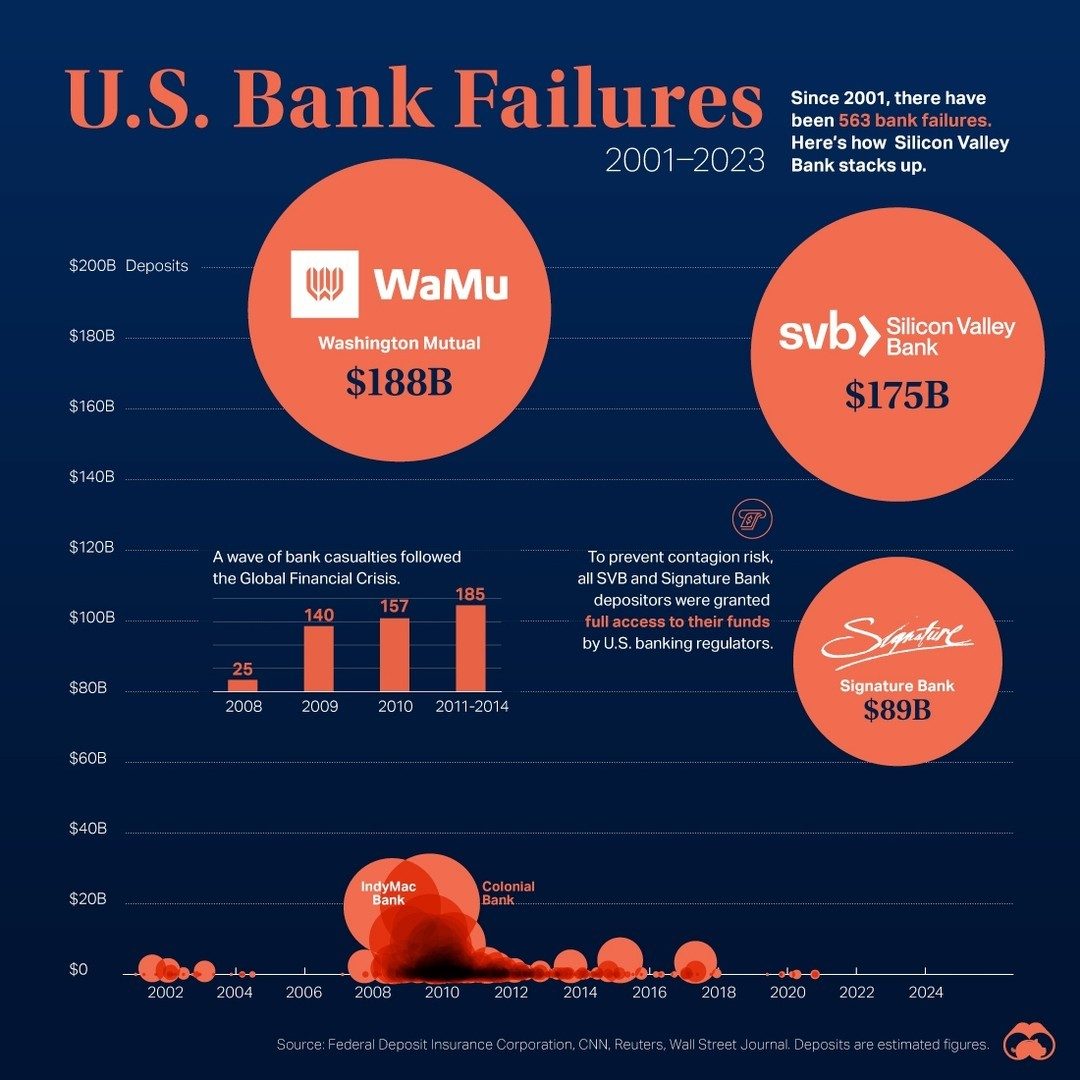
Since 2001, the U.S. has witnessed 563 bank failures. The most notable among these include Washington Mutual, which failed with $188 billion in deposits; Silicon Valley Bank, which failed with $175 billion in deposits; and Signature Bank, which had $89 billion in deposits at the time of its collapse.
Major Bank Failures
Washington Mutual (WaMu) - $188B
Washington Mutual was once one of the largest savings and loan associations in the United States. It was a casualty of the 2008 financial crisis, which led to its failure in 2008. The bank was taken over by the Federal Deposit Insurance Corporation (FDIC) and subsequently sold to JPMorgan Chase.
Silicon Valley Bank (SVB) - $175B
More recently, Silicon Valley Bank, a prominent institution known for serving startups and venture capital firms, crumpled. This failure was particularly alarming due to its significant impact on the tech industry. The sudden collapse of Silicon Valley Bank underscored the vulnerabilities in the banking sector and the need for robust regulatory measures.
Signature Bank - $89B
Following Silicon Valley Bank, Signature Bank, which was heavily involved in the crypto industry, also folded. This failure was notable because it was the third-largest bank casualty in U.S. history, underscoring the wide-reaching impact of recent banking disruptions.
Response to Prevent Contagion Risk
To mitigate the fallout from these failures, U.S. banking regulators took emergency measures. Depositors and Signature Bank were granted full access to their funds, which was a crucial step in preventing a wider contagion risk. This intervention aimed to restore confidence in the banking system and safeguard depositors' interests.
Practical Tips
For Investors
- Diversify Your Portfolio: Avoid concentrating your investments in a single bank. Diversifying across multiple financial institutions can help mitigate risks.
- Monitor Regulatory Announcements: Stay informed about regulatory actions and announcements. This can provide early warnings of potential risks or opportunities.
- Review Bank Ratings: Regularly check the financial health and ratings of the banks you are dealing with. This can offer insights into their stability and risk profile.
For Depositors
- Stay Within FDIC Limits: Ensure your deposits are within the limits covered by the Federal Deposit Insurance Corporation (FDIC). This can protect your funds up to $250,000 per depositor, per insured bank, for each account ownership category.
- Spread Your Deposits: Consider spreading your deposits across multiple banks to reduce the risk of loss in case of a bank failure.
- Check Bank Safety Ratings: Use tools like the FDIC's BankFind tool and other financial health indicators to assess the safety of your bank.
Important Takeaways
- Bank Failures Are Not Uncommon: There have been numerous bank failures since 2001, and while they are rare, they do occur.
- Impact is Significant: The failures of banks like Washington Mutual, Silicon Valley Bank, and Signature Bank highlight the potential economic and financial impact of such events.
- Regulatory Responses: Emergency measures taken by U.S. banking regulators play a crucial role in preventing contagion risk and restoring confidence in the banking system.
Conclusion
Understanding the historical context, the significant bank failures, and the regulatory responses is essential for navigating the current banking landscape. By taking proactive steps, investors and depositors can protect their assets and stay informed about potential risks. The recent failures of Silicon Valley Bank, Signature Bank, and Silvergate Capital serve as a reminder of the importance of vigilance and preparedness in the ever-changing financial world. Keep an eye on regulatory announcements, diversify your investments, and stay informed to safeguard your financial interests.
Watch the Reel
Questions readers ask
What caused the recent failures of Silicon Valley Bank, Signature Bank, and Silvergate Capital?
The failures were primarily due to a combination of factors including poor risk management, liquidity issues, and the Silicon Valley Bank's collapse in particular was exacerbated by a bank run. Silicon Valley Bank was especially vulnerable due to its high concentration of tech industry clients, which were heavily impacted by the economic downturns such as the 2022 r/WallStreetBets surge.
How do recent bank failures impact the broader economy?
Recent bank failures can lead to a loss of confidence in the banking system, causing businesses and consumers to withdraw their funds. This can lead to a credit crunch, where banks reduce lending, stifling economic growth. Additionally, the economic fallout from bank failures can result in job losses and reduced consumer spending.
What is being done to prevent contagious risks in the banking system?
Regulators have implemented measures such as deposit insurance, stress tests, and capital requirements to prevent contagious risks. These actions aim to ensure that banks maintain adequate liquidity and capital reserves to withstand economic shocks, thereby minimizing the risk of further failures.
What is the significance of the historical context of bank failures in understanding the recent collapses?
Examining past bank failures, such as those during the Great Depression or the 2008 financial crisis, provides insights into the root causes and patterns of these events. This historical perspective helps policymakers and regulators implement effective measures to mitigate current and future risks.
What protections are in place for bank depositors in the event of a bank failure?
In the U.S., the Federal Deposit Insurance Corporation (FDIC) provides deposit insurance up to $250,000 per depositor, per insured bank, for each account ownership category. This protection helps safeguard depositors' funds in the event of a bank failure, promoting stability and confidence in the banking system.
What role do bank regulators play in preventing and managing bank failures?
Bank regulators, such as the Federal Reserve and the FDIC, oversee the banking system to ensure compliance with regulations and to assess the financial health of banks. They conduct regular examinations, enforce capital and liquidity requirements, and take action when necessary to prevent and manage bank failures.
What is the significance of the recent bank failures in Washington, 2023, such as Silicon Valley Bank 2023, is this indicative of a broader trend?
The recent bank failures in Washington, including Silicon Valley Bank 2023, are indicative of a broader trend where banks are facing challenges due to rapid interest rate hikes, and the economy. These failures underscore the need for enhanced scrutiny and risk management practices to prevent further disruptions in the banking system.
Recent articles
Fresh deep dives from the latest Reels we unpacked.




Comments
Be the first to comment.