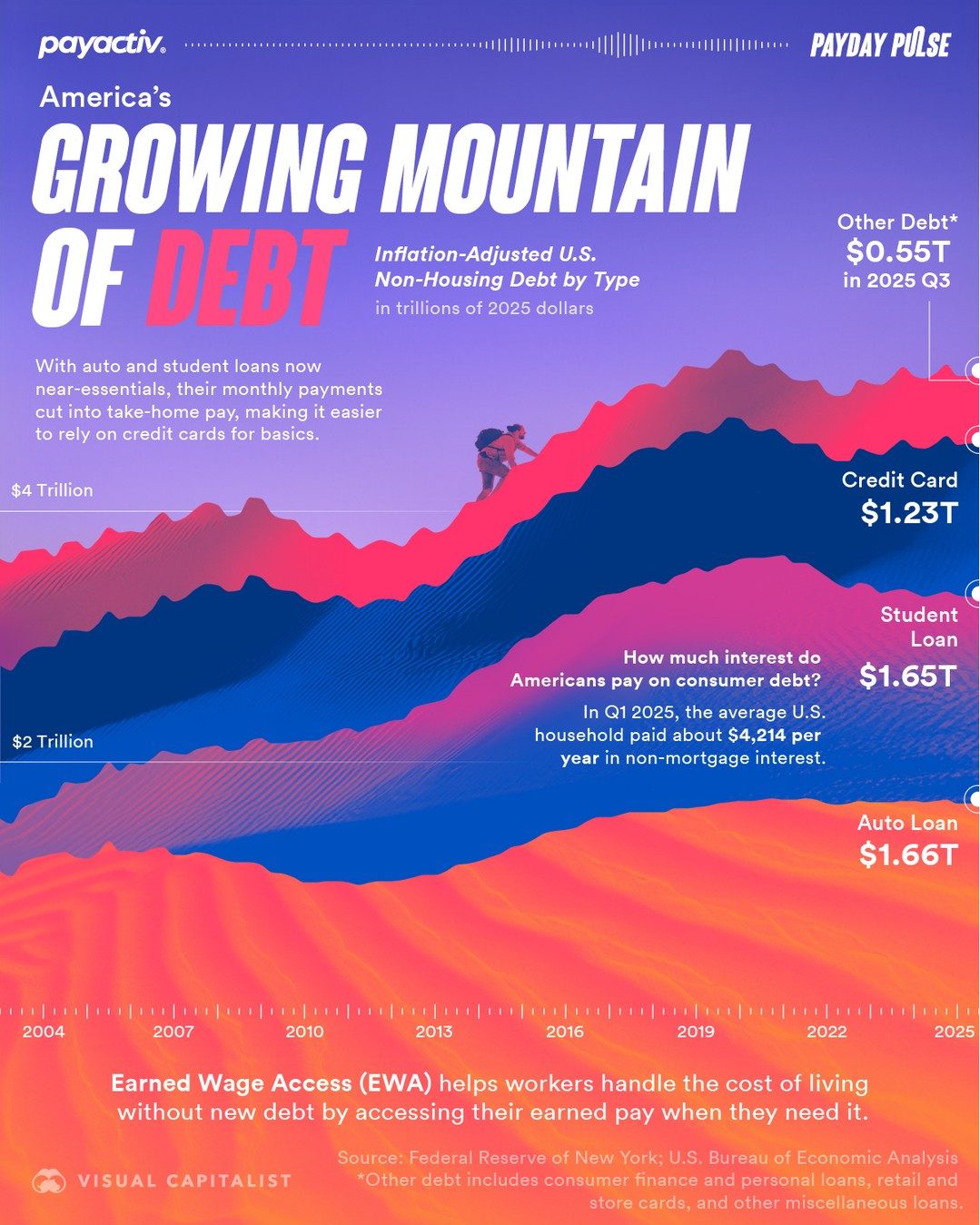
America’s Growing Mountain of Debt
Americans are facing a towering mountain of debt, with auto and student loans being significant contributors. This financial strain has led many to seek alternative solutions, such as earned wage access (EWA), to manage their bills and living expenses. Understanding the scale and impact of this debt is crucial for anyone looking to navigate today's economic landscape.
Why This Matters
The rising debt levels in the U.S. are not just numbers on a spreadsheet; they represent real financial stress for millions of Americans. High levels of debt, particularly in categories like auto loans and student loans, can significantly impact take-home pay, making it difficult for individuals and families to cover basic living expenses. This financial pressure can lead to increased reliance on credit cards and other forms of debt, creating a vicious cycle that is hard to escape.
Understanding the Debt Landscape
The Scope of Non-Housing Debt
Non-housing debt in the U.S. includes various types of loans such as credit card debt, student loans, auto loans, and other forms of debt. These categories have seen significant growth over the past two decades. According to data from the Federal Reserve Bank of New York and the U.S. Bureau of Economic Analysis, the inflation-adjusted value of non-housing debt has risen steadily from around $4 trillion in 2004 to projected levels in 2025. Key categories include:
- Credit Card Debt: Estimated to be around $1.23 trillion in 2025.
- Student Loan Debt: Projected to reach approximately $1.65 trillion by 2025.
- Auto Loan Debt: Expected to hit around $1.66 trillion by 2025.
- Other Debt: This category includes various types of debt and is expected to be around $0.55 trillion in 2025.
The Impact on Take-Home Pay
The monthly payments for auto and student loans have become near-essentials for many Americans, significantly cutting into their take-home pay. This financial strain makes it easier for individuals to rely on credit cards to cover basic expenses, further exacerbating the debt problem. The average U.S. household is projected to pay about $4,214 per year in non-mortgage interest by Q1 2025, highlighting the heavy burden of consumer debt.
Earned Wage Access (EWA) as a Solution
Earned Wage Access (EWA) is an innovative solution gaining traction as a way for workers to manage their living expenses without incurring new debt. EWA allows employees to access their earned wages before payday, providing a financial lifeline for those struggling with immediate expenses.
How EWA Works
EWA programs enable workers to access a portion of their earned wages before the scheduled payday. This access is typically provided through a mobile app or other digital platforms, making it convenient and easy to use. The key features of EWA include:
- Immediate Access: Employees can access their earned wages as soon as they need them, reducing the reliance on credit cards or payday loans.
- No Interest or Fees: Unlike traditional loans, EWA programs do not charge interest or fees, making it a cost-effective solution for managing short-term financial needs.
- Financial Stability: By providing immediate access to earned wages, EWA helps workers maintain financial stability and avoid the cycle of debt that can arise from relying on credit cards for basic expenses.
Benefits of EWA
The benefits of EWA extend beyond immediate financial relief. Employees who have access to EWA programs report reduced financial stress, improved job satisfaction, and better overall well-being. For employers, offering EWA as a benefit can lead to increased employee retention, productivity, and a more positive work environment.
Practical Tips for Managing Debt
Managing debt effectively requires a combination of financial planning, budgeting, and leveraging available resources. Here are some practical tips to help navigate the current debt landscape:
Assess Your Debt
Start by assessing your current debt situation. Identify the types of debt you have, their interest rates, and minimum monthly payments. This will give you a clear picture of your financial obligations and help you prioritize your repayment strategy.
Create a Budget
Developing a budget is essential for managing debt. Track your income and expenses to understand where your money is going each month. Look for areas where you can cut back on non-essential spending and allocate more funds towards debt repayment.
Prioritize High-Interest Debt
Focus on paying off high-interest debt first, such as credit card debt. High-interest debt can quickly accumulate, making it more challenging to manage over time. Prioritizing these payments can help you save money on interest and reduce your overall debt burden faster.
Consider Debt Consolidation
If you have multiple high-interest debts, consider consolidating them into a single loan with a lower interest rate. Debt consolidation can simplify your repayment process, reduce monthly payments, and save you money on interest over time.
Explore Earned Wage Access
If immediate financial relief is needed, explore EWA programs. These programs can provide the necessary funds to cover short-term expenses without incurring new debt. Look for reputable EWA providers and ensure that the program aligns with your financial needs and goals.
Important Takeaways
The rising mountain of debt in the U.S. is a significant challenge for many Americans, particularly in the categories of auto and student loans. This financial strain can make it difficult to manage living expenses and maintain financial stability. By understanding the scope of non-housing debt and exploring solutions like Earned Wage Access, individuals and families can better navigate their financial challenges. Additionally, practical tips such as assessing debt, creating a budget, prioritizing high-interest debt, and considering debt consolidation can provide a roadmap for managing debt more effectively.
Conclusion
Debt is a multifaceted issue that impacts millions of Americans. By staying informed about the current debt trends and leveraging available resources, it is possible to manage financial challenges more effectively. Whether through traditional debt management strategies or innovative solutions like Earned Wage Access, taking proactive steps can help individuals and families achieve greater financial stability and well-being.
Watch the Reel
Questions readers ask
How significant is the rise in auto and student loans in America's overall debt crisis?
Auto and student loans have become major contributors to America's debt crisis. Federal Reserve data indicates that non-housing debt, which includes these loans, has been steadily increasing. This rise is a critical factor in the overall debt burden faced by Americans, impacting their financial health and stability.
How do auto loans affect Americans' financial well-being?
Auto loans can significantly impact Americans' financial well-being by reducing their take-home pay. High monthly payments can strain budgets, making it difficult to cover basic living expenses. This financial pressure often leads individuals to rely more heavily on credit cards and other forms of debt, exacerbating their debt-to-income ratio.
What are the main reasons behind the increase in student loan debt?
The increase in student loan debt can be attributed to several factors, including rising tuition costs, increased enrollment in higher education, and changes in loan policies that make it easier for students to borrow. This financial stress can persist long after graduation, affecting graduates' ability to meet living expenses and save for the future.
How does the reliance on credit cards increase due to auto and student loan debt?
Many Americans, burdened by auto and student loan debt, find it difficult to meet their monthly expenses. This financial strain often leads them to rely more on credit cards, which can result in a cycle of high-interest debt. This reliance can further exacerbate their financial struggles, making it even harder to manage their overall debt.
What is Earned Wage Access (EWA) and how can it help manage debt?
Earned Wage Access (EWA) is a financial service that allows employees to access a portion of their earned wages before payday. This can be a useful tool for managing debt, as it provides immediate access to funds needed for living expenses and bill payments, reducing the need to rely on high-interest loans or credit cards.
What are the long-term financial implications of high levels of auto and student loan debt?
High levels of auto and student loan debt can have long-term financial implications, including delayed homeownership, reduced savings, and decreased retirement contributions. This financial burden can also impact credit scores, making it more challenging to secure favorable terms for future loans, further complicating financial management.
How does the debt-to-income ratio affect Americans' financial stability?
A high debt-to-income ratio means that a significant portion of an individual's income is allocated to debt repayment, leaving less for other living expenses. This can lead to financial instability, as unexpected costs or economic downturns can push households into a precarious financial situation, often necessitating the use of additional credit to stay afloat.
Recent articles
Fresh deep dives from the latest Reels we unpacked.




Comments
Be the first to comment.