Immigrant populations and their legal statuses represent a significant global issue with far-reaching implications. Understanding the distribution of undocumented immigrants in various countries can provide valuable context for discussions around immigration policies and their consequences.
Why This Matters
The legal status of immigrants affects their access to various rights and services, including healthcare, education, and employment opportunities. It also impacts the broader socioeconomic landscape of the countries involved. Not only does this issue frame political debates, but it also influences public opinion and shapes the policies of nations around the world.
Immigration Statistics by Country
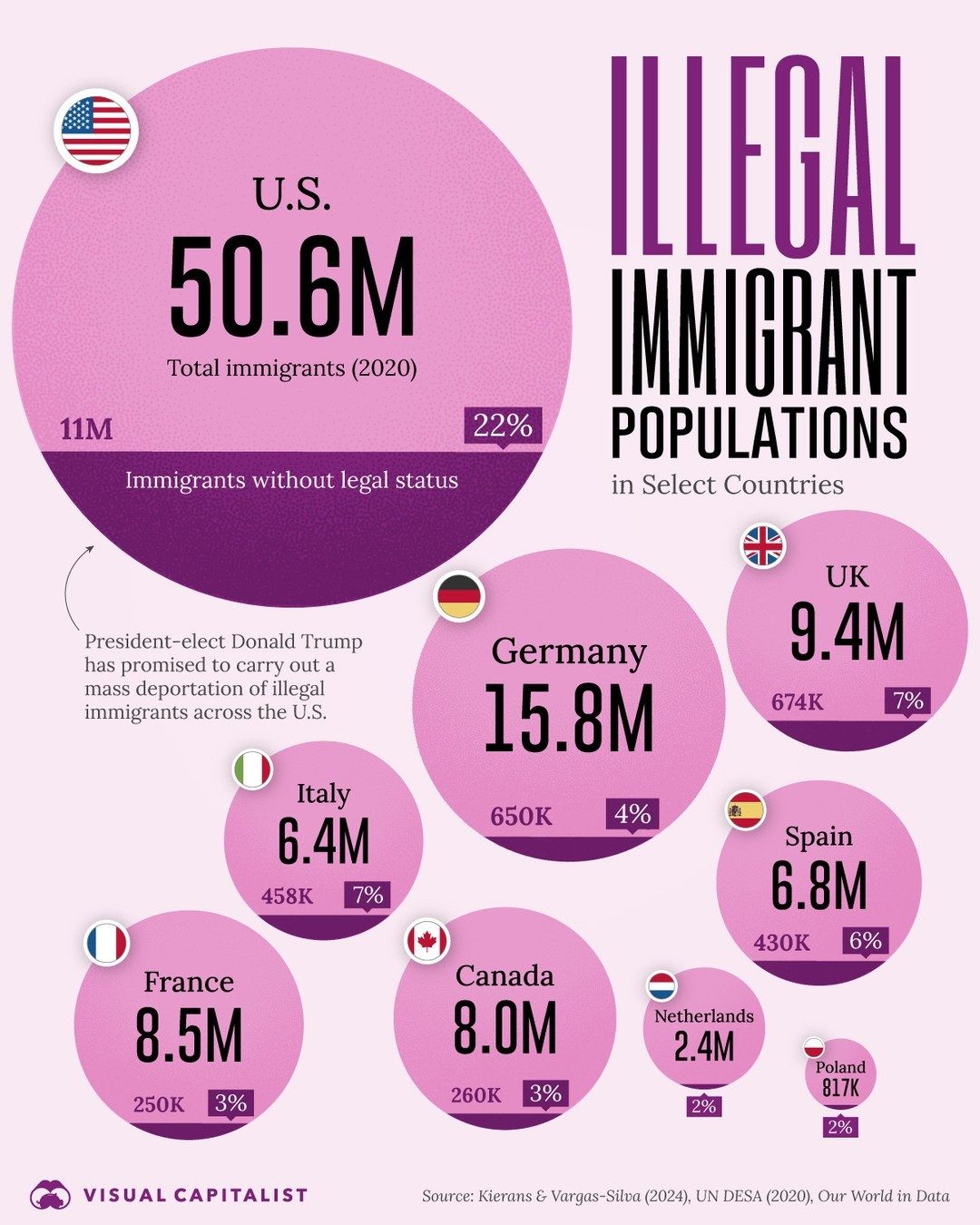
The data from Our World in Data, as presented, provides a snapshot of the immigrant populations and the percentages of those without legal status in nine developed countries. Here’s a breakdown of the key statistics.
United States
The United States has one of the largest immigrant populations, with approximately 50.6 million immigrants as of 2020. Of these, 22%, or 11 million people, lack legal status. This significant number of undocumented immigrants has been a focal point of political debates, particularly in the context of statements like President-elect Donald Trump’s promise to carry out a mass deportation.
Europe
In Europe, the numbers of undocumented immigrants vary considerably:
- Germany: With 15.8 million immigrants, Germany has 650,000 undocumented immigrants, representing about 4% of the total immigrant population.
- United Kingdom: The UK's immigrant population stands at 9.4 million, with 674,000 undocumented immigrants, making up approximately 7.2% of the total immigrant population.
- Italy: Italy has 817,000 undocumented immigrants out of a total of 5.1 million immigrants, which is about 16%.
- Spain: Spain hosts 6.8 million immigrants, with 430,000 lacking legal status, or about 6.3%.
- France: France's immigrant population is 8.5 million, of which 250,000 are undocumented, around 3%.
- Netherlands: In the Netherlands, 2.4 million immigrants live with 260,000 lacking legal status, which is about 11%.
- Poland: Poland has a significantly smaller immigrant population with about 2.4 million, and 2% of those, or around 48,000, are undocumented.
Canada
Canada’s immigrant population is 8.0 million, with 260,000 lacking legal status. Comparatively, this represents about 3.2% of the total immigrant population in Canada.
Contextualizing the Data
These statistics highlight the diversity in the distribution of undocumented immigrants across different countries. While the U.S. has the largest number of undocumented immigrants, the percentage is significantly higher in Italy and slightly higher in the Netherlands. This variation underscores the different contexts and policies that shape immigration dynamics in each country.
Practical Tips
Knowing these numbers can help in understanding the broader context of immigration policies and their impact. For those working with or advocating for immigrant populations, these statistics can serve as a starting point for more detailed analyses and targeted interventions.
Advocacy and Policy
Advocates can use these statistics to underscore the need for comprehensive immigration reform that addresses the status of undocumented immigrants. For instance, in the U.S., the high number of undocumented immigrants could be a rallying point for policies that offer pathways to legal status.
Research and Analysis
For researchers, these figures can provide a basis for deeper studies on the socio-economic impacts of undocumented immigration. This includes examining how undocumented status affects access to services, employment, and social integration.
Media and Public Discourse
Journalists and media outlets can use this data to frame discussions around immigration in a more nuanced manner, highlighting the differences and similarities across countries. This can help to dispel myths and misconceptions and promote a more informed public discourse.
Important Takeaways
Immigration statistics provide a critical lens through which to view the complexities of global immigration. Understanding the numbers and their implications can help in crafting more effective policies and initiatives that address the needs of immigrant populations, particularly those without legal status.
Conclusion
The data on undocumented immigrants in various countries offers a comprehensive view of a complex issue. By examining the numbers and their context, we gain a better understanding of the challenges and opportunities presented by immigration policy. This knowledge can guide more informed discussions and actions, ultimately leading to better outcomes for immigrant populations and the societies they inhabit.
Watch the Reel
Questions readers ask
What are the top countries with the highest number of undocumented immigrants?
The top countries with the largest populations of undocumented immigrants include the United States, Germany, and Italy. These countries, along with others like France and Spain, have significant immigrant populations, some of whom lack legal status.
How does the legal status of immigrants affect their access to services?
Undocumented immigrants often face limited access to essential services such as healthcare, employment opportunities, and other public benefits. This lack of access can significantly impact their quality of life and ability to integrate into society.
What are some recent trends in immigration to Europe?
Immigration trends in Europe show a mix of arrivals from various regions. Countries like Germany and Italy have seen fluctuations in immigrant populations, reflecting global events and policy changes. Spain and France also have notable immigrant populations, contributing to the diverse landscape of European immigration.
How do undocumented immigrants in the USA compare to those in other top countries?
The United States has one of the largest populations of undocumented immigrants globally. However, when comparing the proportion of undocumented immigrants to the total population, other countries like Germany and Italy also have significant numbers, each with unique immigration trends and policies.
What impact do undocumented immigrants have on the broader socioeconomic landscape?
The presence of undocumented immigrants can influence a country's economy, labor market, and social services. Their limited access to rights and services can create challenges, but they also contribute to the workforce and cultural diversity.
How can understanding global immigration data help shape policy discussions?
Global immigration data provides a comprehensive view of the distribution and trends of undocumented immigrants. This information can inform policy debates, helping lawmakers and the public understand the complexities of immigration and the potential consequences of policy changes.
What are some of the challenges faced by immigrants without legal status in countries like Canada?
Undocumented immigrants in Canada face various challenges, including limited access to healthcare, employment opportunities, and other public services. Additionally, the constant threat of deportation can create significant stress and uncertainty, affecting their ability to settle and integrate.
Related deep dives
Similar reads based on topic and creator.


Recent articles
Fresh deep dives from the latest Reels we unpacked.




Comments
Be the first to comment.