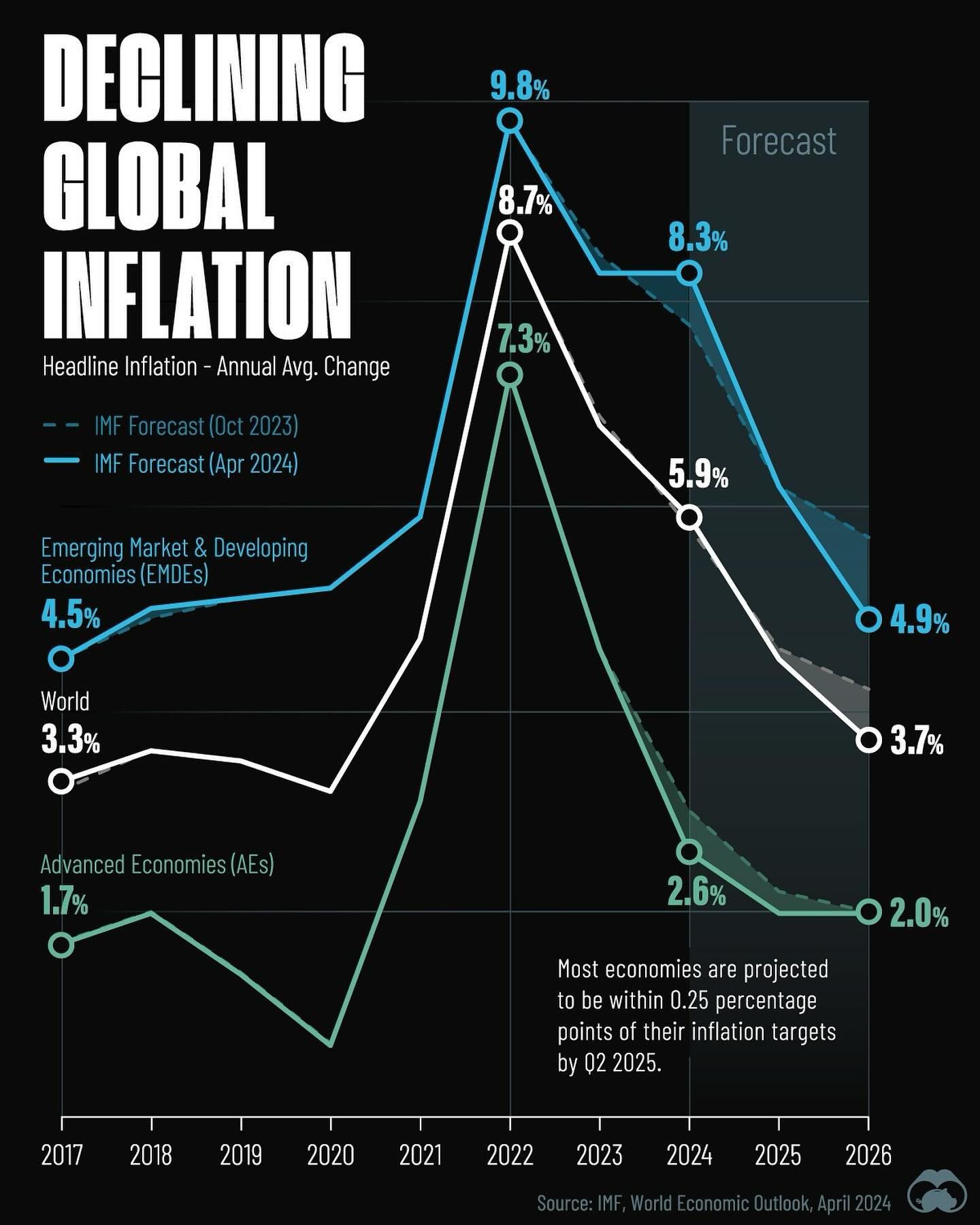
Global Inflation Forecast
Global inflation, a critical economic indicator, is projected to experience a notable decline over the coming years. According to the latest projections from the International Monetary Fund (IMF), after peaking at 8.7% in 2022, global inflation is expected to decrease to 5.9% by 2024. This forecast provides valuable insights into the economic landscape, highlighting a gradual reduction in price pressures while the global economy shows signs of resilience.
Why This Matters
Understanding global inflation trends is crucial for investors, policymakers, and consumers alike. Inflation directly impacts purchasing power, investment strategies, and monetary policies. The IMF's projections offer a roadmap for navigating economic uncertainties, helping stakeholders make informed decisions amidst a dynamic global economy.
Main Discussion
IMF Projections Overview
The IMF's forecasts, updated in October 2023 and April 2024, provide a comprehensive view of global inflation trends. The key projections include:
- Global Inflation: The overall global inflation rate is expected to decline steadily from its 2022 peak, reaching 5.9% by 2024 and continuing to fall thereafter.
- Emerging Market and Developing Economies (EMDEs): These economies are projected to experience a significant decrease in inflation, reflecting efforts to stabilize their economies.
- Advanced Economies (AEs): Advanced economies, while also seeing a decline, may exhibit a slower rate of decrease compared to EMDEs.
Regional Variations
The inflation outlook varies across different regions, reflecting diverse economic conditions and policies.
- Emerging Market and Developing Economies (EMDEs): Higher inflation in these regions is attributed to factors such as volatile commodity prices and currency fluctuations. However, the IMF anticipates a marked reduction in inflation rates, driven by policy interventions and structural reforms.
- Advanced Economies (AEs): In contrast, advanced economies are likely to see a more gradual decline in inflation. This trend is influenced by stable economic policies, lower commodity dependence, and robust financial systems.
Factors Influencing the Outlook
Several factors contribute to the projected decline in global inflation:
- Monetary Policies: Central banks worldwide are implementing measures to control inflation, including interest rate adjustments and quantitative easing. These policies aim to stabilize prices and support economic growth.
- Energy Prices: Fluctuations in energy prices significantly impact inflation rates. The IMF's projections consider potential price adjustments in the energy sector, which could either mitigate or exacerbate inflationary pressures.
- Global Growth: The resilience of global growth plays a pivotal role in shaping inflation trends. Economic stability and growth prospects can either amplify or mitigate inflationary pressures.
Practical Tips
For individuals and businesses, navigating the complex landscape of global inflation requires strategic planning. Here are some practical tips:
- Diversify Investments: Spread investments across various asset classes to hedge against inflation risks. This approach can help mitigate the impact of inflation on your portfolio.
- Monitor Policies: Stay informed about monetary and fiscal policies in your region and globally. Understanding policy changes can help you anticipate market movements and adjust your strategies accordingly.
- Cost Management: For businesses, effective cost management is crucial. Implement measures to reduce operational expenses and improve efficiency, thereby mitigating the impact of inflation on profitability.
- Financial Planning: Regularly review and update your financial plans to account for inflation. Consider inflation-adjusted savings goals and investment targets.
Important Takeaways
- Gradual Decline: Global inflation is expected to decline gradually, reaching 5.9% by 2024.
- Regional Differences: Inflation trends vary significantly across different regions, with EMDEs experiencing a more pronounced decline than AEs.
- Policy Impact: Monetary and fiscal policies play a crucial role in shaping inflation trends. Central banks' actions to control inflation are likely to influence economic stability.
- Energy Prices: Fluctuations in energy prices will continue to impact inflation rates, requiring close monitoring.
Conclusion
The IMF's projections for global inflation from 2023 to 2026 offer a clear view of the economic landscape, highlighting a slow but steady decline in inflation rates. This trend, amidst resilient global growth, presents both opportunities and challenges for stakeholders. By understanding these projections and adapting strategies accordingly, individuals and businesses can navigate the complexities of the global economy more effectively. Staying informed about monetary policies, energy prices, and regional variations will be crucial in managing the impact of inflation on your investments and financial well-being.
Watch the Reel
Questions readers ask
Why is the IMF's inflation forecast important for consumers?
The IMF's inflation forecast helps consumers understand how their purchasing power might change. A decline in global inflation rates means that goods and services may become more affordable. Consumers should plan their spending and saving habits based on these projections to mitigate the effects of inflation.
What are the implications of the IMF's forecast for investors?
The IMF's inflation forecast is crucial for investors as it influences the returns and risks associated with their investments. Lower inflation can lead to more stable investment returns, particularly in fixed-income investments. Investors can adjust their portfolios to take advantage of potential growth opportunities in areas less affected by inflation.
How does the IMF's 2024 forecast impact developing economies?
Developing economies often face higher inflation rates due to factors like exchange rate fluctuations and supply chain disruptions. A global decline in inflation to 5.9% by 2024 could provide relief for developing economies, allowing them to focus on growth and stability rather than managing high price pressures.
What role does the IMF play in global economic projections?
The IMF is a key player in global economic projections, providing forecasts that influence policymaking and economic strategies. Its reports, such as the 2024 forecast, offer insights into inflation trends, economic stability, and emerging risks, helping governments and international organizations make informed decisions.
What factors contribute to the projected decrease in global inflation?
Several factors contribute to the projected decrease in global inflation. These factors include declining energy prices, improved supply chain efficiencies, and central bank policies aimed at stabilizing prices. Moreover, the IMF's forecast considers global economic conditions, such as reduced demand pressures and stabilization in financial markets.
How can policymakers use the IMF's 2024 inflation forecast?
Policymakers can use the IMF's 2024 inflation forecast to develop effective monetary and fiscal policies. By anticipating a decline in inflation, they can adjust interest rates, implement fiscal measures, and design social welfare programs aimed at maintaining economic stability and growth. This proactive approach can help mitigate potential economic disruptions and ensure a smoother transition to a more stable economy.
What are the potential challenges in achieving the IMF's 2024 inflation target?
Achieving the IMF's 2024 inflation target may face several challenges, including geopolitical tensions, sudden shifts in commodity prices, and unforeseen economic shocks. Additionally, the actual impact of monetary and fiscal policies on global price pressures can vary, making it difficult to predict precise outcomes. Therefore, continuous monitoring and adaptability in policy-making will be essential to navigate these challenges and meet the projected inflation rate.
Recent articles
Fresh deep dives from the latest Reels we unpacked.




Comments
Be the first to comment.