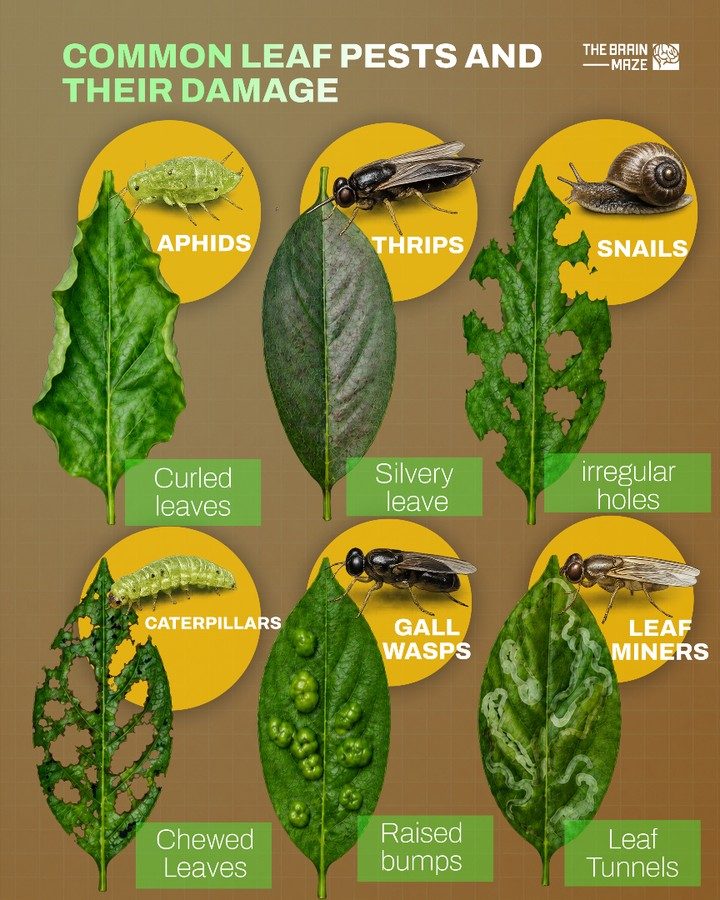
Leaf Pest Identification
Pests cause noticeable damage to plant leaves, which can help identify the invader. Understanding the signs of these pests is crucial for plant health and preventing severe infestations. This guide will walk you through common leaf pests and the characteristic damage they cause.
Context
Leaf damage is a key indicator of pest infestation. Recognizing the signs early can help implement effective control measures, preventing the pests from spreading and causing extensive damage to your plants. By understanding the distinctive damage patterns, you can tailor your pest management strategies more effectively.
Main discussion
Aphids
Aphids are small, soft-bodied insects that feed on plant sap. Their feeding activity causes leaves to curl and deform. This curling occurs as the aphids suck the sap, leading to a twisted and misshapen appearance. Aphids can also excrete a sticky substance called honeydew, which can attract other pests like ants and lead to the growth of sooty mold on the leaves.
Thrips
Thrips are tiny, slender insects that feed on plant tissue. Their feeding damage often appears as silvery or scarred patches on the leaves. This is due to the thrips scraping the surface of the leaf, damaging the chlorophyll and creating a white, silvery look. Thrips can also cause leaf discoloration, reduced growth, and distorted flowers. Regular monitoring and appropriate pesticide use can help control thrips.
Snails and Caterpillars
Snails and caterpillars are both chewers, meaning they feed by biting off chunks of the leaf. This results in irregular holes and ragged edges. Snails are particularly active during the night, and you might find them hiding under leaves or in moist areas during the day. Caterpillars, on the other hand, are often seen during the day and can be controlled by introducing natural predators or using organic pesticides.
Gall Wasps
Gall wasps trigger the formation of abnormal growths or raised bumps on leaves. These galls are the plant's response to the wasp larvae feeding on the leaf tissue. The galls can vary in size and shape and are often found on the underside of the leaf. While galls are unsightly, they generally do not cause significant harm to the plant. However, heavy infestations can weaken the plant and make it more susceptible to other diseases and pests.
Leaf Miners
Leaf miners are larvae of small flies or moths that tunnel within the leaf tissues, leaving winding, serpentine trails. These trails are often visible on the surface of the leaf as light-colored or brownish lines. Leaf miners can cause significant damage by reducing the leaf's photosynthetic area and weakening the plant. Controlling leaf miners can be challenging, as the larvae are protected within the leaf tissue. Regularly inspecting and removing affected leaves can help manage infestations.
Practical tips
Early Detection
Regularly inspect your plants for signs of pest damage. Early detection is key to preventing severe infestations. Look for unusual spots, discoloration, or physical damage. Act quickly to implement control measures.
Identify the Pest
Use the characteristic damage patterns to identify the pest. Knowing the type of pest will help you choose the most effective control method. The sooner you identify the pest, the easier it will be to manage.
Natural Predators
Encourage natural predators, such as ladybugs, lacewings, and birds, to help control pest populations. These predators feed on various pests, keeping their numbers in check.
Organic Pesticides
Use organic pesticides as a last resort. Many organic options, like insecticidal soaps and neem oil, can be effective against a range of pests without harming beneficial insects or the environment.
Physical Barriers
Use physical barriers, such as row covers and netting, to protect your plants from pests. These barriers create a physical barrier that prevents pests from reaching the leaves.
Prune and Dispose
Remove and dispose of heavily infested leaves to reduce the pest population and prevent the spread of infestation to other parts of the plant. Always dispose of infested plant material in a sealed bag to prevent pests from spreading to other plants.
Important takeaways
Early detection of leaf pests is crucial for controlling infestations and protecting plant health. Different pests cause distinctive types of damage, making it possible to identify the culprit and implement appropriate control measures. By regularly monitoring your plants and using a combination of natural predators, organic pesticides, and physical barriers, you can effectively manage leaf pests and maintain healthy, vibrant plants.
Conclusion
Identifying leaf pests early is essential for maintaining plant health and preventing severe infestations. By recognizing the characteristic damage patterns caused by aphids, thrips, snails, caterpillars, gall wasps, and leaf miners, you can take targeted actions to control these pests. Regular monitoring, using natural predators, and implementing organic control methods can help keep your plants healthy and thriving.
Watch the Reel
Questions readers ask
How can I distinguish between aphid damage and other pests that cause leaf curling?
Aphid damage typically results in leaves that curl inward and become distorted. To confirm, look for small, soft-bodied insects on the undersides of leaves or on new growth. Other pests that cause curling, like leaf-rollers, often create visible webs or silken tubes around the curled leaves. If you see these, you might be dealing with a different type of pest.
What do silvery patches on leaves indicate, and which pests are likely responsible?
Silvery patches on leaves are often a sign of thrips infestation. These tiny, slender pests scratch the surface of leaves to feed, creating a characteristic silvery or streaked appearance. Look for small, dark specks moving along the leaf surface or in the flowers to confirm the presence of thrips.
How can I identify if caterpillars are the cause of holes in my plant leaves?
If you notice irregular or jagged holes in leaves, caterpillars are likely the culprits. These pests chew through the leaf tissue, leaving behind distinctive damage. To confirm, look for caterpillars on the undersides of leaves or on the plant's stems. You might also find caterpillar droppings, known as frass, on the leaves or surrounding soil.
What are the signs of a wasp gall infestation on leaves?
Wasp galls appear as abnormal growths or raised bumps on leaves, often round with a distinct shape. These galls are caused by wasps laying their eggs in the plant tissue, which triggers the plant to form a protective gall around the developing eggs. The presence of these galls indicates an infestation, and you may also notice small wasps emerging from the galls as they mature.
How can I tell if leaf miners are damaging my plant leaves?
Leaf miners create visible, winding trails or blotches within the leaf tissue. These trails are usually brown or yellow and indicate the presence of leaf miner larvae feeding between the upper and lower leaf surfaces. If you notice these trails, you might also find small, yellow or white, worm-like larvae within the leaves. Leaf miners often affect young, tender leaves, so inspect new growth carefully.
What does snail damage on leaves look like and how can I control it?
Snail damage on leaves appears as irregular, jagged holes or large, unevenly torn sections. Snails feed at night, leaving a slimy trail behind. To control snails, use physical barriers like copper tape or diatomaceous earth, or set up traps with beer or yeast mixtures. Regularly inspect your plants, especially at night, to monitor and manage snail populations.
Why is it important to act quickly when you notice leaf damage patterns?
Acting quickly when you notice leaf damage patterns is crucial for preventing the spread of pests and minimizing damage to your plants. Early detection allows you to implement targeted control measures, reducing the need for harsh chemicals. By addressing the issue promptly, you can protect your plants' overall health and prevent severe infestations that can be more difficult and costly to manage.
Recent articles
Fresh deep dives from the latest Reels we unpacked.




Comments
Be the first to comment.