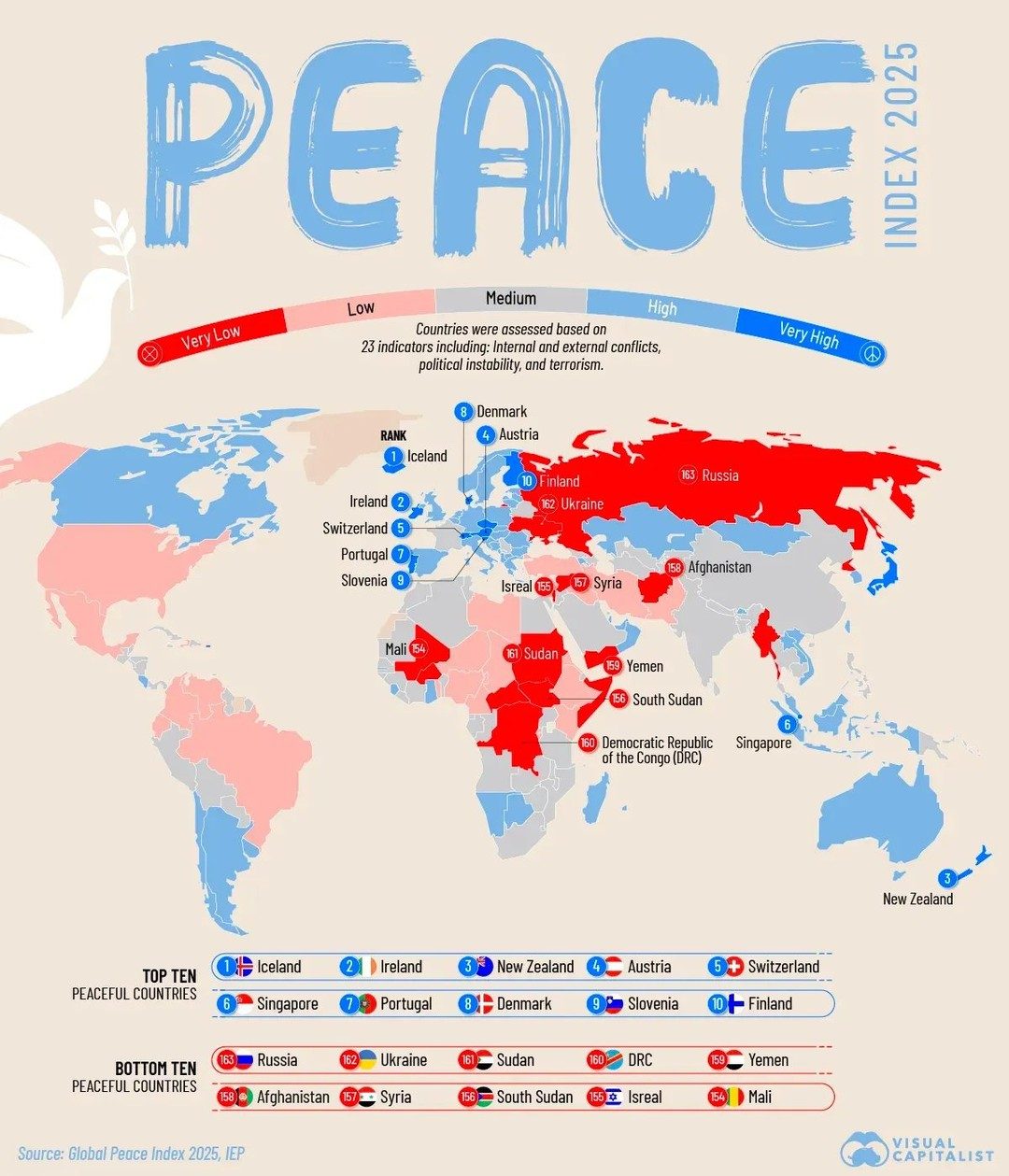
Global Peace Index 2025: A World in Flux
Despite Iceland's top position, global peace is declining. The number of state-based conflicts has hit its highest level since World War II. The Global Peace Index (GPI) 2025, developed by the Institute for Economics & Peace, offers a comprehensive view of global peace trends. The index assesses 163 countries based on 23 qualitative and quantitative indicators, providing a more nuanced understanding of global peace.
Context: Why This Matters
The GPI is more than just a ranking; it's a vital tool for understanding the state of the world and the factors driving peace and conflict. By delving into the GPI 2025, we can gain insights into the geopolitical landscape, identify trends, and better comprehend the complexities of global peace.
Main Discussion
Understanding the Global Peace Index
The Global Peace Index is a comprehensive effort to quantify and compare the levels of peace and conflict in countries worldwide. The index evaluates three key domains: the level of safety and security in society, the extent of domestic and international conflict, and the degree of militarization.
The Top Ten Most Peaceful Countries
Iceland, renowned for its pristine landscapes and high standard of living, retains its position as the most peaceful country in the world. Its commitment to diplomatic solutions and lack of an army contribute significantly to its high ranking. Denmark, Austria, and Finland follow closely, each with their unique approaches to maintaining social cohesion and security.
The Bottom Ten Most Peaceful Countries
On the other end of the spectrum, countries like Afghanistan and Yemen grapple with the devastating effects of ongoing conflicts, political instability, and terrorism. The Democratic Republic of the Congo (DRC), Syria, and South Sudan also face significant challenges, highlighting the urgent need for international intervention and support.
The Global Trend: A World in Conflict
While Iceland's achievements are commendable, the overall global trend is concerning. The GPI 2025 highlights a disturbing increase in the number and intensity of conflicts worldwide. This trend is driven by various factors, including political instability, economic disparities, and climate change.
Practical Tips for Understanding Global Peace
Global peace is a complex issue, but there are several ways to better understand and engage with it. Here are some practical tips:
- Stay Informed: Follow reliable sources of information on global peace and conflict, such as the Institute for Economics & Peace and reputable news outlets.
- Engage Locally: Participate in local initiatives and organizations that promote peace and conflict resolution.
- Advocate for Policy Change: Support policies that address the root causes of conflict, such as economic inequality and climate change.
Important Takeaways
- Iceland's Ranking: Despite global declines, Iceland stands out as a beacon of peace, demonstrating the potential for peaceful coexistence.
- Global Decline: The overall decline in global peace is a cause for concern, with conflicts reaching their highest level since World War II.
- Key Factors: Internal and external conflicts, political instability, and terrorism remain the primary drivers of global unrest.
- Importance of the GPI: The Global Peace Index provides a valuable tool for understanding and addressing global peace trends.
Conclusion
The Global Peace Index 2025 offers a multifaceted view of the world's peace landscape. While Iceland's top ranking is a testament to the possibility of a peaceful society, the overall trend of declining global peace underscores the urgent need for concerted efforts to address conflicts and promote peace. As we navigate the complexities of the 21st century, understanding and engaging with the GPI is more crucial than ever.
Watch the Reel
Questions readers ask
How does the Global Peace Index 2025 determine the most peaceful countries?
The Global Peace Index 2025 evaluates 163 countries using 23 different indicators. These include factors like the level of safety and security in society, the extent of domestic and international conflict, and the degree of militarization. Each country is scored based on these indicators, and the results are used to rank countries from most to least peaceful.
Why is Iceland consistently ranked as the most peaceful country?
Iceland's top ranking can be attributed to its low crime rates, strong social cohesion, and commitment to peaceful conflict resolution. The country has no standing army, and it prioritizes diplomacy and international cooperation. Additionally, Iceland's stable political environment and high levels of social welfare contribute to its peaceful status.
What does a high number of state-based conflicts mean for global stability?
A high number of state-based conflicts indicates a significant decrease in global stability. These conflicts often lead to humanitarian crises, displacement of populations, and economic disruptions. They also strain international relationships and can escalate into broader regional or global conflicts, making the world a more volatile and unstable place.
Which regions are most affected by the rising state-based conflicts?
While the article does not specify regions, historical data and trends suggest that areas with ongoing political tensions, resource scarcity, and ethnic or religious divisions are often hotspots for state-based conflicts. These regions may include parts of the Middle East, Africa, and certain areas in Asia and Eastern Europe.
How can the Global Peace Index 2025 help in understanding global trends?
The GPI 2025 provides a comprehensive overview of global peace trends by assessing various indicators of peace and conflict. By analyzing the data, policymakers, researchers, and the public can identify patterns, track progress, and understand the complexities of global peace. This information is crucial for developing strategies to promote peace and address the root causes of conflict.
What are some of the key indicators used in the Global Peace Index 2025?
The GPI 2025 uses a mix of qualitative and quantitative indicators. These include the level of violent crime, political instability, the presence of external and internal conflicts, military expenditure, and the number of displaced people. These indicators provide a well-rounded assessment of a country's peace status, considering both internal and external factors.
Recent articles
Fresh deep dives from the latest Reels we unpacked.




Comments
Be the first to comment.