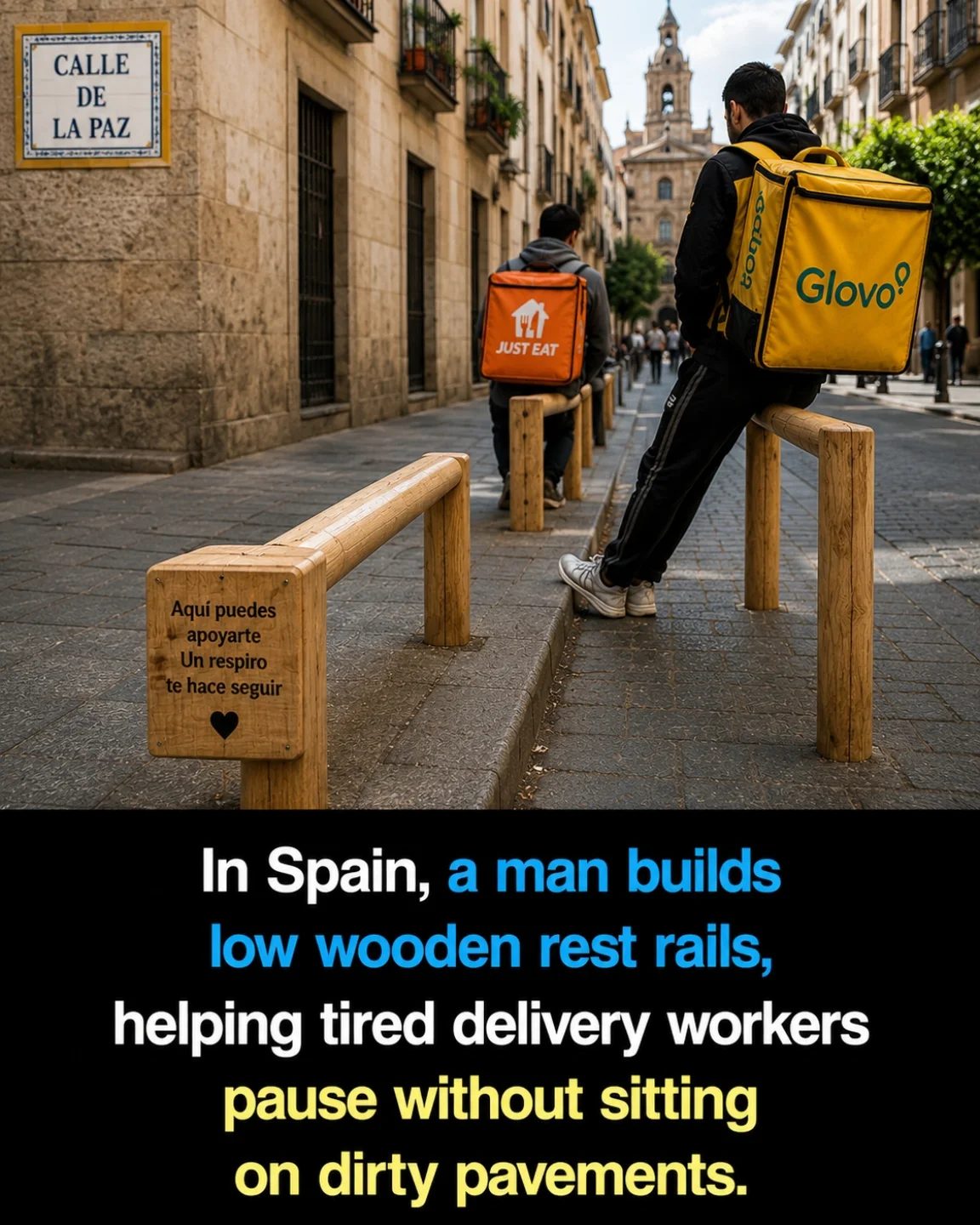
Wooden Rest Rails for Urban Delivery Workers
In the bustling streets of Spain, a unique initiative is gaining attention: the construction of low wooden rest rails for delivery workers. These simple yet thoughtful installations provide a much-needed respite for hardworking couriers who often have to navigate the urban landscape on foot, carrying heavy packages. The rails offer a hygienic and comfortable spot to rest, addressing a common issue faced by delivery personnel from major services like Glovo and Just Eat.
Why This Matters
Delivery services have become an integral part of modern urban life, especially with the rise of e-commerce and food delivery apps. However, the working conditions for delivery workers often go unnoticed. They spend long hours on their feet, walking through cities to deliver packages and meals. Public spaces, including pavements, are not always designed with their needs in mind, leading to discomfort and fatigue.
The introduction of wooden rest rails addresses a critical aspect of urban design: the need for ergonomic and hygienic spaces for workers who keep our cities moving. This initiative not only improves the quality of life for delivery workers but also highlights the broader issue of urban infrastructure that often overlooks the needs of certain worker demographics.
Main Discussion
The Design and Placement of Wooden Rest Rails
The wooden rest rails are designed to be low and unobtrusive, allowing them to blend seamlessly into the urban landscape. This design ensures that they do not get in the way of pedestrians or disrupt the flow of traffic. The rails are typically placed at strategic points along delivery routes, providing workers with a place to rest without sitting on the pavement.
The choice of wood as the material is intentional. Wood is a durable and sustainable material that can withstand the elements and the wear and tear of frequent use. It is also a hygienic option, as it can be easily cleaned and maintained. The natural aesthetics of wood also add a touch of warmth to the urban environment, making the rails a practical and visually appealing addition to city infrastructure.
The Impact on Delivery Workers
For delivery workers, the rest rails offer a much-needed break from the constant strain of carrying heavy packages. Instead of having to find a clean and comfortable spot to sit, they can pause and rest without having to worry about hygiene or the comfort of the seating area. This small but significant improvement can have a substantial positive impact on their overall well-being.
Additionally, the rest rails can help reduce fatigue and potential injuries associated with long periods of standing and walking. By providing a designated spot to rest, the rails can help delivery workers maintain their energy levels and focus on their tasks, leading to increased efficiency and job satisfaction.
Community and Corporate Engagement
The initiative to install wooden rest rails has sparked interest and engagement from both the local community and major delivery service providers. Community members appreciate the thoughtfulness behind the project, which not only improves the working conditions of delivery personnel but also contributes to a more compassionate urban environment.
Corporations like Glovo and Just Eat have also taken notice of this initiative. While the video does not provide specific details on their involvement, it is evident that such companies stand to benefit from improved working conditions for their delivery staff. They can potentially support similar initiatives in their respective cities, contributing to a more supportive and inclusive urban design.
Practical Tips
If you are inspired to create similar initiatives in your community or workplace, consider the following practical tips:
Identify Key Areas
Look for high-traffic areas where delivery workers often take breaks. These could be near delivery hubs, busy intersections, or popular delivery locations. Engage with local delivery workers to understand their specific needs and preferences.
Choose the Right Materials
Opt for materials that are durable, easy to clean, and aesthetically pleasing. Wood is a great choice, but other materials like metal or recycled plastic can also work well, depending on the specific requirements and local regulations.
Engage the Community
Reach out to local businesses, community groups, and delivery service providers to garner support for your initiative. Collaborative efforts can help secure funding, resources, and volunteers, making the project more sustainable and impactful.
Ensure Compliance and Safety
Make sure that the installation of wooden rest rails complies with local regulations and safety standards. Ensure that the rails are placed in accessible areas and do not obstruct pedestrian traffic or pose any safety hazards.
Important Takeaways
Urban Infrastructure Needs to Evolve
Urban infrastructure must evolve to accommodate the diverse needs of its residents, including those who keep the city moving. Simple additions like wooden rest rails can make a significant difference in the lives of delivery workers, enhancing their well-being and overall efficiency.
The Power of Community Initiatives
Community-driven initiatives can have a profound impact on urban life. They reflect the unique needs and concerns of local residents and can inspire broader changes in how cities are designed and managed.
The Role of Corporations
Corporations have a crucial role to play in supporting initiatives that improve working conditions for their employees. By engaging with community efforts, they can contribute to a more inclusive and supportive urban environment, benefiting both their employees and the broader community.
Conclusion
The installation of wooden rest rails in Spanish cities is a commendable initiative that addresses a critical need for delivery workers. This simple yet effective solution highlights the importance of urban design that caters to the diverse needs of its residents, including those who keep the city running smoothly. As cities continue to grow and evolve, initiatives like these serve as a reminder of the power of community engagement and the role of corporations in creating a more inclusive and supportive urban environment.
Watch the Reel
Questions readers ask
What are the wooden rest rails in Spain's urban centers designed for?
The wooden rest rails are specifically designed to provide delivery workers with a hygienic and comfortable spot to rest during their long shifts. They are installed in busy urban areas to help delivery personnel who are on foot and carrying heavy packages.
Why are these rest areas important for delivery workers?
Delivery workers often spend extended periods on their feet, navigating crowded streets and carrying heavy loads. These rest areas offer a crucial opportunity for workers to take a break, reduce fatigue, and maintain their well-being during their workday. They also promote better hygiene.
Who is responsible for installing these rest areas?
While the article does not specify a single entity, the initiative is likely a result of collaboration between local governments and private delivery services. These companies and urban planners are working together to address the needs of delivery workers, who are integral to the urban ecosystem.
Where can I find these wooden rest rails?
These rest areas are located in various urban centers across Spain, particularly in high-traffic areas where delivery workers are most active. They are often placed near popular delivery destinations and in well-trafficked areas.
How do these rest areas help cities and delivery services?
By providing delivery workers with comfortable, hygienic rest spots, these installations can help reduce worker fatigue and stress. This can lead to improved service quality and efficiency, benefiting both the delivery companies and the cities they serve.
Are there any additional benefits to these rest areas beyond worker comfort?
Yes, these rest areas also contribute to the overall urban environment by promoting a more considerate and inclusive city design. They ensure that the well-being of essential workers is prioritized, which can lead to more positive interactions and a more cohesive urban community.
Related deep dives
Similar reads based on topic and creator.

Recent articles
Fresh deep dives from the latest Reels we unpacked.




Comments
Be the first to comment.