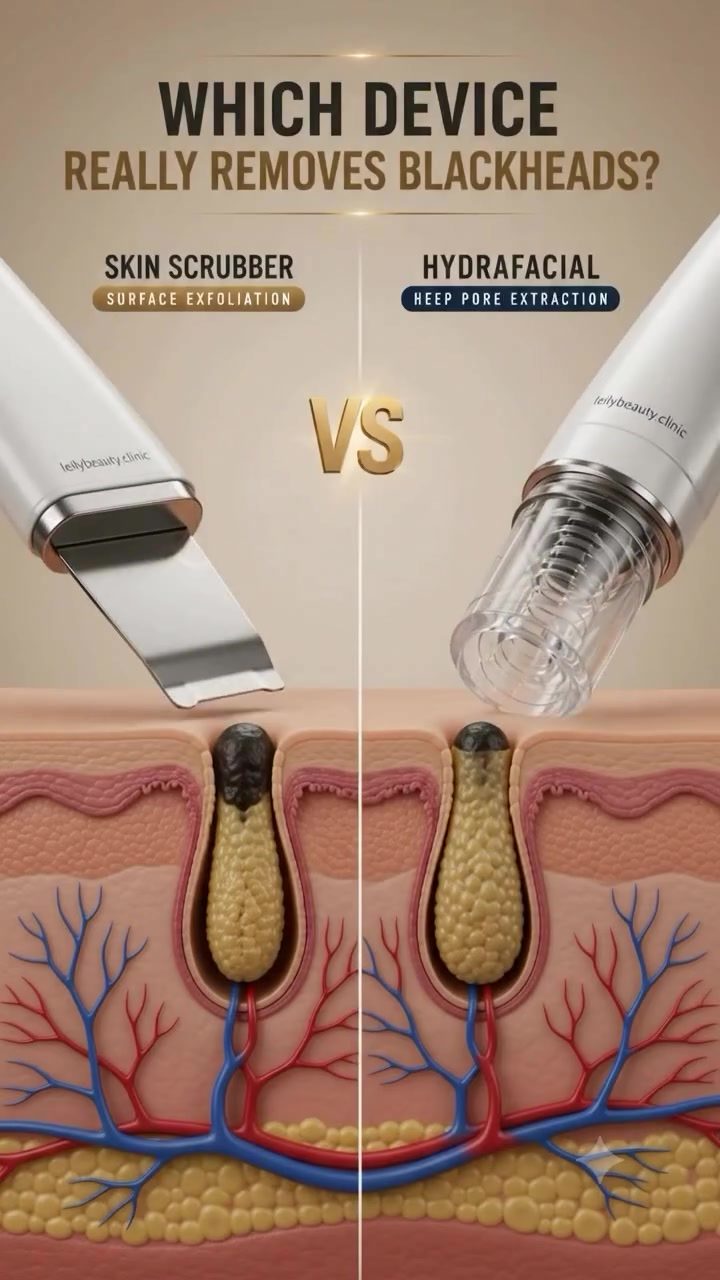
Blackhead Removal: Comparing Skin Scrubbers and Hydrafacials
When it comes to maintaining clear, healthy skin, blackhead removal is a common concern. Two popular treatments often discussed are skin scrubbers and hydrafacials. Both aim to improve skin texture and appearance, but they work quite differently. Understanding these differences can help you choose the right treatment for your skin needs.
Context / Why This Matters
Blackheads are a common skin issue caused by the clogging of hair follicles with sebum and dead skin cells. While many over-the-counter products and home remedies promise to remove blackheads, professional treatments like skin scrubbers and hydrafacials offer more targeted solutions. Knowing how each treatment works can help you make an informed decision about which one to choose.
Main Discussion
What is a Skin Scrubber?
Skin scrubbers are devices designed to exfoliate the skin's surface. They primarily remove dead skin cells and surface debris, leaving your skin feeling softer and looking smoother immediately after treatment. This type of exfoliation is beneficial for removing the top layer of dead skin cells, which can make your skin appear smoother and more radiant. However, it doesn't delve deep into the pores to remove the buildup that causes blackheads.
How Does a Hydrafacial Work?
Hydrafacials, on the other hand, use a more advanced approach to skin care. This treatment employs Vortex-Fusion technology and controlled suction to cleanse the pores more deeply. By removing sebum and debris from within the follicles, hydrafacials can effectively address blackheads and other pore-related issues. This deeper cleansing can lead to a more thorough and long-lasting improvement in skin texture and appearance.
Practical Tips
Choosing the Right Treatment
If your primary goal is to improve the overall texture and appearance of your skin, a skin scrubber might be sufficient. Its surface exfoliation can leave your skin feeling smoother and looking more radiant right after treatment. However, if you're specifically looking to address blackheads and achieve a deeper pore cleanse, a hydrafacial is likely the better choice.
Maintenance and Follow-Up
Regardless of the treatment you choose, maintaining good skin care habits is crucial. Regular cleansing, moisturizing, and using non-comedogenic products can help prolong the benefits of your treatment. Additionally, follow-up appointments can ensure that your skin continues to improve over time.
Important Takeaways
- Skin scrubbers primarily remove dead skin cells and surface debris, providing immediate surface-level results.
- Hydrafacials use advanced technology to cleanse the pores more deeply, effectively removing sebum and debris that cause blackheads.
- For immediate surface-level results, a skin scrubber is a good choice.
- For a deeper pore cleanse and long-lasting improvement in skin texture, hydrafacials are more effective.
- Maintaining good skin care habits and regular follow-up appointments can enhance the benefits of both treatments.
Conclusion
Choosing the right treatment for blackhead removal depends on your specific skin concerns and goals. Skin scrubbers offer immediate surface-level benefits, while hydrafacials provide a deeper, more thorough cleanse. By understanding how each treatment works, you can make an informed decision and achieve healthier, more radiant skin.
Watch the Reel
Questions readers ask
What is the primary difference between a skin scrubber and a hydrafacial for blackhead removal?
The primary difference lies in their approach to pore cleansing. Skin scrubbers focus on surface exfoliation, manually removing dead skin cells and impurities from the skin's surface. In contrast, hydrafacials use advanced technology to deeply cleanse pores, extracting impurities from within the pores for a more thorough cleanse.
Which treatment is better for deeply cleansing pores: a skin scrubber or a hydrafacial?
For deeply cleansing pores, hydrafacials are generally more effective. They use a combination of vacuum suction and serums to penetrate deep into the pores, extracting dirt, oil, and impurities that skin scrubbers might not reach.
Are skin scrubbers or hydrafacials suitable for all skin types?
Skin scrubbers can be suitable for most skin types, but those with sensitive skin should be cautious as they can sometimes cause irritation. Hydrafacials are typically gentler and can be customized to suit various skin types, including sensitive skin, making them a versatile option.
How often can I get a hydrafacial treatment for blackhead removal?
The frequency of hydrafacial treatments can vary depending on your skin's needs and the recommendations of your skincare professional. Generally, treatments can be done every 4-6 weeks to maintain clear pores and healthy skin.
What is the best way to maintain clear skin after a hydrafacial treatment?
After a hydrafacial, it's important to follow a consistent skincare routine to maintain results. This includes gentle cleansing, moisturizing, and using non-comedogenic products to prevent pore clogging. Additionally, regular hydrafacial treatments and sun protection can help keep your skin clear and healthy.
Can I use a skin scrubber at home for blackhead removal?
Yes, skin scrubbers are available for home use and can be effective for surface exfoliation. However, for deep pore cleansing, professional hydrafacial treatments are typically more effective. Always be gentle when using a skin scrubber to avoid irritating the skin.
Related deep dives
Similar reads based on topic and creator.


Recent articles
Fresh deep dives from the latest Reels we unpacked.




Comments
Be the first to comment.