Hurricane Costs
Hurricanes are among the most costly natural disasters in the United States, with damages often reaching into the billions of dollars. Understanding the financial impact of these storms is crucial for preparedness and recovery efforts. Here, we delve into the costliest hurricanes to hit the U.S. up to 2023, with a particular focus on the most devastating storms and their economic tolls.
Context: Why Hurricane Costs Matter
Hurricane costs encompass a wide range of expenses, including public sector costs and direct physical damages to buildings, personal property, infrastructure, and agriculture. These costs do not include indirect economic impacts, such as lost productivity or disruptions in supply chains. The financial burden of hurricanes is significant, affecting not only the immediate regions hit but also the broader economy.
The Most Costly Hurricanes
Katrina (2005)
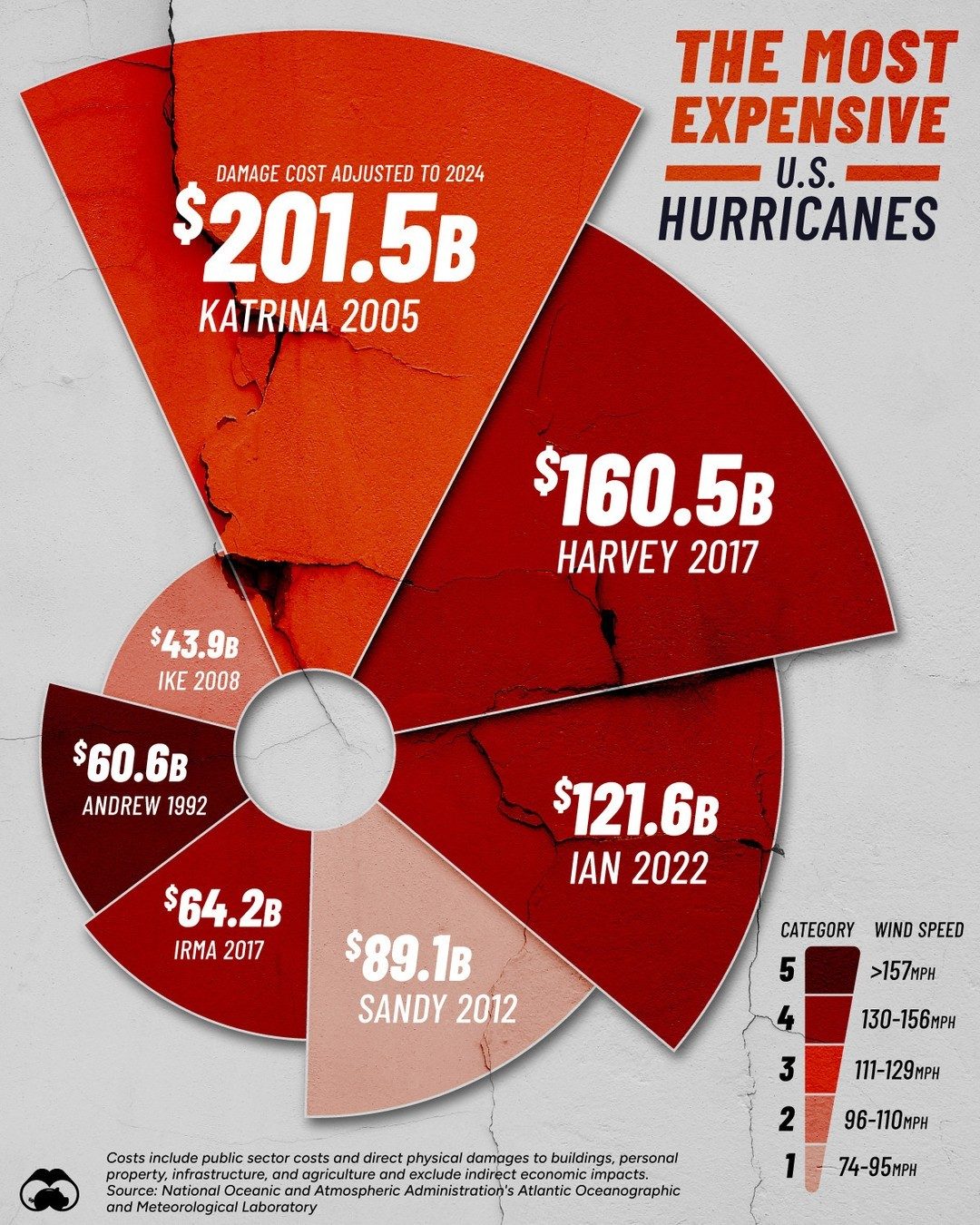
Katrina remains the most expensive hurricane to hit the U.S., with damages exceeding $201.5 billion when adjusted to 2024. This Category 5 storm, with wind speeds over 157 MPH, devastated the Gulf Coast, particularly New Orleans. The extensive damage to infrastructure, homes, and businesses led to a prolonged recovery effort, highlighting the need for robust disaster preparedness and response.
Harvey (2017)
Harvey is the second most expensive hurricane, with estimated damages of $160.5 billion. This Category 4 storm brought catastrophic flooding to Texas and Louisiana, causing widespread destruction and displacement. The extensive flooding led to significant property damage, impacting both residential and commercial areas.
Ian (2022)
Ian ranks third in terms of cost, with damages estimated at $121.6 billion. This Category 4 storm made landfall in Florida, causing widespread destruction along the coast. The storm's powerful winds and storm surge led to significant damage to infrastructure, homes, and businesses, resulting in a lengthy recovery process.
Other Notable Hurricanes
Several other hurricanes have also caused significant financial damage. Hurricane Irma, also a Category 5 storm, resulted in $64.2 billion in damages. Hurricane Andrew, which struck in 1992, caused $60.6 billion in damage, highlighting the enduring impact of past storms. Hurricane Ike (2008) and Hurricane Sandy (2012) also made the list, with damages of $43.9 billion and $89.1 billion, respectively.
The Role of Hurricane Categories
The cost and impact of hurricanes are closely tied to their categories, which indicate their wind speeds and potential for damage. Category 5 hurricanes, with wind speeds exceeding 157 MPH, typically cause the most extensive damage. Category 4 storms, with wind speeds between 130-156 MPH, are also highly destructive. Lower category storms, while less severe, can still result in significant financial losses, particularly if they bring heavy rainfall and flooding.
Practicing for Hurricanes
Living in hurricane-prone areas means preparing for the potential of these devastating events. This preparation can take various forms, from having an emergency kit to reinforcing homes with hurricane-proof materials. The emphasis on preparedness aims to reduce the financial and physical toll of hurricanes. The cost-effectiveness of hurricane alerts can be measured in the billions. Helping residents prepare, provides resource savings and maintenance services.
Emergency Preparedness
Emergency kits are essential for hurricane preparedness. They should include items like non-perishable food, water, a first aid kit, flashlights, and important documents. Having a plan in place for family members and pets is also crucial. Knowing evacuation routes and having a designated meeting point can save lives and reduce stress during a storm.
Home Reinforcement
Reinforcing your home can help mitigate the damage from high winds and flooding. Installing hurricane shutters, securing loose outdoor items, and reinforcing windows and doors can make a significant difference. Additionally, ensuring that your home is properly insured can provide financial security in the event of a storm.
Important Takeaways
Understanding the financial impact of hurricanes is essential for both individuals and policymakers. The costs of these storms are enormous, affecting not only the immediate regions hit but also the broader economy. Preparedness and response efforts can help mitigate some of the damage, but the financial toll remains significant. By learning from past storms and implementing robust preparedness measures, we can work towards reducing the economic impact of future hurricanes.
Conclusion
Hurricanes are a persistent and costly threat to the United States. From Katrina to Ian, the financial impact of these storms is staggering, highlighting the need for comprehensive preparedness and response efforts. By understanding the costs and categories of hurricanes, we can better prepare for future storms and work towards minimizing their economic impact. Whether through emergency preparedness, home reinforcement, or policy changes, taking proactive steps can help reduce the financial toll of these devastating events.
Watch the Reel
Questions readers ask
What factors contribute to the high costs of hurricanes in the U.S.?
Hurricane costs are influenced by several factors, including the size and intensity of the storm, population density in affected areas, and the value of infrastructure and property. Additionally, indirect costs such as business interruptions and emergency response efforts contribute to the overall financial impact.
Which hurricane holds the record for the most expensive in U.S. history as of 2023?
As of 2023, Hurricane Katrina, which struck in 2005, is one of the most expensive hurricanes in U.S. history. Its total damage exceeded $160 billion, making it a catastrophic event in terms of financial impact. However, other storms like Hurricane Harvey (2017) and Hurricane Irma (2017) also incurred significant costs.
How does the National Oceanic and Atmospheric Administration (NOAA) determine hurricane costs?
NOAA assesses hurricane costs by evaluating direct physical damages to buildings, infrastructure, and personal property, as well as public sector expenses related to response and recovery efforts. NOAA's estimates are crucial for understanding the financial toll of these storms and for informing future preparedness strategies.
What are some of the most financially impactful hurricanes to hit the U.S.?
Some of the most financially impactful hurricanes in U.S. history include Hurricane Katrina (2005), Hurricane Harvey (2017), Hurricane Maria (2017), and Hurricane Sandy (2012). These storms caused billions of dollars in damage, highlighting the significant economic toll that hurricanes can have on affected regions.
How do hurricanes affect agriculture and infrastructure in the U.S.?
Hurricanes can cause extensive damage to agricultural lands, leading to crop losses and livestock deaths. Infrastructure, including roads, bridges, and public utilities, is also severely impacted, resulting in costly repairs and disruptions in essential services. These damages contribute significantly to the overall financial impact of a hurricane.
What measures can be taken to mitigate the financial impact of hurricanes?
Effective hurricane preparedness involves strengthening infrastructure, implementing robust building codes, and investing in early warning systems. Additionally, having comprehensive insurance coverage and emergency response plans can help mitigate the financial impact of these storms. Community preparedness and timely evacuation plans are also crucial for minimizing losses.
How do hurricanes impact the economy beyond immediate property damage?
Beyond the immediate property damage, hurricanes can disrupt supply chains, leading to shortages and price increases for goods and services. Businesses may also face prolonged closures, resulting in lost revenue and job losses. These indirect economic impacts can have long-term effects on local and national economies, extending far beyond the initial storm event.
Related deep dives
Similar reads based on topic and creator.


Recent articles
Fresh deep dives from the latest Reels we unpacked.




Comments
Be the first to comment.