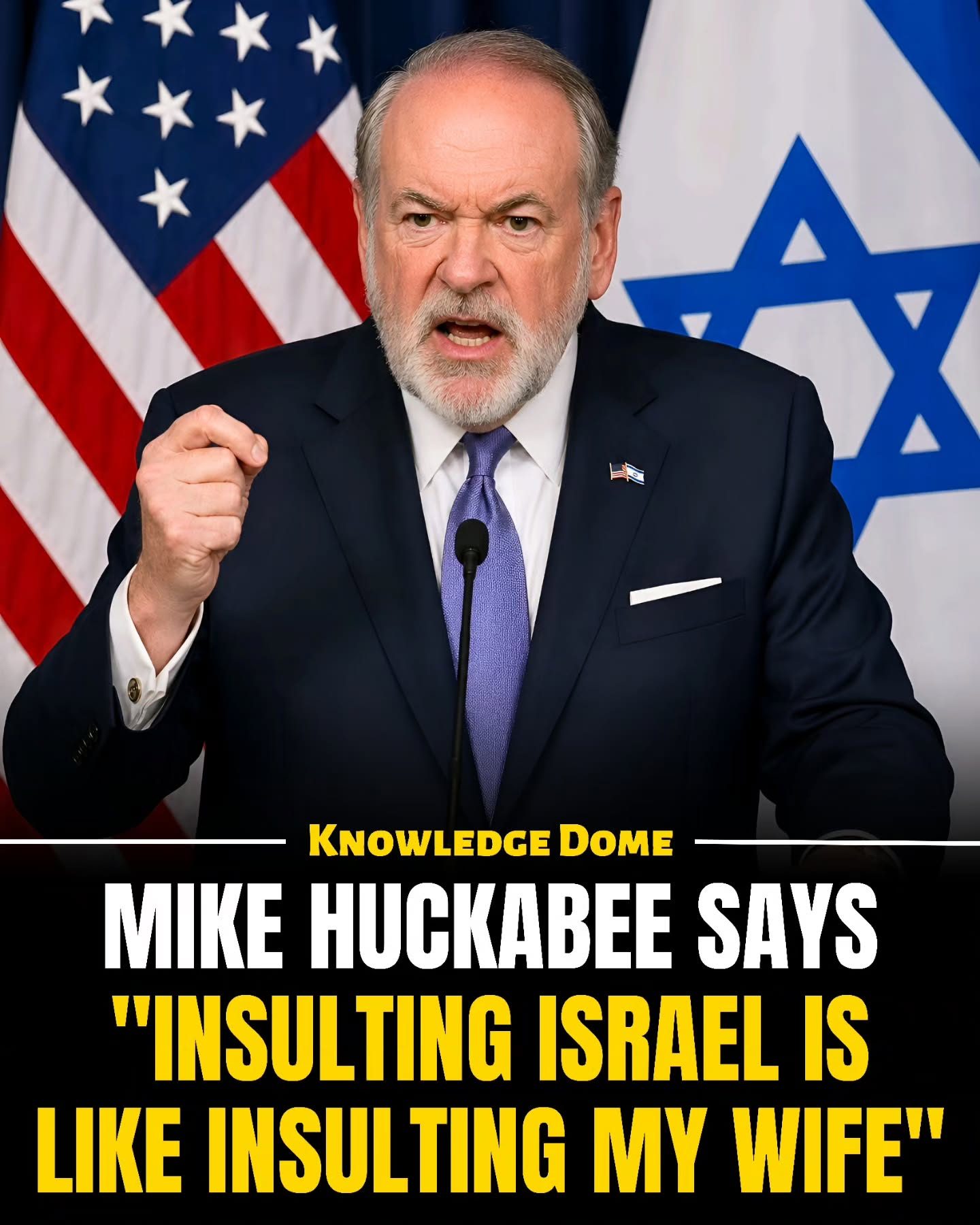
Mike Huckabee's Marriage Analogy for U.S.-Israel Relations
Mike Huckabee, the U.S. Ambassador to Israel, sparked significant debate with his strong statement comparing the U.S. alliance with Israel to his own marriage. By drawing a parallel between insulting Israel and insulting his wife, Huckabee made a bold statement about the depth of the bond between the two countries. This analogy, delivered at the “50 States, One Israel” conference in Jerusalem and later reiterated in an interview, has ignited a variety of responses and interpretations.
Context / Why this matters
The dynamic between the United States and Israel has long been a focal point of international diplomacy. The strength and nature of this alliance are often scrutinized, especially in light of geopolitical tensions and global affairs. Huckabee's statement adds a personal and emotional dimension to this complex relationship, framing it in terms of personal loyalty and familial bonds.
Main discussion
The Statement and Its Context
Huckabee's comment initially came during his speech at the “50 States, One Israel” conference. He underscored the closeness of the U.S.-Israel relationship by using a dinner party analogy. According to Huckabee, if someone were to disparage his wife in his home, he would not allow them to remain at the table. This metaphor was meant to convey that any disrespect toward Israel would be similarly unacceptable. Huckabee's choice of words was deliberate and intended to highlight the depth of his commitment to Israel and the U.S. alliance with it.
The Public and Media Reaction
The reaction to Huckabee's statement was swift and multifaceted. Some praised his assertion, seeing it as a powerful show of support for Israel. They appreciated the strong, clear language he used to highlight the importance of the U.S.-Israel alliance. Conversely, others found the comparison overly sentimental and potentially problematic. They argued that equating a foreign country with a spouse could blur the line between diplomatic policy and personal loyalty, potentially complicating international relations.
The debate intensified as media outlets picked up on the story, further amplifying the discussion. Critics highlighted the potential for misunderstanding and misinterpretation, noting that such strong language could be seen as divisive in the international arena.
The Implications for U.S.-Israel Relations
Huckabee's analogy has sparked a broader conversation about the nature of U.S.-Israel relations. The statement underscores the idea that the U.S. views Israel not just as an ally but as a close and deeply valued partner. This perspective can be seen as reassuring to Israel, offering a sense of security and support in a volatile region.
However, the analogy also throws into sharp relief the potential pitfalls of personalizing international relations. By framing the alliance in terms of personal loyalty, Huckabee's statement could be interpreted as implying that criticism of Israel is akin to a personal affront, which might not align with broader diplomatic goals of fostering open and constructive dialogue.
Practical tips
When discussing sensitive international issues, it's important to consider the nuance and complexity of the relationship. Here are a few tips for navigating such discussions:
- Clarify Intentions: Always be clear about the purpose of your analogy or statement. Ensure that it conveys the intended message without unintended implications.
- Consider Context: Understand the broader context and potential reactions. Recognize that your audience may include a diverse range of perspectives and interpretations.
- Avoid Hyperbole: While strong language can be effective, it can also be counterproductive. Be mindful of how your words might be received, especially in sensitive diplomatic contexts.
Important takeaways
Mike Huckabee's analogy has underscored the deep and complex nature of U.S.-Israel relations. While his statement was intended to convey strong support and loyalty, it also highlighted the potential risks of personalizing diplomacy. Huckabee's words have sparked a vital conversation about the balance between personal loyalty and diplomatic policy, emphasizing the need for nuanced and thoughtful communication in international affairs.
Conclusion
The discussion surrounding Huckabee's statement about U.S.-Israel relations is a testament to the importance of clarity and nuance in diplomacy. Whether you view his words as a powerful endorsement or a problematic oversimplification, the debate surrounding them serves to illustrate the intricacies of international alliances. As we continue to navigate these delicate relationships, it is crucial to approach discussions with care, understanding, and a deep appreciation for the nuances involved.
Watch the Reel
Questions readers ask
What exactly did Mike Huckabee say in his analogy?
Mike Huckabee compared the U.S.-Israel alliance to his own marriage, stating that to insult Israel would be akin to insulting his wife. He used this parallel to emphasize the deep loyalty and commitment between the two nations.
Why did Huckabee choose a marriage analogy to discuss international relations?
Huckabee likely chose a marriage analogy because it conveys a profound sense of loyalty, commitment, and personal connection. The analogy emphasizes that the bond between the U.S. and Israel is strong and deeply felt, beyond typical political alliances.
What was the immediate reaction to Huckabee's statement?
The immediate reaction was varied. Some praised the sentiment, appreciating the clear and strong message about U.S. commitment. Others questioned the appropriateness of the comparison and expressed concern about the use of such personal language in diplomatic discourse. The controversy highlights the ongoing scrutiny of the U.S.-Israel relationship.
Where and when did Huckabee make this statement?
Huckabee first made the statement at the '50 States, One Israel' conference in Jerusalem. He later reiterated his comparison in an interview, reinforcing his position on the depth of the alliance between the two countries.
How did this analogy impact the discussion on U.S.-Israel relations?
The analogy sparked a debate that brought attention to the intricacies of U.S.-Israel relations, and the importance of strong and committed alliances in international diplomacy. The personal tone of the analogy added a unique dimension to the discussion, making it a focal point for various interpretations.
What does this debate reveal about U.S. foreign policy?
This debate reveals that U.S. foreign policy, particularly regarding key allies like Israel, is closely watched and scrutinized. It also shows that personal analogies used by diplomats can have significant impacts on how international relations are perceived and discussed.
How have similar analogies or statements been received in the past?
Similar strong language and personal analogies used by public figures can be both praised for their clarity and criticized for oversimplifying complex international relationships. They often provoke debate and scrutiny, much like Huckabee's statement, especially when they involve high-profile alliances like that between the U.S. and Israel.
Recent articles
Fresh deep dives from the latest Reels we unpacked.




Comments
Be the first to comment.