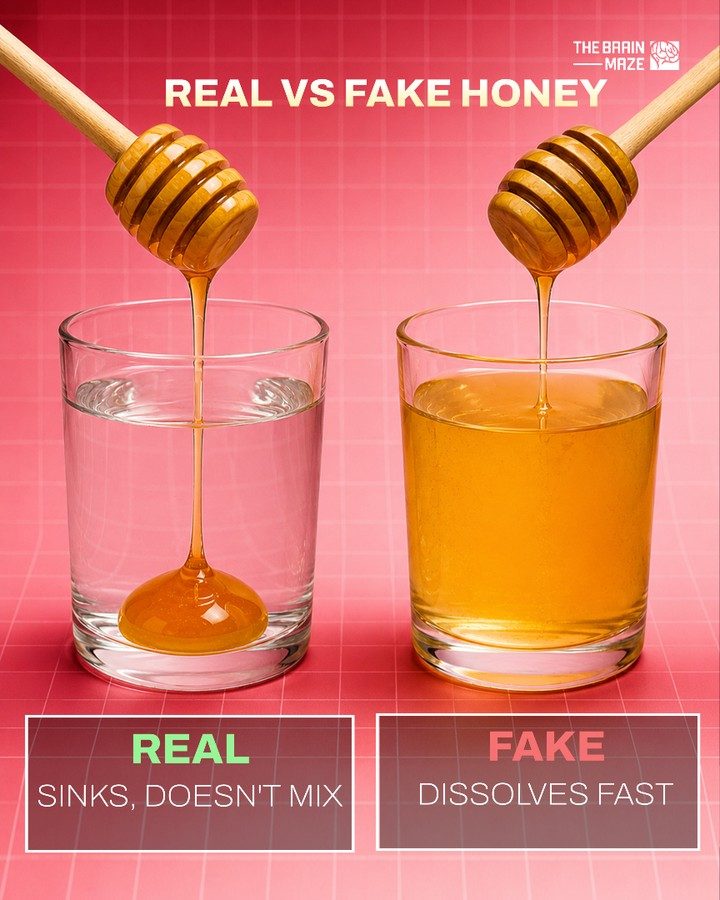
Real vs. Fake Honey
Honey is a beloved natural sweetener, but not all honey is created equal. Real honey and fake (or adulterated) honey behave very differently when mixed with water, a fact that can help consumers identify counterfeit products.
Context / Why this matters
Knowing how to distinguish real honey from fake is crucial for several reasons. First, fake honey often contains added water, syrup, or other sweeteners, which dilute the nutritional benefits and therapeutic properties of real honey. Second, consuming adulterated honey can pose health risks, as it may contain harmful additives or contaminants. Third, supporting the consumption of real honey encourages ethical practices and helps beekeepers sustain their livelihoods.
Main discussion
The Science Behind Real Honey
Real honey is a complex mixture of sugars, enzymes, and other compounds produced by bees from the nectar of flowers. Its viscosity and density are due to the high concentration of sugars, primarily glucose and fructose, and the presence of various proteins, amino acids, and minerals. When a drop of real honey is placed in water, it tends to sink to the bottom and remains relatively intact. This behavior can be attributed to several factors:
- Density: Real honey is denser than water, which causes it to sink.
- Viscosity: The thick consistency of honey makes it resistant to mixing with water.
- Surface Tension: The surface tension of honey is higher than that of water, which helps it maintain its shape.
Over time, real honey will slowly spread and mix with the water, but this process is gradual and does not occur instantly.
The Characteristics of Fake Honey
Fake honey, on the other hand, is often diluted with water or syrup to increase the volume and reduce production costs. This adulteration alters the physical properties of honey, making it thinner and less viscous. When fake honey is added to water, it dissolves quickly and mixes with the water more readily, forming a homogeneous solution.
The rapid dissolution of fake honey in water can be explained by the following factors:
- Lower Density: The addition of water or syrup reduces the overall density of fake honey, making it less likely to sink.
- Reduced Viscosity: The thinner consistency of fake honey means it flows and mixes more easily with water.
- Changed Surface Tension: The addition of water or syrup can alter the surface tension of honey, making it more prone to mixing.
Practical Tips
To determine if the honey you have is real, there are several simple tests you can perform at home:
-
Water Test: Drop a small amount of honey into a glass of water. Real honey will sink to the bottom and take time to dissolve, while fake honey will dissolve quickly.
-
Thermometer Test: Place a small amount of honey in a clean container and heat it to 140°F (60°C). Real honey will foam and bubble, while fake honey will remain relatively stable.
-
Paper Test: Spread a small amount of honey on a piece of paper. Real honey will absorb slowly and leave a stain, while fake honey will absorb quickly and leave no trace.
-
Taste Test: Real honey has a distinct, complex flavor with a slight astringency. Fake honey often tastes overly sweet and lacks the depth of flavor found in real honey.
Important Takeaways
The ability to distinguish between real and fake honey is an essential skill for consumers. By understanding the differences in their physical properties and behavior, you can make informed choices about the honey you consume. Supporting the production and consumption of real honey not only benefits your health but also supports ethical beekeeping practices.
Conclusion
In a market flooded with adulterated products, knowing how to identify real honey is more important than ever. By performing simple tests, such as the water test, you can ensure that the honey you are consuming is genuine and of high quality. Real honey offers a wealth of benefits, from its unique flavor to its numerous health advantages. By choosing real honey, you are investing in your well-being and supporting the livelihoods of beekeepers around the world.
Watch the Reel
Questions readers ask
How does real honey react when mixed with water?
Real honey is denser than water and contains natural sugars and minerals. When mixed with water, it will eventually dissolve but will first sink to the bottom of the container. Real honey will also form a distinct layer at the bottom and will take longer to fully dissolve than fake honey, which mixes more quickly.
What happens when fake honey is mixed with water?
Fake honey often contains added sweeteners or syrups like corn syrup, which are more soluble in water. When mixed with water, fake honey will dissolve more quickly and evenly, without forming a distinct layer at the bottom. This rapid mixing is a strong indicator of adulteration.
Why is the water test a reliable method for checking honey authenticity?
The water test is a simple and effective way to check honey authenticity at home. Real honey's slower dissolution and layering in water are due to its natural composition, while fake honey's quick mixing indicates the presence of added sweeteners or syrups. This difference in behavior makes the water test a useful tool for spotting fake honey.
Can the water test differentiate between different types of real honey?
The water test is not designed to differentiate between different types of real honey, such as clover or manuka. Instead, it is a method to check for the presence of added sweeteners in fake honey. The test will confirm if the honey is real based on its behavior in water, but it will not identify the specific floral source of the honey.
Are there other methods to check honey authenticity at home?
Yes, in addition to the water test, you can conduct a flame test. Real honey will not ignite, but fake honey with added sugars might. Another method is the thumb test, where you rub a small amount of honey between your thumb and index finger; real honey will absorb quickly while fake honey will feel sticky.
What should I do if I suspect my honey is fake?
If you suspect your honey is fake based on the water test or other methods, it's best to stop consuming it. Consider reaching out to the manufacturer or retailer to voice your concerns. Additionally, you can report the product to consumer protection agencies or food standards authorities in your region.
Related deep dives
Similar reads based on topic and creator.




Recent articles
Fresh deep dives from the latest Reels we unpacked.




Comments
Be the first to comment.