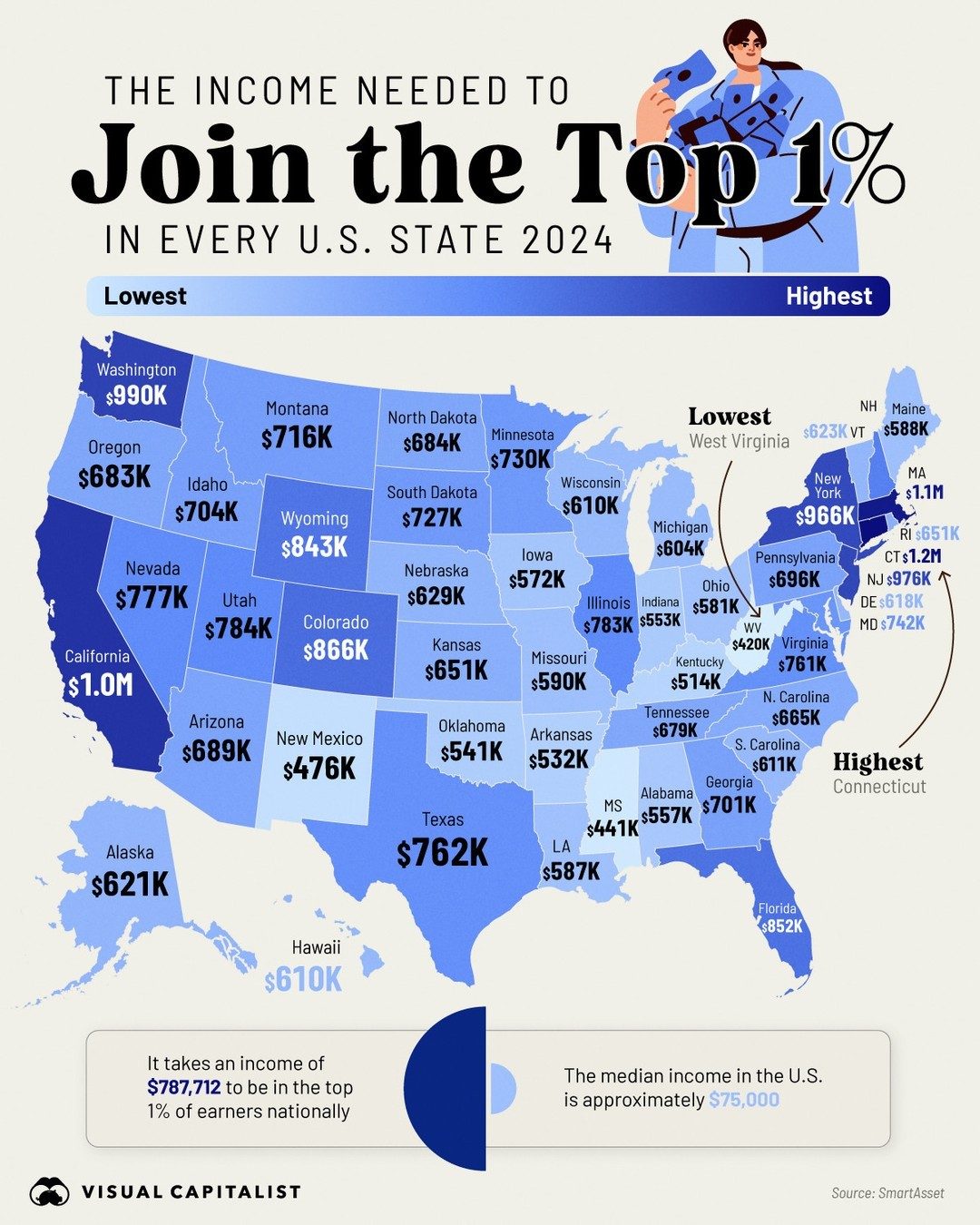
Income to Join the Top 1% by State
The path to joining the top 1% of income earners in the United States varies significantly depending on where you live. In some states, you'll need to earn over $1 million annually to make the cut, while in others, less than half that amount is sufficient. This disparity highlights the regional differences in the economic landscape and the cost of living across the country. This article delves into the income thresholds for the top 1% in each state, offering insights into the financial benchmarks that define success.
Why This Matters
Understanding the income requirements to join the top 1% in each state is more than just a curiosity—it's a reflection of the economic dynamics at play. These figures illustrate the cost of living, economic opportunities, and income distribution in different regions. Whether you're planning a move, considering a career change, or simply curious about financial trends, knowing these thresholds can provide valuable context.
The Breakdown by State
Let's dive into the specific income requirements for each state, based on data compiled by SmartAsset in June 2024. The figures reveal a wide range of incomes needed to join the top 1% of earners, from just under $500,000 in some states to over $1 million in others.
Highest Income Requirements
Washington ($990K): At the top, Washington State requires the highest income to join the top 1%, with a threshold of $990,000. This high bar is likely influenced by the state's robust tech industry and high cost of living, particularly in major cities like Seattle.
Connecticut ($1.1M): Connecticut follows closely behind, requiring an income of $1.1 million to be in the top 1%. This is the highest income requirement in the nation, reflecting the state's affluent communities and high cost of living, particularly in areas like Fairfield County.
Florida ($852K): Florida requires an income of $852,000 to be in the top 1%. The state’s diverse economy, which includes tourism, healthcare, and technology, contributes to this figure. Additionally, the high cost of living in cities like Miami and Tampa is a significant factor.
Mid-Range Income Requirements
New Jersey ($761K): New Jersey, with an income requirement of $761,000, highlights the state's high cost of living and strong economic sectors, including finance and healthcare. This is a significant benchmark for those aiming to join the ranks of the top earners.
California ($762K): California, known for its booming tech and entertainment industries, requires an income of $762,000 to be in the top 1%. The high cost of living in cities like San Francisco and Los Angeles drives this figure.
Massachusetts ($761K): Massachusetts, with an income requirement of $761,000, reflects its strong sectors in education, healthcare, and finance. The state's high cost of living, especially in cities like Boston, is a significant contributor.
Lowest Income Requirements
Alabama ($541K): Alabama has one of the lowest income requirements to join the top 1%, at $541,000. This lower threshold reflects the state's relatively lower cost of living and economic conditions.
Oklahoma ($441K): Oklahoma requires the lowest income to join the top 1%, at $441,000. The state's lower cost of living and diverse economy, including energy, agriculture, and healthcare, contribute to this figure.
New Mexico ($476K): New Mexico, with an income requirement of $476,000, is another state with a lower threshold. The state's cost of living and employment opportunities in sectors like healthcare, education, and government play a role in this benchmark.
National Context
To provide a broader perspective, it's important to note that the national threshold to be in the top 1% of earners is $78,712. This figure is significantly lower than the state-specific requirements, indicating that the concentration of wealth and high earners varies greatly by region.
The median income in the U.S. is approximately $75,000, which is another useful benchmark. This median income serves as a midpoint, showing that while many Americans earn around this figure, a significant portion earns substantially more. These figures highlight the economic disparities within the country and the significant gap between the top 1% and the rest of the population.
Practical Tips for Aspiring High Earners
For those aiming to join the top 1% of income earners in their state, several practical steps can help achieve this goal. These strategies focus on career development, financial planning, and leveraging opportunities.
Career Advancement
-
Choose High-Paying Industries: Industries such as tech, finance, healthcare, and engineering often offer higher salaries. Pursuing careers in these fields can increase your earning potential.
-
Skill Development: Invest in continuous learning and skill development. Advanced degrees, certifications, and specialized training can make you more valuable in the job market.
-
Networking: Building a strong professional network can open doors to better job opportunities, mentorship, and career advancement.
Financial Planning
-
Budgeting and Saving: Create a budget to manage your expenses and maximize savings. Living below your means can help you accumulate wealth over time.
-
Investing: Consider investing in stocks, real estate, or other assets to grow your wealth. Diversifying your investment portfolio can mitigate risks and maximize returns.
-
Financial Literacy: Educate yourself on financial management, including tax planning, retirement savings, and insurance. Financial literacy can help you make informed decisions and build wealth.
Important Takeaways
Understanding the income required to join the top 1% in each state offers valuable insights into the economic landscape and the cost of living across the country. Whether you're aiming to join the ranks of high earners or simply curious about financial trends, these figures provide a clear picture of the benchmarks for success. By focusing on career development, financial planning, and leveraging opportunities, you can work towards achieving your financial goals.
Conclusion
The income required to join the top 1% of earners varies significantly by state, reflecting the diverse economic conditions and cost of living across the country. Whether you're in a high-income state like Connecticut or a lower-income state like Oklahoma, understanding these benchmarks can provide valuable context for your financial journey. By focusing on career advancement, financial planning, and leveraging opportunities, you can work towards achieving your financial goals and joining the ranks of the top earners in your state.
Watch the Reel
Questions readers ask
How does the income to join the top 1% vary across different states?
The income required to be in the top 1% varies greatly by state. For example, in states like Connecticut and New York, you might need to earn over $1 million annually. In contrast, states such as North Dakota and West Virginia have much lower thresholds, often less than half of that amount.
Why is there such a significant difference in top 1% income requirements between states?
The primary factors contributing to these differences are the varying economic landscapes and costs of living across states. States with higher costs of living, such as California and New York, tend to have higher income thresholds for the top 1% compared to states with lower living costs.
Which state has the lowest income requirement to join the top 1%?
North Dakota has one of the lowest income requirements to join the top 1%. The state's cost of living and economic conditions allow individuals to enter the top 1% with an income significantly lower than states like New York or California.
What is the highest income threshold to join the top 1% in any state?
New York typically has the highest income threshold for joining the top 1%. The state's high cost of living and robust economy mean that earning over $1 million annually is often necessary to be part of the top 1%.
How does understanding the top 1% income by state help individuals?
Knowing the income requirements to join the top 1% in different states can help individuals set financial goals and make informed decisions about where to live. It also provides insights into the economic opportunities and challenges in each state, aiding in better financial planning and career choices.
What is the average income needed to join the top 1% across all US states?
The average income required to join the top 1% across all US states varies, but generally, it is around $500,000 to $700,000 annually. This average can help provide a national benchmark, but it's essential to note that individual state thresholds can be significantly higher or lower based on local economic conditions and cost of living.
Which states have the highest concentration of top 1% earners?
States with high concentrations of top 1% earners often include California, New York, and Connecticut. These states typically have high costs of living and robust economies, attracting high-income individuals and offering numerous opportunities for wealth accumulation.
Recent articles
Fresh deep dives from the latest Reels we unpacked.




Comments
Be the first to comment.