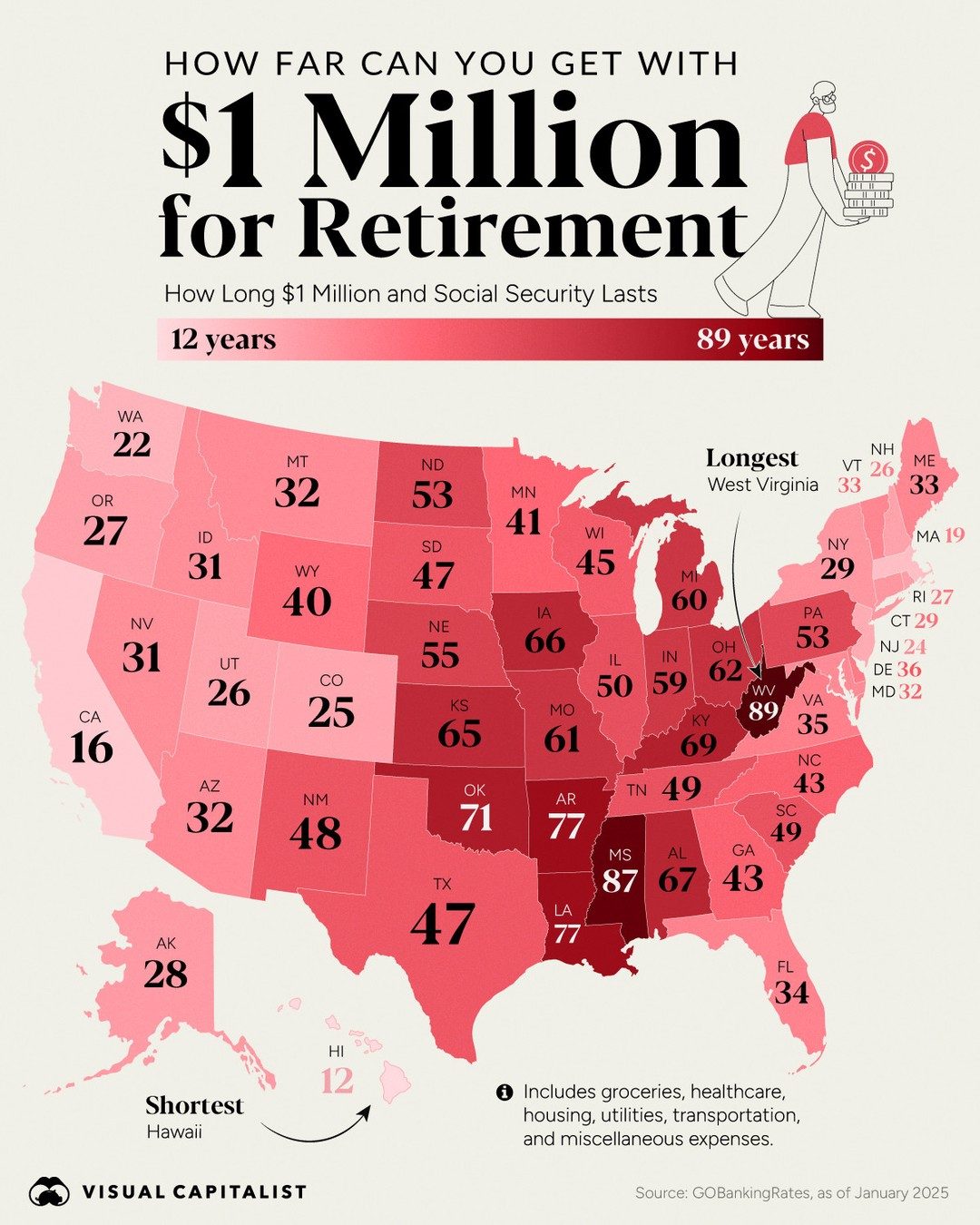
Retirement Planning with $1 Million
When planning for retirement, many people aim to save $1 million. However, the longevity of this amount can vary significantly depending on where you live. With rising costs in essential areas like housing, healthcare, and food, it's crucial to understand how far $1 million, combined with Social Security, can stretch in different U.S. states.
Context: Why This Matters
Retirement planning is a complex process that involves numerous variables, including your ideal retirement age, desired lifestyle, and healthcare needs. One of the most significant factors to consider is the cost of living in your chosen retirement location. The cost of living can dramatically impact how long your retirement savings will last. For instance, in states with high costs of living, such as California and Hawaii, $1 million may not go as far as in states with lower costs, like West Virginia.
State-by-State Analysis
High-Cost States
In states like California, Hawaii, and Massachusetts, the cost of living is notoriously high. This includes expensive housing, healthcare, and general goods and services. According to the infographic, retirees in these states could exhaust their $1 million, plus Social Security, in less than 20 years. Specifically:
- Hawaii: $1 million and Social Security would last only 12 years.
- California: Retirees would enjoy 19 years of retirement comfort.
- Massachusetts: Similar to California, Massachusetts retirees could stretch their funds for 19 years.
Middle-Ground States
There are states where the cost of living is more moderate, allowing retirees to enjoy a longer retirement period. States like Illinois, Indiana, and New Jersey fall into this category. In these areas, the combination of $1 million and Social Security can last between 24 to 32 years. For example:
- Illinois: 22 years
- Indiana: 27 years
- New Jersey: 24 years
Low-Cost States
For retirees looking to maximize the longevity of their retirement savings, low-cost states are the most advantageous. In states like West Virginia, Montana, and Wyoming, the cost of living is significantly lower, allowing retirees to stretch their funds over several decades. Notably:
- West Virginia: Retirees can enjoy an impressive 89 years of retirement.
- Montana: 69 years
- Wyoming: 69 years
Practical Tips for Retirement Planning
Assess Your Cost of Living
Before retiring, it's essential to assess the cost of living in your chosen retirement location. Consider factors such as housing, healthcare, utilities, and transportation. Use resources like GOBankingRates to get a clearer picture of what to expect. This will help you make an informed decision about where to retire and how much you need to save.
Diversify Your Retirement Portfolio
Diversifying your retirement portfolio can help protect your savings from market fluctuations. Consider a mix of low-risk investments like bonds and high-yield investments like stocks. Diversification can help ensure that your retirement savings last longer, no matter where you choose to live.
Plan for Healthcare Costs
Healthcare costs are a significant expense in retirement, and they tend to increase with age. It's important to factor in future healthcare needs when planning your retirement budget. Consider purchasing long-term care insurance or setting aside a portion of your savings specifically for healthcare.
Consider Tax Implications
Different states have varying tax laws that can impact your retirement income. Some states, like Florida and Texas, do not tax retirement income, while others, like California, do. Understanding the tax implications of your chosen retirement location can help you better manage your finances and stretch your savings further.
Adjust Your Lifestyle
If you find that your current savings may not last as long as you'd like, consider adjusting your lifestyle. Downsizing your home, cutting back on non-essential expenses, or relocating to a more affordable area can all help extend the life of your retirement savings.
Important Takeaways
Retiring with $1 million is a significant milestone, but understanding how far that amount will go is crucial for a comfortable retirement. Key takeaways include:
- The cost of living in your retirement location can significantly impact how long your savings last.
- In high-cost states like Hawaii and California, $1 million may only last 12 to 19 years.
- In low-cost states like West Virginia and Montana, the same amount can last much longer, up to 89 years.
- Assess your cost of living, diversify your retirement portfolio, plan for healthcare costs, and consider tax implications.
- Adjusting your lifestyle can help extend your retirement savings.
Conclusion
Retirement planning requires careful consideration of numerous factors, with the cost of living being one of the most critical. By understanding how long $1 million and Social Security benefits can last in different U.S. states, you can make more informed decisions about your retirement plans. Whether you choose a high-cost state with a shorter retirement duration or a low-cost state with a longer retirement period, careful planning can help ensure a comfortable and financially secure retirement.
Watch the Reel
Questions readers ask
How does the cost of living affect the longevity of $1 million in retirement?
The cost of living significantly influences how long $1 million will last in retirement. In states with lower costs, such as Oklahoma, a retiree can expect their funds to last over 32 years. Conversely, in high-cost states like Hawaii, the same amount might only last around 12 years. It's essential to factor in expenses like housing, groceries, and healthcare when planning.
Which states are best for retirees with $1 million in savings?
The best states for retirement with $1 million savings are generally those with lower costs of living. States like Oklahoma, Mississippi, and Arkansas offer a lower cost of living and have a longer retirement span of $1 million, often exceeding 25 years. Conversely, states with a higher cost of living, such as California and New York, may not be as ideal.
What should I consider when choosing a retirement location?
When selecting a retirement location, consider factors such as housing costs, tax rates, healthcare accessibility, and local amenities. States with lower costs of living may extend the lifespan of your retirement savings, but also consider the quality of life and personal preferences. It's wise to research and compare different states to find the best fit for your needs.
How can I maximize the longevity of $1 million in retirement?
To maximize the longevity of $1 million in retirement, focus on reducing expenses and increasing income. Consider downsizing your home, moving to a lower-cost area, and budgeting carefully. Additionally, delaying Social Security benefits can increase your monthly income, helping to stretch your savings further.
Why does retirement income planning vary by state?
Retirement income planning varies by state due to differences in the cost of living, tax laws, and available benefits. States with higher taxes or living costs may require more significant savings or a more conservative spending plan. Conversely, states with lower costs and favorable tax policies can offer more flexibility in retirement income planning.
How can I estimate the retirement lifespan of my savings in a specific state?
To estimate the retirement lifespan of your savings, you can use online calculators that factor in the cost of living, taxes, and other expenses. Additionally, research the average cost of housing, groceries, and healthcare in the state you are considering. This will give you a better understanding of how long your savings will last in that particular location.
Recent articles
Fresh deep dives from the latest Reels we unpacked.




Comments
Be the first to comment.