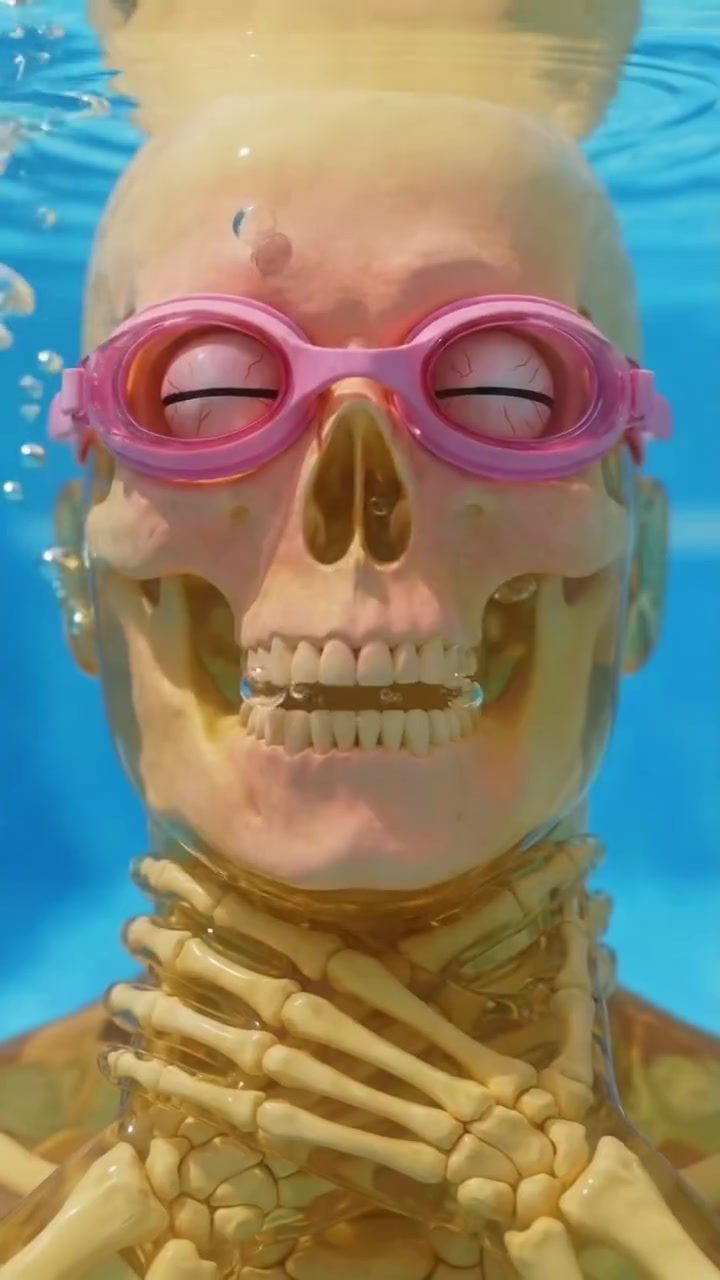
Skeleton Swimming: The Unlikely Swimmer and Breath Control
Skeleton swimming isn't your average pool activity, but it's a great way to illustrate breath control and the body's reactions to extended breath-holding. Let's dive into the phenomenon and explore what actually happens to your body when you hold your breath.
Context / Why this matters
Skeleton swimming is not a typical way to illustrate how your body responds to breath-holding. However, the novelty of the skeleton allows us to explore breath-holding in a unique and memorable way. Understanding how the body responds to breath-holding is crucial for anyone participating in water sports, freediving, or even in situations like scuba diving or swimming underwater. This knowledge is essential for safety and performance.
The Body's Response to Breath-Holding
30 seconds to 1 minute
When you hold your breath, the first 30 seconds are relatively comfortable. Your brain is still fully oxygenated, your heart rate remains steady, and your body feels relaxed. At this point, your system is completely in control. As you approach the one-minute mark, oxygen levels in your blood begin to drop, while carbon dioxide (CO2) levels rise. Your chest may push harder with each breath you're holding, and your brain will start sending the first warning signals. But overall, you're still in a manageable state.
1 to 2 minutes
The second minute is where things start to change. The urge to breathe becomes more intense. Your diaphragm, the muscle responsible for inhalation, starts contracting on its own. You might begin losing control of your breathing, with small air leaks escaping and your mouth fighting to stay closed. Water may even start getting in, whether you want it to or not.
2 to 3 minutes
By the time you hit the 3-minute mark, your brain is seriously low on oxygen. Your muscles start contracting without your permission. Your chest tightens, and violent spasms run through your body. Your arms, neck, and torso may jerk uncontrollably. At this stage, you are no longer in control, and the situation can become dangerous.
The Skeleton's Journey
The skeleton model in the video showcases this journey vividly. Wearing pink goggles and performing various swimming movements underwater, the skeleton provides a unique visual representation of what happens to the body as breath is held for extended periods.
The First Minute
The skeleton's movements in the first minute are smooth and controlled. This mirrors the human experience, where the body is still in control and everything feels fine. The skeleton's relaxed state and steady movements reflect the calmness and control a person might experience during the initial stages of breath-holding.
The Second Minute
As the skeleton enters the second minute, its movements become more erratic. This mirrors the human experience, where the diaphragm starts contracting on its own, and small air leaks escape. The skeleton's fights to stay submerged and the water getting in, whether it wants to or not, illustrate the increasing struggle to maintain control.
The Third Minute
By the third minute, the skeleton's movements become chaotic. Violent spasms run through the model, and it jerks uncontrollably. This dramatic representation highlights the extreme discomfort and potential danger a person might face if they hold their breath for too long.
Practical Tips for Breath Control
Gradual Breath-Holding
For those looking to improve their breath-holding ability, it's essential to start gradually. Begin with short periods of breath-holding and gradually increase the duration over time. This will allow your body to adapt and build tolerance to extended breath-holding.
Mindful Breathing
Mindful breathing techniques can help you stay calm and focused during breath-holding exercises. Techniques such as diaphragmatic breathing can help you maintain a steady heart rate and reduce the urge to breathe prematurely.
Safety First
Always prioritize safety when practicing breath-holding. Avoid extreme situations and never push yourself beyond your limits. It's crucial to listen to your body and stop if you feel uncomfortable or experience any symptoms of distress.
Important Takeaways
- Understanding the body's response to breath-holding is essential for safety and performance in water sports and underwater activities.
- The first 30 seconds to 1 minute of breath-holding are relatively comfortable, with the body still in control.
- Between 1 to 2 minutes, the urge to breathe becomes more intense, and the body starts losing control.
- By 2 to 3 minutes, the brain is low on oxygen, and muscles start contracting without permission, leading to violent spasms and uncontrollable movements.
- Always prioritize safety and gradually build your breath-holding ability with mindful breathing techniques.
Conclusion
Skeleton swimming provides a unique and memorable way to illustrate the body's response to breath-holding. By understanding the physiological changes that occur during extended breath-holding, you can better prepare yourself for water sports, freediving, and other underwater activities. Always prioritize safety and gradually build your breath-holding ability to enjoy these activities safely and effectively.
Watch the Reel
Questions readers ask
What are the initial body responses when holding breath underwater?
In the first few minutes of breath-holding, your body starts to conserve oxygen. Your heart rate slows down, and blood vessels constrict to reduce blood flow to less vital organs, directing oxygen to your brain and muscles. Additionally, your body triggers the 'diving reflex,' which helps to conserve oxygen by further slowing the heart rate and redistributing blood flow.
What are the signs of oxygen depletion in the body during breath holding?
As oxygen depletion occurs, you may experience increased carbon dioxide levels in your body, leading to involuntary muscle contractions, spasms, and an urgent desire to breathe. These signs typically emerge after the initial minutes of breath holding and signal that your body is running low on oxygen.
How does the brain respond to low oxygen levels during breath holding?
When your brain detects low oxygen levels, it triggers an automatic response to initiate breathing. This response can be delayed with training, but it's crucial not to push your body beyond its limits. Ignoring these signals can lead to blackouts or even more severe consequences, such as shallow water blackout, which can be life-threatening.
What techniques can help improve breath-holding duration for water sports?
To improve breath-holding duration, you can practice techniques like diaphragmatic breathing, which involves engaging your diaphragm to fully expand your lungs. Additionally, training in a controlled environment, such as a pool or with a professional, can help you safely push your limits. Gradually increasing breath-holding duration and focusing on relaxation and proper technique are key to progress.
How does the body's response to breath-holding change over time?
There are distinct phases of the body’s response to breath-holding. In the first phase, your body enters a relaxed state with a slower heart rate. As time progresses, your body experiences intense muscle contractions and spasms due to oxygen depletion. If you continue to hold your breath, your body will eventually trigger an automatic response to initiate breathing, which is crucial to heed for safety.
Why is understanding the body's response to breath-holding important for water sports safety?
Knowing how your body responds to breath-holding is vital for preventing accidents and ensuring safety in water sports. Understanding the signs of oxygen depletion and knowing when to breathe can help you avoid dangerous situations, such as blackouts. This knowledge is particularly important for activities like freediving, scuba diving, and competitive swimming, where breath control is crucial.
Related deep dives
Similar reads based on topic and creator.

Recent articles
Fresh deep dives from the latest Reels we unpacked.



Comments
Be the first to comment.