Stomach Emptying Time: A Quick Guide to How Long Food Stays in Your Stomach
Understanding how long different foods stay in your stomach can provide valuable insights into digestion and overall gut health. The process of stomach emptying varies significantly based on the type of food and individual factors. Here, we'll explore the approximate stomach emptying times for common foods and discuss the variables that influence digestion.
Why This Matters
Knowing the stomach emptying times for different foods can help in meal planning and managing digestive discomfort. Foods that pass through your stomach quickly are typically easier to digest, while those that stay longer may provide sustained energy but can also cause bloating or indigestion in some individuals. This information is particularly useful for athletes, those with digestive disorders, and anyone looking to optimize their eating habits.
How Long Do Different Foods Stay in Your Stomach?
Fruits
Certain fruits tend to pass through the stomach relatively quickly due to their high water content and lower fiber and fat content.
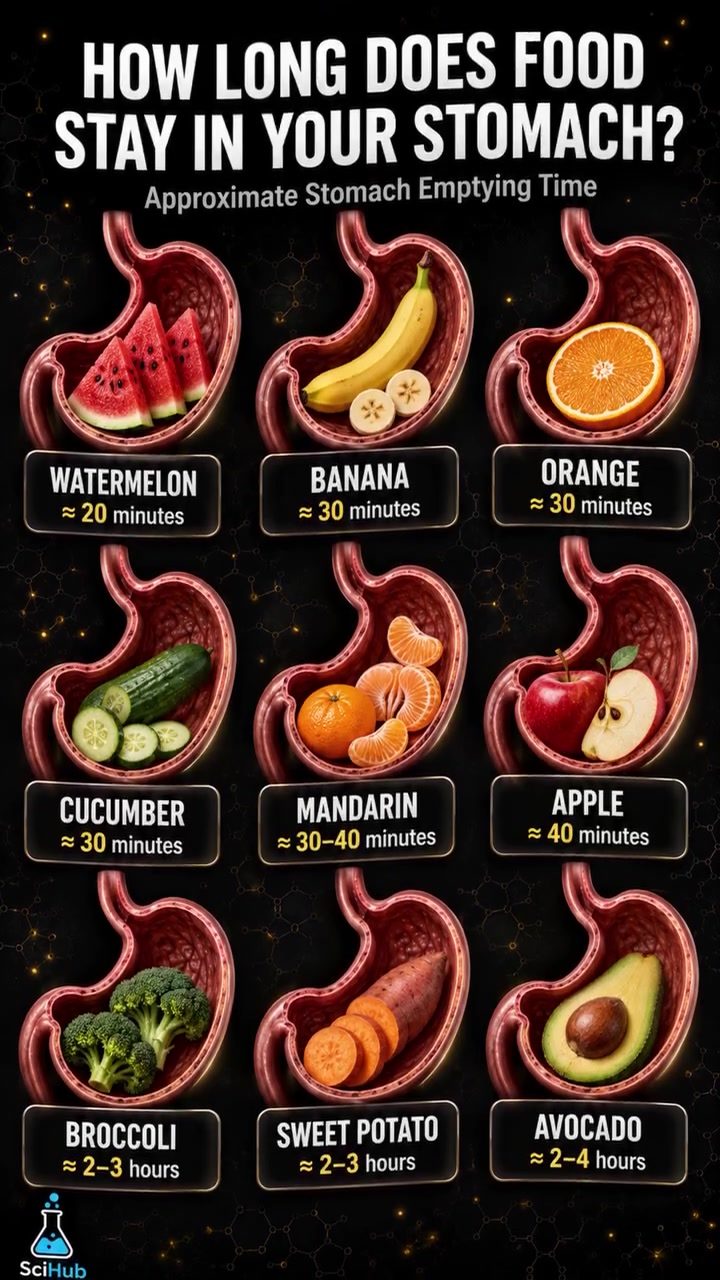
- Watermelon: Approximately 20 minutes.
- Banana: Around 30 minutes.
- Orange: About 30 minutes.
- Cucumber: Around 30 minutes.
- Mandarin: Between 30-40 minutes.
- Apple: About 40 minutes.
Vegetables
Vegetables, especially those high in fiber, generally take longer to digest, which can affect how quickly they move through the stomach.
- Broccoli: Approximately 2-3 hours.
- Sweet Potato: Around 2-3 hours.
Healthy Fats
Foods rich in healthy fats, like avocados, take the longest to digest, which can be beneficial for sustained energy but may also lead to feelings of fullness or discomfort for some.
- Avocado: Around 2-4 hours.
Factors Affecting Stomach Emptying Time
While the estimates provided give a general idea, it's essential to recognize that digestion times can vary based on several factors:
Meal Size
Larger meals take longer to digest than smaller ones. This is because the stomach needs more time to break down a larger volume of food.
Cooking Method
The way food is prepared can also affect digestion. For example, raw fruits and vegetables may pass through the stomach faster than cooked ones because cooking can break down some of the food's fiber, making it easier to digest.
Nutrient Composition
Foods high in fat, protein, or fiber generally take longer to digest. This is because these nutrients require more effort to break down.
Individual Metabolism
Everyone's metabolism is unique, and factors like age, gender, and overall health can influence how quickly food moves through the digestive system. For instance, younger individuals and those with faster metabolic rates may experience quicker digestion.
Practical Tips for Optimal Digestion
Meal Planning
Plan your meals with digestion in mind. Pair faster-digesting foods with slower ones to balance your energy levels throughout the day.
Hydration
Staying hydrated can help food move through your digestive system more efficiently. Water helps break down food and supports overall digestion.
Chew Thoroughly
Chewing your food thoroughly can aid in digestion. This process breaks down food into smaller particles, making it easier for your stomach to process.
Listen to Your Body
Pay attention to how your body responds to different foods. If you experience discomfort, it might be worth adjusting your diet or consulting a healthcare professional.
Important Takeaways
Stomach emptying times vary significantly depending on the type of food and individual factors. Fruits with high water content, like watermelon and cucumber, pass through quickly, while foods rich in fiber or healthy fats, such as avocados, take longer to digest. Understanding these times can help optimize meal planning and manage digestive comfort, but it's crucial to recognize that individual experiences may vary.
The general breakdown is:
- Quickly Digested Foods: Watermelon (20 minutes), Banana (30 minutes), Orange (30 minutes), Cucumber (30 minutes), Mandarin (30-40 minutes), Apple (40 minutes).
- Moderately Digested Foods: Broccoli (2-3 hours), Sweet Potato (2-3 hours).
- Slowly Digested Foods: Avocado (2-4 hours).
Conclusion
Stomach emptying times are more than just interesting facts; they provide valuable insights into how our bodies process food. By understanding these times and the factors that influence them, you can make more informed choices about what and when to eat. Whether you're looking to manage digestive discomfort, optimize your energy levels, or simply understand your body better, knowing how different foods move through your stomach is a powerful tool.
Watch the Reel
Questions readers ask
How does the stomach emptying time vary for different foods?
Stomach emptying time can range from as little as 15 minutes to 40 to 50 minutes for some foods, and can be several hours for others. Foods high in fat and protein typically stay longer in the stomach, while carbohydrates and simple sugars pass through more quickly. For example, watermelon can take about 20 to 30 minutes, whereas bananas may take 30 to 40 minutes. Cooking and processing can also change the digestive process.
What factors influence how long food stays in the stomach?
Several factors affect stomach emptying time, including the type of food, your overall health, and any medications you might be taking. Fiber, fat, and protein content of food can significantly impact digestion time. Additionally, physical activity, stress, and existing digestive conditions can alter how quickly or slowly your stomach empties.
Why is it important to know about stomach emptying times for meal planning?
Understanding stomach emptying times can help you plan meals to optimize digestion and manage discomfort. For instance, if you know that certain foods stay in your stomach longer, you can space out your meals accordingly to avoid overeating or feeling bloated. Pairing foods with similar digestion times can also improve digestive comfort.
What are some foods that pass through the stomach quickly?
Generally, foods with simple sugars and carbohydrates digest more quickly. Examples include watermelon and cucumber, which can take around 20 to 30 minutes to pass through the stomach. Other quick-digesting foods include soft fruits, vegetables, and liquids, making them best for maintaining hydration and quick energy boosts.
What are some foods that stay in the stomach longer?
Foods high in fat and protein tend to stay in the stomach longer, such as meats, dairy, and nuts. For example, oranges, which contain fiber and sugars, can take around 30 minutes to an hour to digest. Bananas, though often considered quick to digest, can take around 30 to 40 minutes and even longer when combined with fats or proteins.
How can I manage my digestive comfort based on stomach emptying times?
To manage digestive comfort, consider eating smaller, more frequent meals and pairing foods with similar digestion times. For instance, if you eat a banana, you may want to avoid high-fat foods at the same time to prevent increased discomfort. Hydration supports digestion, and staying hydrated can help foods pass through your stomach more efficiently.
What are some general guidelines for healthy digestion?
To promote healthy digestion, incorporate a variety of foods into your diet, focusing on whole foods and minimizing processed items. Chew your food thoroughly and maintain a consistent eating schedule. Stay hydrated and avoid overeating to support a healthy digestive process. Additionally, regular physical activity can stimulate digestion and reduce discomfort.
Related deep dives
Similar reads based on topic and creator.

Recent articles
Fresh deep dives from the latest Reels we unpacked.




Comments
Be the first to comment.