Real Estate Affordability: A Global Perspective
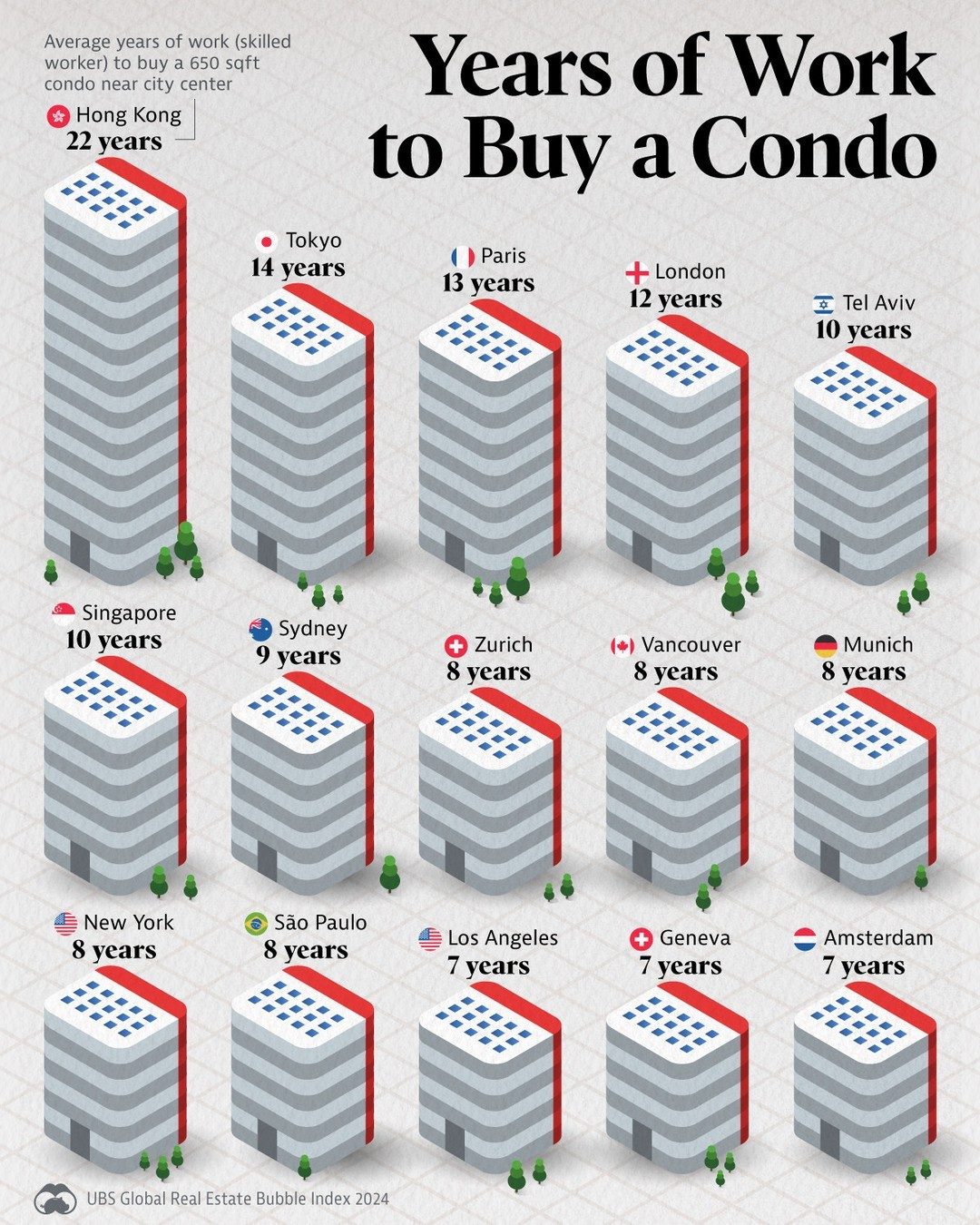
Understanding the affordability of real estate in major cities around the world is crucial for anyone considering a move or investment. The UBS Global Real Estate Bubble Index 2024 provides valuable insights into how long it takes for a skilled worker to save for a 650 sqft condo in various urban centers. This index highlights the stark differences in housing affordability across different regions, influenced by factors such as income levels, cost of living, and economic conditions.
Why This Matters
The ability to buy a home is a key indicator of economic health and quality of life. In cities where housing is affordable, residents enjoy greater financial stability and can invest in other areas of their lives, such as education and leisure. Conversely, in cities where housing is expensive, residents may face significant financial strain, impacting their overall well-being. Understanding these dynamics is essential for policymakers, investors, and individuals planning their future.
Factors Influencing Real Estate Affordability
Economic Conditions
Economic stability and job opportunities play a significant role in real estate affordability. Cities with thriving economies, such as San Francisco, tend to have higher average incomes, making it easier for residents to save for a down payment. On the other hand, cities with slower economic growth or high unemployment rates may struggle with housing affordability.
Cost of Living
The cost of living, which includes expenses like groceries, transportation, and utilities, greatly affects how much disposable income residents have for saving for a home. In cities with a high cost of living, even high-income earners may find it challenging to afford a condo. For example, Hong Kong's high cost of living, combined with stringent housing supply, results in one of the longest savings periods in the world.
Housing Supply
The availability of housing units significantly impacts affordability. Cities with limited housing supply, such as Hong Kong and Tokyo, see higher prices and longer savings periods. Conversely, cities with more flexible housing markets, like Amsterdam and Los Angeles, may offer more affordable options due to a greater supply of housing units.
Major Housing Markets: A Comparative Analysis
Hong Kong
Hong Kong tops the list with the longest savings period, requiring over 22 years of work for a skilled worker to afford a 650 sqft condo. This is largely due to the city's high cost of living and limited housing supply. Despite being a global financial hub, Hong Kong's housing market remains one of the least affordable in the world.
Tokyo
Tokyo follows closely with a savings period of 14 years. Similar to Hong Kong, Tokyo faces challenges with housing supply and high cost of living, making it difficult for residents to save for a home. However, the city's robust economy offers higher-income opportunities, which can offset some of the financial strain.
Paris, London, and Tel Aviv
Paris, London, and Tel Aviv each require approximately 12 years of work to save for a 650 sqft condo. These cities are known for their vibrant cultural scenes and economic opportunities, but they also grapple with high living costs and limited housing supply. Paris, in particular, has been under scrutiny for its strict building regulations, which can limit the development of new housing units.
New York, Sao Paulo, Los Angeles, and Amsterdam
Cities like New York, Sao Paulo, Los Angeles, and Amsterdam require 7-8 years of work to afford a 650 sqft condo. These cities offer a mix of economic opportunities and a more diversified housing market, making it relatively easier for residents to save for a home. However, the cost of living can still be high, especially in areas with high demand for amenities and leisure.
Practical Tips for Navigating Real Estate Markets
1. Research Local Market Trends
Staying informed about local market trends, including supply and demand dynamics, is essential. Understanding the current and projected housing market conditions can help you make informed decisions about when and where to buy a property.
2. Consider Long-Term Financial Planning
It’s crucial to have a long-term financial plan that accounts for fluctuations in income and living expenses. This includes setting aside a portion of your income for savings and ensuring you have a diversified investment portfolio to support your financial goals.
3. Explore Financing Options
Evaluate different financing options, such as low-interest loans, government-backed mortgages, and first-time homebuyer programs. These options can help you manage the financial burden of purchasing a property and make homeownership more accessible.
4. Seek Professional Advice
Consulting with real estate professionals, such as realtors and financial advisors, can provide valuable insights and guidance. They can help you navigate the complexities of the housing market and ensure you make the best decision for your financial situation.
Important Takeaways
Economic Stability and Housing Affordability
Economic stability and job opportunities greatly influence housing affordability. Cities with strong economies, like San Francisco, offer higher average incomes, reducing the savings period.
Cost of Living and Savings Period
The cost of living significantly affects how long it takes to save for a home. Cities with a high cost of living, such as Hong Kong and Tokyo, have longer savings periods due to the strain on residents' disposable income.
Housing Supply and Market Dynamics
The availability of housing units plays a crucial role in affordability. Cities with limited housing supply, such as Hong Kong and Tokyo, face higher prices and longer savings periods for residents.
Conclusion
The UBS Global Real Estate Bubble Index 2024 provides a comprehensive look at real estate affordability in major cities worldwide. By understanding the factors influencing housing affordability, such as economic conditions, cost of living, and housing supply, individuals can make more informed decisions about their future. Whether you're planning to buy a home or invest in property, staying informed about local market trends and seeking professional advice can help you navigate the complexities of the housing market effectively.
Watch the Reel
Questions readers ask
How does the UBS Global Real Estate Bubble Index 2024 help in understanding condo affordability?
The UBS Global Real Estate Bubble Index 2024 provides a comparative analysis of how many years it takes for a skilled worker to save for a 650 sqft condo in different major cities. This index considers factors like income levels, living costs, and economic conditions to offer a clear picture of housing affordability worldwide. It is a useful tool for those looking to invest in or move to a new city.
Which city has the longest condo saving timeline for a skilled worker?
Hong Kong stands out as the city with one of the longest timelines for a skilled worker to save for a condo. The average condo price in Hong Kong is significantly high, making it challenging for residents to buy a property quickly. According to the UBS index, it can take up to 25 years for a skilled worker to save for a 650 sqft condo.
How does the cost of living impact the condo saving timeline?
The cost of living directly influences how long it takes to save for a condo. In cities with a high cost of living, a larger portion of a worker's income goes towards daily expenses, leaving less for savings. This results in a longer condo saving timeline. Conversely, in cities with a lower cost of living, workers can save more quickly, reducing the time needed to purchase a condo.
Why is comparing condo prices across cities important?
Comparing condo prices across cities helps potential buyers understand the global real estate market and make informed decisions. It highlights the disparities in housing affordability and can guide investors and homebuyers in choosing locations that align with their financial goals. This comparison also sheds light on how economic conditions and income levels vary by region.
How does economic stability affect the condo market?
Economic stability plays a significant role in the condo market. In cities with stable economies, there is often a more predictable housing supply and steady income growth, which can lead to a more balanced and affordable housing market. Conversely, economic instability can cause fluctuations in housing prices and supply, making it more challenging to predict the condo saving timeline.
Recent articles
Fresh deep dives from the latest Reels we unpacked.




Comments
Be the first to comment.