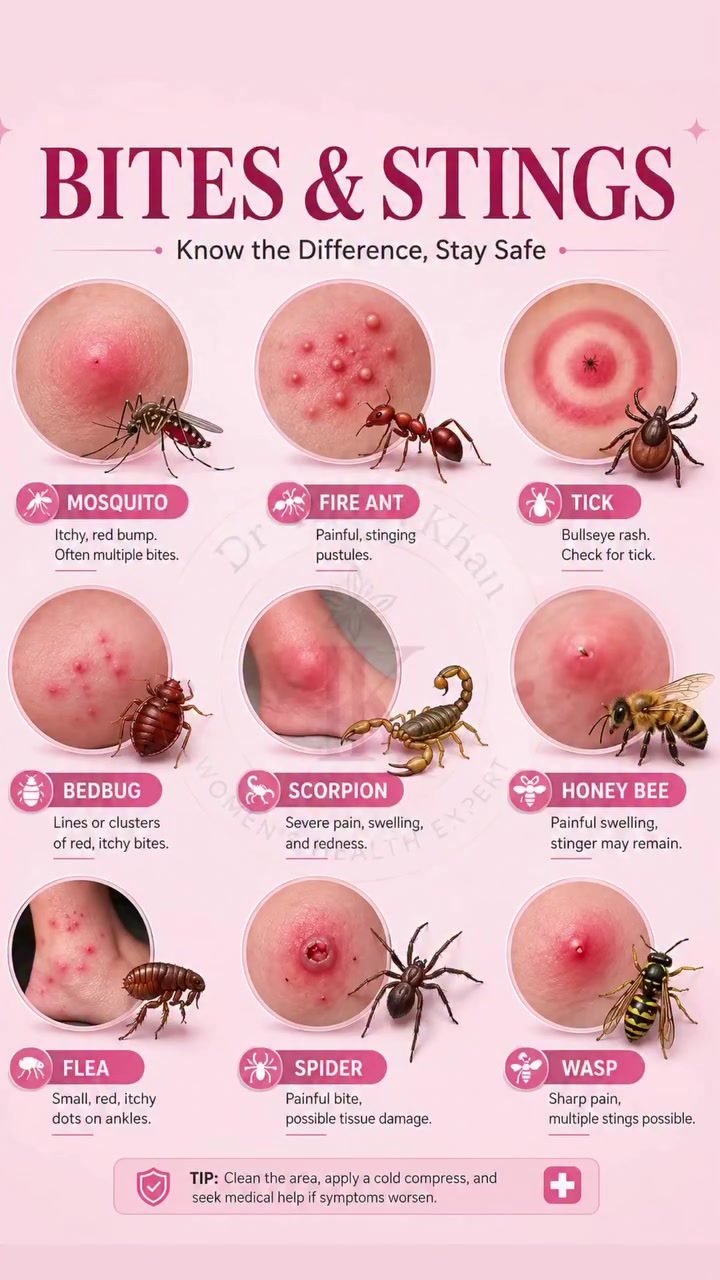
Identifying Common Insect Bites and Stings
Insect bites and stings are a common occurrence, but not all bites look the same. Being able to identify the type of bite or sting can help you respond appropriately and seek medical care when necessary. Familiarizing yourself with the common signs can make all the difference in managing symptoms and ensuring quick recovery.
Context: Why This Matters
Insect bites and stings can range from mildly irritating to severely painful and even life-threatening. Knowing how to identify the source of a bite or sting can help you determine the best course of action. Some bites may require immediate medical attention, while others can be treated at home.
Main Discussion
When it comes to insect bites and stings, recognizing the symptoms is key. Let's dive into the characteristics of some of the most common offenders:
Mosquito Bites
Mosquito bites are often itchy, red bumps. They frequently occur in multiple places, as mosquitoes tend to bite repeatedly in a small area. These bites can be annoying, but they typically do not require medical attention unless you experience an allergic reaction.
Fire Ant Stings
Fire ant stings are known for causing painful, stinging pustules. These bites often result in small blisters that can be uncomfortable and itchy. While fire ant stings are generally not life-threatening, they can be very painful and may require pain relief and antiseptic treatment.
Tick Bites
Ticks can be particularly troublesome because they can transmit diseases like Lyme disease. One of the telltale signs of a tick bite is a bullseye rash. If you notice a rash that looks like a bullseye or experience flu-like symptoms, it's crucial to seek medical attention promptly.
Bedbug Bites
Bedbug bites appear as lines or clusters of red, itchy bites. These bites are often grouped in a row or zigzag pattern and can be mistaken for mosquito bites. While bedbug bites are not usually dangerous, they can cause significant discomfort and may require medical intervention if they become infected.
Scorpion Stings
Scorpion stings are characterized by severe pain, swelling, and redness. These stings can be very painful and may cause severe symptoms, including difficulty breathing and swelling of the face, lips, or tongue. Immediate medical attention is necessary if you experience these symptoms.
Honey Bee Stings
Honey bee stings cause painful swelling and may leave a stinger behind. If you are stung by a bee, it's important to remove the stinger as quickly as possible to minimize venom injection. Honey bee stings can be life-threatening for individuals with allergies, so seek immediate medical help if you experience an allergic reaction.
Flea Bites
Flea bites are typically small, red, and itchy dots, often found on the ankles. Fleas are common pests in homes with pets and can cause significant discomfort. While flea bites are usually not serious, they can become infected if scratched.
Spider Bites
Spider bites can be painful and may cause tissue damage. Some spiders, like the black widow and brown recluse, can deliver venomous bites that can cause severe symptoms. If you suspect a spider bite, monitor your symptoms closely and seek medical help if you experience severe pain, swelling, or signs of infection.
Wasp Stings
Wasp stings cause sharp pain and can result in multiple stings. Unlike bees, wasps can sting multiple times, making their stings particularly dangerous. Wasp stings can be painful and may cause severe allergic reactions in some individuals, so it's important to seek medical attention if you experience symptoms like difficulty breathing or swelling of the face.
Practical Tips
Initial Treatment
When dealing with insect bites and stings, the first step is to clean the area thoroughly with soap and water. Applying a cold compress can help reduce swelling and numb the pain. Over-the-counter pain relievers and antihistamines can also provide relief.
When to Seek Medical Help
While many bites and stings can be treated at home, it's crucial to seek immediate medical attention if you experience any of the following symptoms:
- Difficulty breathing
- Swelling of the face, lips, or tongue
- Severe allergic reaction (anaphylaxis)
- Fever, spreading redness, pus, or worsening pain
Prevention
Preventing bites and stings is always the best approach. Use insect repellent, wear protective clothing, and avoid areas with high concentrations of insects. Regularly check for ticks after spending time outdoors, especially in wooded or grassy areas.
Important Takeaways
Understanding the differences between various insect bites and stings can help you respond quickly and effectively. Remember to:
- Clean the area and apply a cold compress for initial treatment.
- Seek immediate medical attention if you experience severe symptoms.
- Be aware of the signs of a severe allergic reaction and how to respond.
Conclusion
Insect bites and stings are a part of life, but with the right knowledge, you can manage them effectively. By familiarizing yourself with the common signs and symptoms, you can respond quickly and seek medical care when necessary. Whether it's a mosquito bite or a scorpion sting, knowing what to look for and how to treat it can make all the difference.
Watch the Reel
Questions readers ask
How can I differentiate between an insect bite and an insect sting?
Insect bites and stings often have different characteristics, but they are not mutually exclusive. Insect bites typically involve piercing or sucking the skin to feed, often resulting in a red, itchy bump. Examples include mosquito and flea bites. In contrast, insect stings inject venom through a stinger, leading to immediate pain and swelling. Bees, wasps, and ants are common stingers.
What are the symptoms of a mosquito bite?
Mosquito bites typically cause a small, round, red, itchy bump. This is due to an allergic reaction to the mosquito's saliva. Swelling and itchiness usually appear within a few minutes of the bite and can last for several days. Some people may develop a more severe reaction, including larger areas of swelling and itchiness.
How do I recognize a tick bite?
Tick bites are often painless and may go unnoticed. However, a small red bump, similar to a mosquito bite, may appear. The key sign of a tick bite is the presence of the tick itself. Ticks can be removed with tweezers, but it's important to do so carefully to prevent further complications. If you find a tick embedded in your skin, save it for identification and monitor the bite area for signs of infection or a bull's-eye rash, which may indicate Lyme disease.
What should I do if I suspect a fire ant sting?
Fire ant stings usually cause a sharp, burning pain followed by the development of a raised, itchy, red area. Multiple stings can occur, resulting in pustules that may become infected. To treat a fire ant sting, clean the area with mild soap and water, apply a cold compress, and consider taking an over-the-counter antihistamine for itching. Seek medical attention if you experience signs of a severe allergic reaction, such as difficulty breathing or swelling of the throat.
What do honey bee sting symptoms look like?
Honey bee stings result in immediate, sharp pain, followed by a red, swollen area. The stinger, which may be left in the skin, will look like a small black dot. The affected area will typically turn white and swell. Mild reactions can be treated at home, while severe reactions, especially if you experience signs of anaphylaxis such as difficulty breathing or dizziness, require immediate medical intervention.
When should I seek medical help for an insect bite or sting?
Seek medical help if you experience severe pain, swelling, or redness that spreads beyond the immediate area of the bite or sting, or if you develop a fever or chills. Additionally, if you experience signs of a severe allergic reaction, such as difficulty breathing, swelling of the throat, or rapid pulse, seek immediate medical attention. If you are unsure about the type of bite or sting or if it was delivered by an unknown insect, it's always best to err on the side of caution and consult a healthcare professional.
How can I treat mild insect bites and stings at home?
For mild insect bites and stings, home treatment typically involves cleaning the affected area with mild soap and water, applying a cold compress to reduce swelling, and using an over-the-counter antihistamine or hydrocortisone cream to alleviate itching. Pain relievers such as ibuprofen or acetaminophen can also help manage discomfort. However, if symptoms worsen or do not improve, seek medical attention.
Recent articles
Fresh deep dives from the latest Reels we unpacked.




Comments
Be the first to comment.