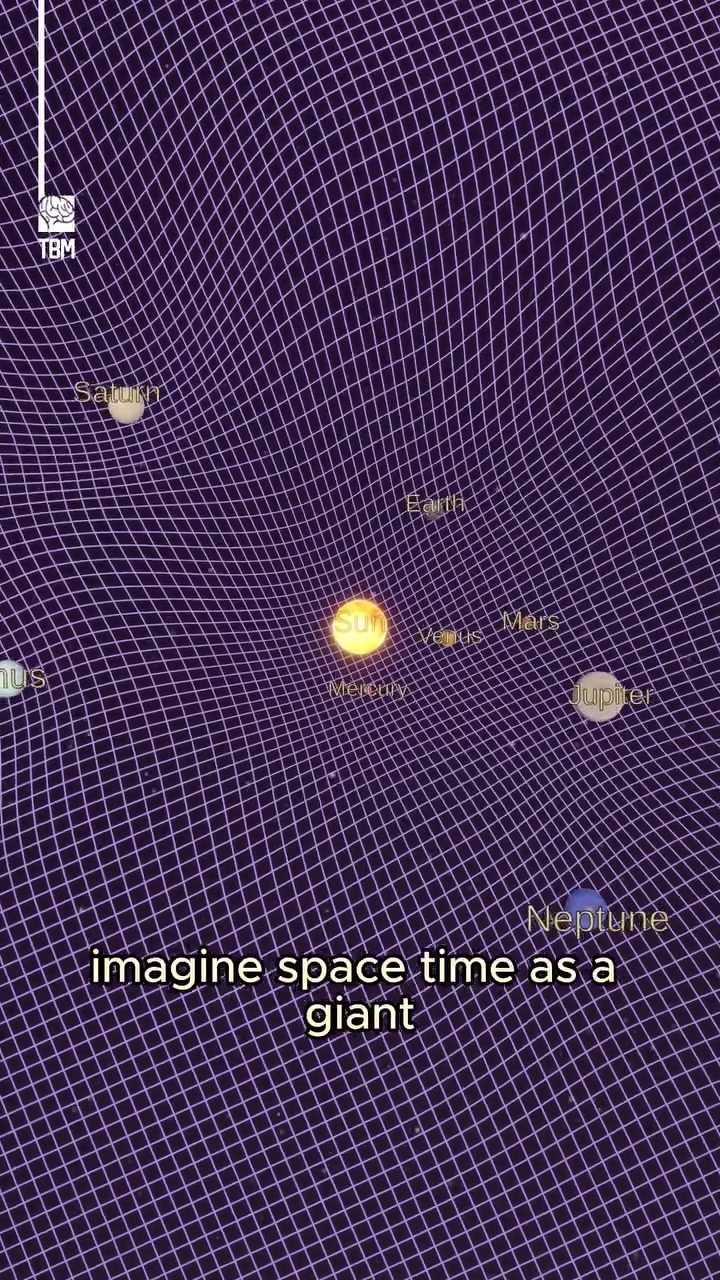
Gravity Wells: How Massive Objects Bend Space-Time
Space-time distortion is a fascinating concept that helps explain how massive objects like planets, stars, and black holes influence the movement of other objects in the universe. Gravity wells are a useful visualization that can help understand this complex phenomenon.
Why Gravity Wells Matter
Understanding how gravity wells bend space-time is crucial for comprehending the dynamics of celestial bodies. Instead of imagining gravity as an invisible force pulling objects, think of it as the curvature of space-time caused by mass. This concept, first introduced by Albert Einstein's theory of general relativity, provides a more accurate description of how objects move through the universe. Gravity wells highlight that planets orbit stars and satellites orbit planets not because of a mystical force, but because they follow the curved paths in space-time.
Understanding Gravity Wells
The Fabric of Space-Time
Imagine a giant, invisible fabric stretched across the universe. Massive objects, like planets, stars, and black holes, create indentations in this fabric, which we refer to as gravity wells. The deeper the well, the heavier the object.
The Curved Path of Objects
When small objects, such as planets or satellites, move through space, they do not follow a straight line. Instead, they follow the curved shape of space-time caused by massive objects. This is why planets orbit stars, moons orbit planets, and even light can bend around extremely massive objects like black holes.
The Solar System as a Gravity Well
In the solar system, the Sun is at the deepest part of the gravity well because it contains most of the solar system's mass. Planets sit along the curved grid of space-time, and even distant planets are influenced by the Sun's gravity.
Practical Tips for Visualizing Gravity Wells
Visualizing gravity wells can be challenging, but there are tools and concepts that can help make this easier.
The Rubber Sheet Analogy
One classic analogy is to consider a rubber sheet stretched taut. Placing a heavy ball in the center of the sheet creates a depression. If you roll a smaller ball around the edge of the sheet, it will orbit the heavy ball. This demonstrates how massive objects create gravity wells that influence the motion of smaller objects.
Computer Simulations
There are many computer simulations available that can help visualize gravity wells. These simulations can show how different masses create different depths of gravity wells and how objects move through them. Simulations can also help illustrate how changes in mass and distance affect gravitational forces.
Observing Real-World Phenomena
Observing real-world phenomena can also provide insights into gravity wells. For example, the orbits of planets in the solar system are a direct result of the Sun’s gravitational pull, which can be visualized as a gravity well. The bending of light around massive objects, such as galaxies or black holes, is another observable effect of gravity wells.
Important Takeaways
Gravity wells provide a powerful way to visualize how massive objects influence the movement of other objects in the universe. Key points to remember include:
- Space-time is a flexible fabric that bends under the influence of mass.
- Objects follow the curved paths of space-time rather than moving in straight lines.
- The Sun is at the deepest part of the solar system’s gravity well, influencing the motion of planets.
- Gravity is not just a force; it is the shape of the universe guiding everything that moves through it.
Conclusion
Gravity wells offer a compelling way to understand the dynamics of celestial bodies and the curvature of space-time. By visualizing how massive objects bend the fabric of the universe, we can gain deeper insights into the forces that govern our cosmic environment. This concept not only enriches our understanding of the universe but also provides a tangible framework for exploring the intricacies of gravity and motion.
Watch the Reel
Questions readers ask
What are gravity wells and how do they affect the solar system?
Gravity wells are visual representations of how massive objects, like the Sun and planets, curve space-time. They affect the solar system by determining the paths of orbiting bodies, such as planets and satellites, which follow the curved paths through space-time created by these massive objects.
How does the Sun's gravity well influence the planets?
The Sun's immense mass creates a deep gravity well, which shapes the elliptical orbits of the planets. The planets are constantly falling towards the Sun, but their sideways momentum causes them to miss the Sun and orbit around it instead. This is a result of the curvature in space-time around the Sun.
What role do gravity wells play in the movement of celestial bodies?
Gravity wells play a crucial role in the movement of celestial bodies by dictating their trajectories. Instead of being pulled by an invisible force, objects move along the curved paths in space-time created by the gravitational influence of massive bodies. This is why planets orbit stars and moons orbit planets.
Can gravity wells explain the phenomenon of tides on Earth?
Yes, gravity wells can help explain tides. The Moon's gravity well causes the oceans to bulge towards and away from it, creating high and low tides. Additionally, the Sun's gravity well, although larger, has a lesser effect on tides compared to the Moon's well.
How do gravity wells relate to the concept of escape velocity?
Gravity wells are directly related to escape velocity, which is the speed an object needs to escape the gravitational pull of a massive body. A deeper gravity well, like that of a large planet, requires a higher escape velocity. This concept is crucial for space missions and launches.
What is the significance of the curvature of space-time in understanding gravity?
The curvature of space-time, as described by general relativity, provides a more accurate understanding of gravity. It explains why objects move along specific paths and helps define the mechanics of gravitational forces without relying on the traditional notion of an invisible pulling force. It also helps explain why massive objects like the Sun and planets influence the orbits of other celestial bodies.
How do gravity wells help predict the behavior of planets in the solar system?
By understanding gravity wells, scientists can predict the behavior of planets with precision. This includes anticipating their orbits, understanding perturbations caused by other planets, and forecasting events like eclipses and alignments. This predictive power is essential for both scientific research and space exploration missions.
Related deep dives
Similar reads based on topic and creator.

Recent articles
Fresh deep dives from the latest Reels we unpacked.




Comments
Be the first to comment.