Yogurt and Smart Snacking
Yogurt is a popular choice for many seeking a convenient, nutritious snack. But how many of us are truly paying attention to what’s in that cup or tub? You can make better choices by understanding a few key factors.
Why Yogurt Matters
Yogurt is a versatile dairy product that can be enjoyed at any time of day. It’s a great source of calcium and protein, making it a good fit for various nutritional needs. But not all yogurts are created equally. Understanding the differences between yogurt options will help you choose a healthier yogurt and make smarter decisions.
Key Factors to Consider
When selecting a healthier yogurt, consider the following factors:
-
Protein Content: Protein helps keep you full and supports muscle health. Choose yogurts with higher protein content for better satiety and overall nutritional benefit.
-
Added Sugars: Many yogurts, especially flavored ones, are packed with added sugars. Opt for yogurts with lower sugar content to minimize your intake of empty calories.
-
Ingredient Quality: Look for yogurts with shorter, simpler ingredient lists. Avoid products with artificial ingredients, fillers, and unnecessary additives. The purity of the ingredients directly affects the overall health benefit of the yogurt.
In yogurts, these factors are often displayed on the packaging or the nutrition label. By following these guidelines, you can confidently select yogurts that align with your health goals.
The Good, The Bad, and The Best
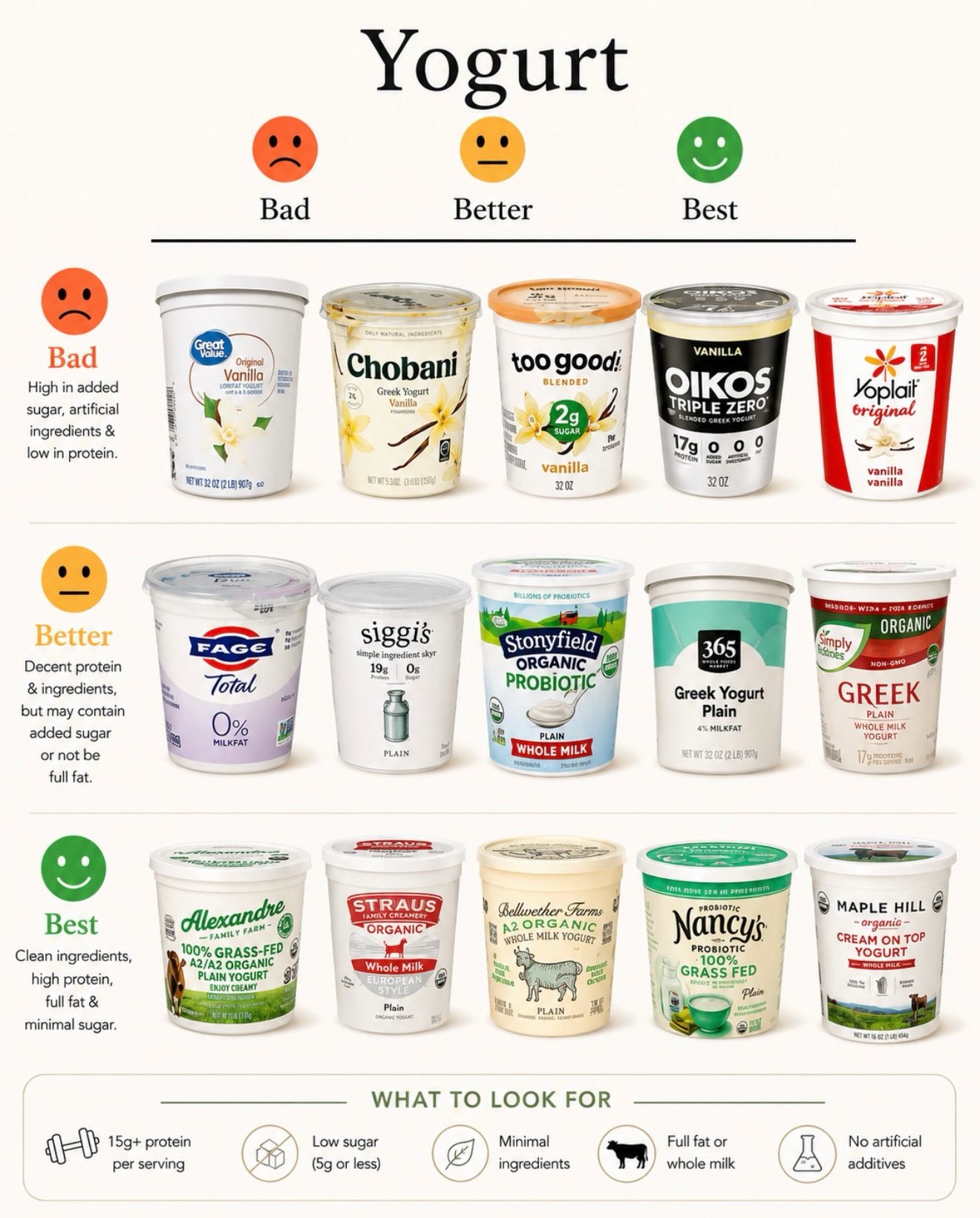
Bad Yogurt Options
Yogurts in this category often come with high sugar content, artificial sweeteners, and a lengthy list of additives. These products may taste good but offer little nutritional value. They are typically heavily processed, making them less healthy and more likely to contribute to weight gain and other health issues.
Better Yogurt Options
Yogurt is labeled as 'better' if it has a balanced profile: moderate protein, reasonable sugar content, and a decent ingredient list. These yogurts are a step up from the "bad" category but can still be improved upon.
Best Yogurt Options
Top-rated yogurts are high in protein and low in added sugars. They feature clean, recognizable ingredients and minimal processing. This yogurt category stands out for providing optimal nutritional benefits while being delicious and satisfying.
Protein in Yogurt: Why It Matters
Protein content is essential when choosing a healthier yogurt. Protein contributes to weight management by promoting satiety and supporting muscle growth and repair. High-protein yogurts, such as Siggi's Original Icelandic Skyr, often contain 15 grams of protein per serving and 0 grams of added sugar.
Sugar in Yogurt: Hidden Dangers
When selecting a yogurt, a significant factor to consider is the sugar content. Many yogurts, especially flavored ones, are packed with added sugars. High sugar content can lead to weight gain, increased risk of type 2 diabetes, and other health issues. Look for yogurts that are low in added sugars or contain natural sweeteners, like fruit.
Practical Tips for Making Smart Yogurt Choices
Read the Labels
Reading labels is crucial. Focus on the ingredients list and the nutritional information. Look for shorter ingredient lists with recognizable, whole-food ingredients. Opt for yogurts with 10 grams or fewer of added sugars and high protein content.
Swap Your Yogurt
If you're currently enjoying high-sugar yogurts, consider swapping them for higher protein options. You'll notice a difference in how you feel and how satisfied you are after eating.
Consider Your Goals
Choose a yogurt that aligns with your health and fitness goals. If weight loss or muscle gain is a priority, opt for a high-protein, low-sugar yogurt.
Benefits of Reading Labels
Reading labels is a small effort that can greatly impact your health. It only takes 10 extra seconds to check the ingredients and nutritional information on your yogurt. This practice will empower you to make more informed decisions and choose healthier options.
Understanding Ingredient Lists
The ingredient list on yogurt packaging provides valuable insights. Look for simple, natural ingredients. Avoid yogurts with long ingredient lists that include artificial sweeteners, fillers, and unnecessary additives. The cleaner the ingredient list, the healthier the yogurt.
The Importance of Minimally Processed Options
Minimally processed yogurts are generally healthier. They retain more of their natural nutrients and are less likely to contain added sugars and artificial ingredients. Choosing minimally processed yogurts can help you maintain a healthier lifestyle.
Important Takeaways
Making small, consistent changes to your yogurt choices can significantly impact your overall health and well-being. Swapping high-sugar yogurts for higher protein options, as well as other healthier alternatives, can lead to sustainable lifestyle improvements.
Conclusion
Yogurt is a versatile and nutritious snack, but not all yogurts are created equally. By focusing on protein content, added sugars, and ingredient quality, you can make smarter choices that support your health and fitness goals. Next time you're at the store, take a moment to read the labels and choose a healthier yogurt option. Your body will thank you.
Watch the Reel
Questions readers ask
What are the benefits of choosing high-protein yogurt?
High-protein yogurt helps maintain fullness, supports muscle health, and promotes overall satiety. A single serving of high-protein yogurt can provide 15-20g of protein, which is an excellent option for snacking, especially for those looking to build muscle or manage appetite.
How can I identify yogurts with low added sugars?
To find low-sugar yogurts, check the nutrition label for the grams of added sugars. Look for yogurts with 15g or less of added sugars per serving. Opt for plain or unsweetened varieties, and consider adding your own sweetness with fresh fruit or a drizzle of honey.
What are some healthy ingredients to look for in yogurt?
Seek yogurts with live active cultures, which can support gut health. Opt for yogurts with minimal ingredients and no artificial sweeteners, flavors, or preservatives. Prioritize whole milk and Greek yogurts, which offer higher protein and fat content.
Which yogurt brands are known for their quality and nutrition?
Several brands stand out for their quality and nutritional profiles. For high-protein options, consider Greek yogurts from brands like Fage, Chobani, and Siggi's. For low-sugar choices, look for brands like Two Good or Dannon Oikos Triple Zero, which offer low sugar and high protein.
What types of yogurt should I avoid for a healthier diet?
Avoid yogurts with excessive added sugars, artificial sweeteners, or flavors. Stay away from non-dairy yogurts and reduced-fat varieties, which tend to be lower in protein and may have more added sugars. Also, be cautious of yogurts labeled 'light' or 'low-fat' due to the potential for higher sugar content.
What is the best yogurt for a nutritious breakfast?
For a nutritious breakfast, select high-protein yogurt with no added sugar. Add fresh fruit and a sprinkle of nuts or seeds for added flavor and texture. Greek yogurt is an excellent option due to its thick, creamy texture and high protein content.
What makes Greek yogurt a better yogurt choice for daily snacks?
Greek yogurt is strained to remove excess liquid, resulting in a higher protein and lower sugar content. It's thicker and creamier, making it a satisfying snack. It holds its own as a stand-alone snack, or you can pair it with nuts, seeds, or berries for added flavor and nutrients.
Recent articles
Fresh deep dives from the latest Reels we unpacked.




Comments
Be the first to comment.