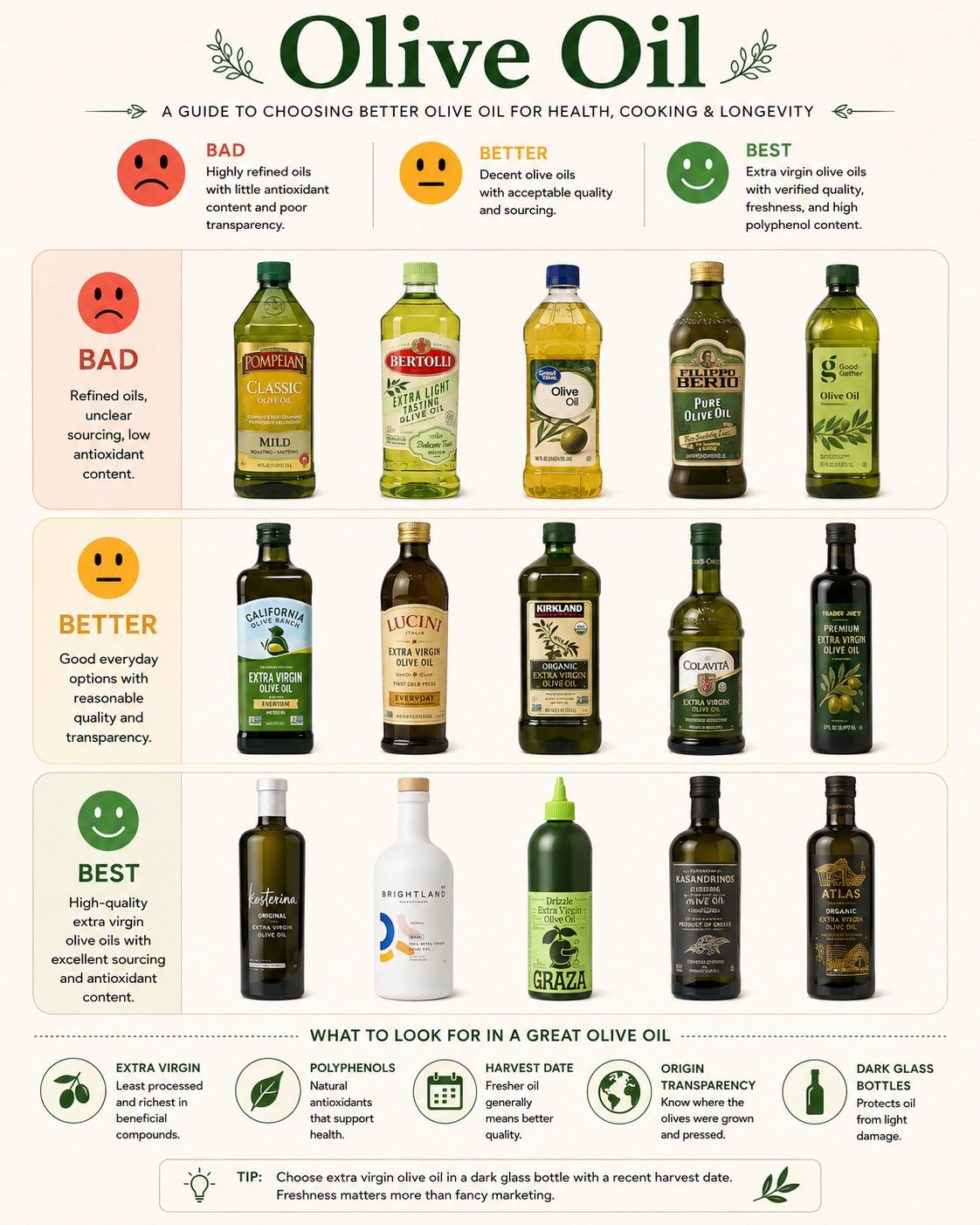
Olive Oil Selection Guide
Olive oil, a staple in many kitchens worldwide, is more than just a cooking ingredient—it's a crucial component of a healthy diet. Choosing the right olive oil can significantly impact your health, cooking, and even the longevity of your meals. This guide will help you navigate the world of olive oils, focusing on key factors like sourcing, polyphenols, harvest date, origin, and packaging.
Context / Why This Matters
The quality of olive oil can vary greatly, and knowing how to choose the best one can enhance your meals and overall well-being. High-quality olive oil is rich in monounsaturated fats, antioxidants, and polyphenols, which play a crucial role in protecting the body from chronic diseases.
Main discussion
Understanding Olive Oil Grades
Olive oil is categorized into different grades based on its quality and processing methods. The most common grades include:
- Extra Virgin Olive Oil: This is the highest quality olive oil, extracted from olives using mechanical means without the use of chemicals or excessive heat. It has a fruity flavor and a low acidity level, which makes it ideal for both cooking and drizzling over salads or bread.
- Virgin Olive Oil: This grade is also extracted using mechanical methods but has a slightly higher acidity level than extra virgin olive oil. It has a good flavor but may not be as rich as extra virgin olive oil.
- Refined Olive Oil: This type of olive oil is processed through chemicals and heat to remove impurities. It has a neutral flavor and is often used for high-heat cooking.
- Pure Olive Oil / Olive Oil: This is a blend of refined olive oil and virgin or extra virgin olive oil. It has a lighter flavor and is often used for cooking.
Key Factors to Consider
When selecting olive oil, consider the following key factors to ensure you're getting a high-quality product:
Sourcing
The source of your olive oil is crucial. High-quality olive oils are typically sourced from regions known for their superior olive varieties, such as Greece, Spain, and Italy. Look for oils that clearly state their origin and have certifications that validate their authenticity.
Polyphenols
Polyphenols are natural compounds found in olive oil that contribute to its health benefits. They have antioxidant, anti-inflammatory, and anti-cancer properties. When choosing olive oil, opt for those with higher polyphenol content. Look for labels that indicate high polyphenol levels or certifications that guarantee the polyphenol content.
Harvest Date
The harvest date is an essential factor in determining the freshness and quality of olive oil. Freshly harvested olives produce oil with a richer flavor and higher antioxidant content. Check the harvest date on the label to ensure you're getting the freshest product available.
Origin
The origin of the olives used to produce the oil can significantly impact its quality. Different regions have unique soil conditions, climates, and olive varieties that contribute to the final product's flavor and nutritional content. Look for olive oil from regions known for their high-quality produce, like Greece, Spain, and Italy.
Packaging
Packaging plays a vital role in preserving the quality of olive oil. Olive oil is sensitive to light, heat, and air, which can degrade its quality over time. Opt for dark glass bottles or tinted plastic bottles that protect the oil from light exposure. Dark glass bottles are particularly effective in maintaining the oil's freshness and quality.
Practical Tips
How to Store Olive Oil
Once you've chosen the perfect olive oil, proper storage is essential to maintain its quality. Here are some practical tips for storing olive oil:
- Store in a Cool, Dark Place: Keep your olive oil away from direct sunlight and heat sources, such as the stove or oven. A cool, dark cabinet is an ideal storage location.
- Avoid Exposure to Air: Minimize the amount of air in the bottle by using smaller bottles or transferring the oil to an airtight container. This helps slow down oxidation and preserves the oil's quality.
- Don't refrigerate: While refrigerating olive oil can prolong its shelf life, it can also cause it to solidify and lose its flavor. It's best to store olive oil at room temperature.
How to Use Olive Oil
Olive oil is versatile and can be used in various ways to enhance your meals:
- Cooking: Use olive oil for sautéing, stir-frying, and baking. Its high smoke point makes it suitable for high-heat cooking methods.
- Dressing: Drizzle olive oil over salads, vegetables, and bread for added flavor and nutrition.
- Marinating: Use olive oil as a base for marinades to infuse meats and vegetables with rich flavors.
- Skin and Hair Care: Olive oil can be used as a natural moisturizer for skin and hair. Its antioxidants help protect and nourish the skin.
Important Takeaways
Choosing the right olive oil involves considering several factors, including sourcing, polyphenols, harvest date, origin, and packaging. Opting for extra virgin olive oil and storing it properly can maximize its benefits and enhance your culinary experiences.
High-quality olive oil is not only delicious but also packed with health benefits. By making informed choices, you can enjoy the full potential of this versatile ingredient in your daily diet.
Conclusion
Selecting the best olive oil involves understanding the different grades, key factors, and practical tips for storage and usage. By choosing high-quality olive oil and incorporating it into your daily meals, you can enhance your health and culinary experiences. Whether you're cooking, dressing salads, or using it for skincare, olive oil is a versatile and beneficial ingredient to have in your kitchen.
Watch the Reel
Questions readers ask
What does the term 'extra virgin' mean when referring to olive oil?
'Extra virgin' is the highest quality grade of olive oil. It is made from the first pressing of the olives and contains no more than 0.8% acidity, which is the highest quality available. This grade of olive oil is ideal for both cooking and as a finishing oil, thanks to its robust flavor and high nutritional content.
How does the sourcing of olive oil affect its quality?
The origin and sourcing of olive oil significantly impact its quality. Olives grown in regions with ideal climates, such as the Mediterranean, tend to produce higher quality oil. Additionally, small-scale, family-owned estates often prioritize traditional harvesting methods and careful processing, leading to better tasting and healthier olive oils.
What are polyphenols in olive oil and why are they important?
Polyphenols are natural compounds found in olive oil, particularly in extra virgin varieties. These compounds possess powerful antioxidant and anti-inflammatory properties, which contribute to the health benefits of olive oil. Polyphenols help protect cells from damage and may reduce the risk of certain chronic diseases.
How should I store olive oil to maintain its freshness?
To maintain the freshness and quality of your olive oil, store it in a cool, dark place away from direct sunlight and heat sources. Using an opaque or tinted glass bottle can also help protect the oil from light degradation. Additionally, ensure the container is tightly sealed to prevent oxidation.
What is the best way to use olive oil for cooking?
The best way to use olive oil for cooking depends on the dish and your desired outcome. For high-heat cooking methods like stir-frying or grilling, choose an olive oil with a higher smoke point, such as extra virgin. For low to medium heat cooking, any extra virgin olive oil will be a good choice. However, consider using extra virgin olive oil as a finishing oil for salads and dips.
What are the health benefits of consuming olive oil regularly?
Regular consumption of olive oil, particularly extra virgin, can offer numerous health benefits. It is rich in monounsaturated fats, which support heart health by helping to lower cholesterol levels. The antioxidants and polyphenols in olive oil also help reduce inflammation and protect against chronic diseases. Furthermore, olive oil can aid in better absorption of fat-soluble vitamins.
Should I consider the harvest date when buying olive oil?
Yes, the harvest date is an important factor to consider. Freshly harvested olives produce the highest quality oil, rich in flavor and nutrients. Olive oil should be consumed within 18-24 months of harvest, so look for a explicit harvest date or 'best by' date on the packaging. This ensures you are getting the most flavorful and beneficial product.
Recent articles
Fresh deep dives from the latest Reels we unpacked.




Comments
Be the first to comment.