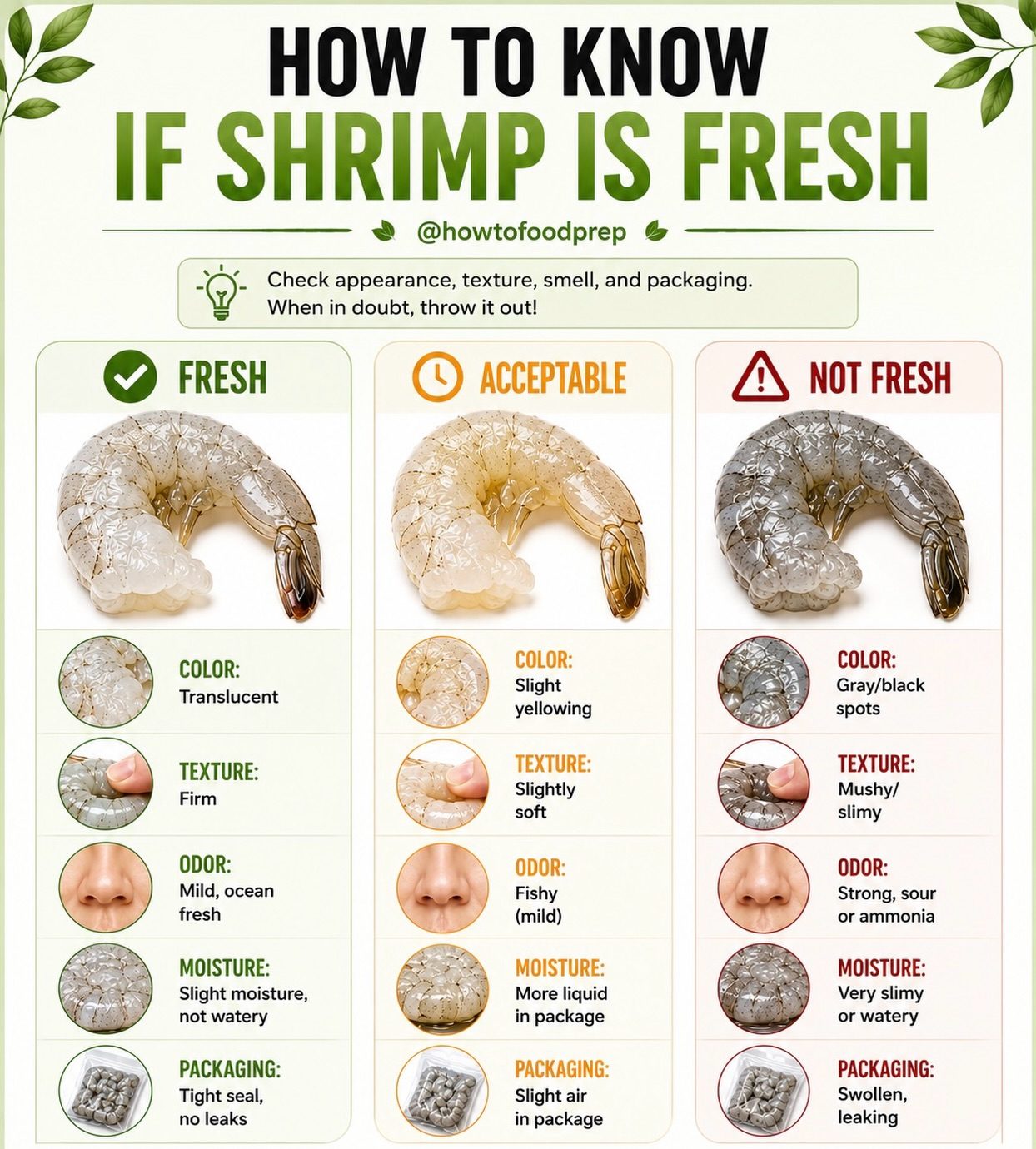
How to Know If Shrimp Is Fresh
Shrimp is a versatile and delicious seafood option, but it can spoil quickly if not handled properly. Knowing how to assess the freshness of shrimp is crucial for both food safety and culinary success. Whether you're buying fresh shrimp from the market or preparing a dish at home, understanding the key indicators of freshness will help you make the right choices.
Why This Matters
Shrimp is a popular ingredient in many dishes, but its perishable nature means it can quickly become unsafe to eat if not stored or handled correctly. Ensuring the freshness of shrimp is not just about taste; it is also about preventing foodborne illnesses. By learning to identify the signs of freshness, you can enjoy shrimp safely and confidently.
Main Discussion
Appearance: The First Indicator
The appearance of raw shrimp is one of the first things to check. Fresh shrimp should have a translucent, slightly grayish color with a firm texture. The flesh should be moist and not show any signs of dryness.
If you notice any gray or black spots, this is a clear indication that the shrimp may have started to spoil. While slight color variations can occur naturally, significant discoloration should raise a red flag.
Texture: A Tell-Tale Sign
Texture is a crucial indicator of shrimp freshness. Fresh shrimp should have a firm, elastic texture. If the shrimp feels soft, mushy, or slimy to the touch, it is a sign that the shrimp has started to deteriorate and should be discarded.
Smell: The Olfactory Test
Smell is another key factor in determining the freshness of shrimp. Fresh raw shrimp may have a mild, slightly salty or ocean-like smell. However, it should not have a strong, fishy odor. If the shrimp has an unpleasant, sour, or ammonia-like smell, it is a clear sign that it has spoiled and should not be consumed.
Packaging: A Sign of Safety
If the shrimp is packaged, check the packaging for any signs of damage or unusual swelling. The container should be intact with no leaks or excessive liquid. If the packaging appears damaged or swollen, it indicates that the shrimp may have been compromised and should be avoided.
Practical Tips
Storage and Temperature
Proper storage is essential to maintain the freshness of shrimp. Fresh raw shrimp should be refrigerated promptly and kept at 40°F (4°C) or below. As a general guideline, raw shrimp should be cooked or frozen within 1-2 days of refrigeration. If you are not planning to cook shrimp immediately, freezing is a good option to extend its shelf life.
Handling and Preparation
Handle shrimp carefully to avoid cross-contamination. Always wash your hands, utensils, and surfaces after handling raw shrimp. Use a separate cutting board and utensils for seafood to prevent the spread of bacteria.
When thawing frozen shrimp, do so in the refrigerator overnight. This helps to maintain the texture and freshness of the shrimp. Avoid thawing at room temperature, as this can promote bacterial growth.
Cooking Shrimp
Cooking shrimp thoroughly is crucial to kill any potential bacteria. Shrimp should be cooked to an internal temperature of 145°F (63°C). This ensures that any harmful bacteria are killed, making the shrimp safe to eat.
Important Takeaways
Assessing Freshness:
- Check the appearance, texture, smell, and packaging.
- Fresh shrimp should have a translucent color, firm texture, and mild ocean-like smell.
- Avoid shrimp with gray/black spots, slimy texture, or strong, sour odors. Storage Guidelines:
- Store raw shrimp at 40°F (4°C) or below.
- Cook or freeze within 1-2 days of refrigeration.
- Handle with care to avoid cross-contamination.
- Thaw frozen shrimp in the refrigerator overnight.
- Cook to an internal temperature of 145°F (63°C).
Conclusion
Knowing how to determine the freshness of shrimp is essential for both food safety and culinary success. By checking the appearance, texture, smell, and packaging, and following proper storage and handling guidelines, you can ensure that your shrimp is always fresh and safe to eat. Whether you are a seasoned cook or a beginner, these tips will help you make the most of this versatile and delicious seafood.
Watch the Reel
Questions readers ask
How can I check the freshness of shrimp by its appearance?
Fresh shrimp should have a translucent and slightly pinkish hue. The shells should be firm and not have any discoloration. Look for any milky or opaque appearance, which are signs that the shrimp is past its prime.
What should fresh shrimp smell like?
Fresh shrimp should have a mild, ocean-like scent. If it has a strong, fishy, or ammonia-like odor, it indicates that the shrimp is not fresh and should be avoided.
How does the texture of fresh shrimp feel?
Fresh shrimp should feel firm and springy to the touch. If the shrimp feels mushy, slimy, or sticky, it is a clear sign that it has spoiled and should not be consumed.
What are some signs of freshness to look for in raw shrimp?
Raw shrimp should have a firm texture and a mild, sea-like smell. The color should be translucent and slightly pinkish, and the shells should be intact and not discolored or slimy.
Can the packaging of shrimp indicate its freshness?
Yes, the packaging can provide clues. Fresh shrimp should be packed in ice or refrigerated to maintain a cold temperature. Check for any signs of leakage or excessive moisture, which can indicate spoilage.
Related deep dives
Similar reads based on topic and creator.




Recent articles
Fresh deep dives from the latest Reels we unpacked.




Comments
Be the first to comment.