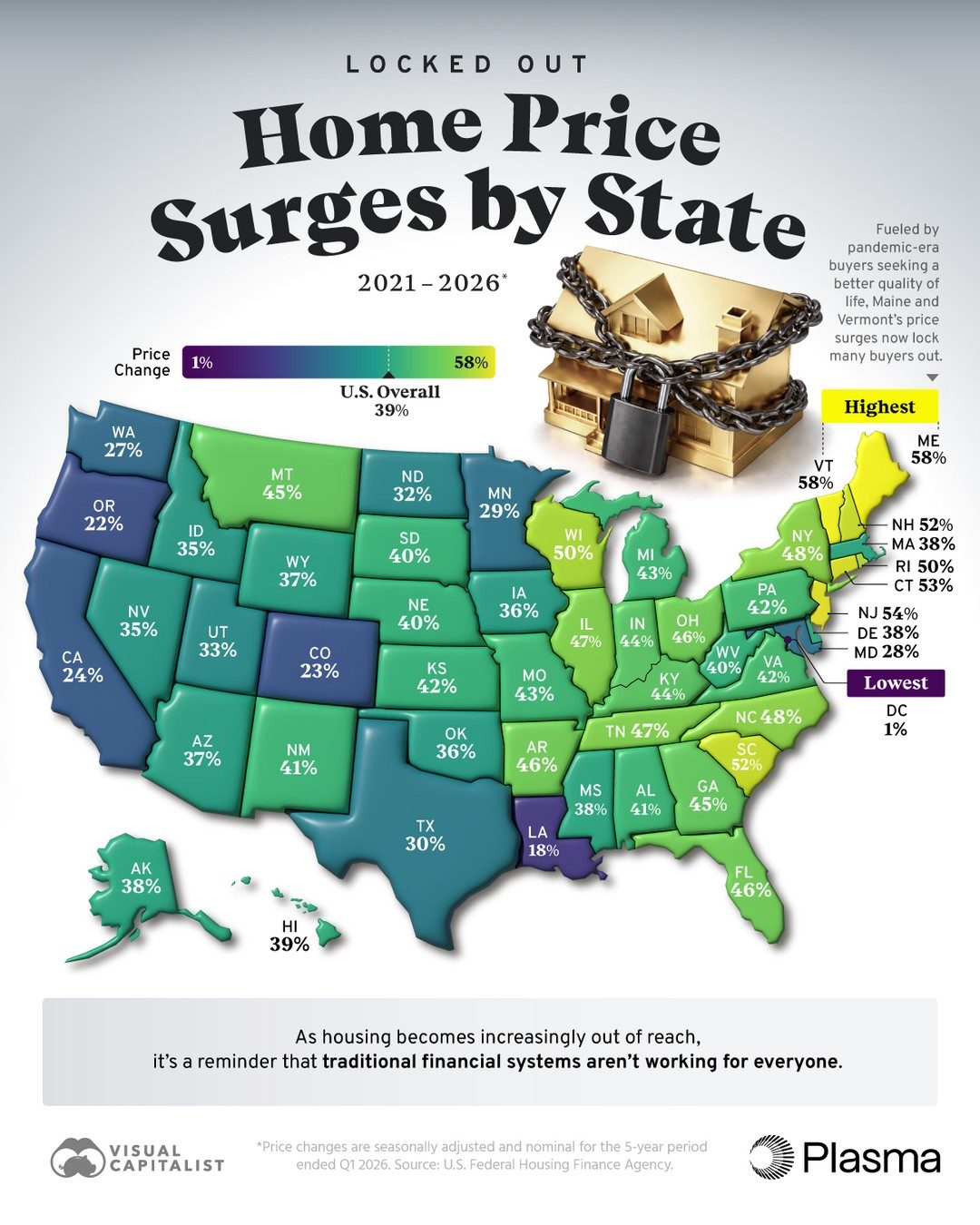
Housing Price Surge Across the U.S.
Over the past five years, the U.S. housing market has seen a significant surge in prices, with some states experiencing increases of nearly 60%. This trend has made it more important than ever to find ways to maximize the value of your money, especially as housing costs consume a larger portion of household budgets.
Context / Why This Matters
Understanding the nuances of the housing market is crucial for homeowners, potential buyers, and renters alike. The sharp increase in housing prices across the country has significant implications for personal finances, economic stability, and the overall well-being of communities. The data from 2021 to 2026 reveals not only the overall trend but also the stark differences in price changes across various states. Maine and Vermont, for example, stand out with the highest price surges, while Washington D.C. and Maryland show the lowest changes. This disparity highlights the need for tailored strategies to navigate the housing market effectively.
Main Discussion
Regional Price Surges
The infographic highlights the percentage change in home prices across different U.S. states, showing a significant variation in price surges. For example, Maine and Vermont have seen the most dramatic increases, with price surges of nearly 60%.
Highest Increases
- Maine (58%) and Vermont (52%) are at the top of the list with the highest percentage increases. These states have seen a significant jump in housing prices, which can be attributed to various factors such as increasing demand, limited supply, and the allure of these states as desirable places to live.
- Florida (46%), Connecticut (53%), and New Jersey (54%) also show substantial increases. These states are known for their desirable climates and economic opportunities, which can drive up housing demand.
Mid-Range Increases
- States like Mississippi (45%) and Indiana (46%) have seen moderate increases. These states offer a mix of urban and rural living, which can attract a diverse range of buyers.
- Texas (30%) and Louisiana (18%) show relatively lower increases compared to other states. These states have a mix of urban and rural areas, which can provide more affordable housing options.
Lowest Increases
- Washington D.C. (1%) and Maryland (28%) have the lowest percentage increases. These areas, while expensive, have seen restrained price surges, possibly due to existing high housing costs and regulatory measures.
National Trends
The U.S. overall average price change of 39% indicates a nationwide trend of increasing housing costs. This trend affects various aspects of life, from personal finances to economic policy. High housing costs can strain household budgets, making it essential to find ways to get more value from your money.
Mitigating the Impact
One way to mitigate the impact of rising housing costs is to leverage financial tools that maximize your spending. The Plasma One app, for instance, allows users to earn up to 10% cashback on AI spend and up to 4% on everything else on the Platinum tier. This kind of app can help users stretch their budgets further, making it a valuable tool in a high-cost housing market.
The Broader Economic Impact
The surge in housing prices has broader economic implications. It can affect consumer spending, savings rates, and overall economic growth. Higher housing costs can lead to reduced disposable income, which in turn can affect consumer spending patterns. This can have a ripple effect on various sectors of the economy, from retail to real estate.
Practical Tips
Maximize Cashback with Apps
Leverage cashback apps like Plasma One to earn rewards on your everyday spending. This can help offset some of the financial strain caused by rising housing costs.
Invest Wisely
Consider investing in properties that offer long-term value. Research neighborhoods with growing demand and potential for appreciation. Look for areas with good schools, job growth, and community amenities.
Budget Smartly
Create a detailed budget to understand your spending patterns. Identify areas where you can cut back and allocate more funds towards savings or investments.
Explore Financing Options
Consider different financing options to make buying a home more affordable. Look into first-time homebuyer programs, low-interest loans, and other financial assistance available in your area.
Important Takeaways
- Regional Variations: Housing price surges vary significantly across the U.S., with Maine and Vermont seeing the highest increases and Washington D.C. and Maryland the lowest.
- Economic Impact: Rising housing costs affect personal finances and broader economic trends. It is essential to find ways to maximize your spending and savings.
- Financial Tools: Use financial tools and apps, like Plasma One, to earn cashback and get more value from your money.
Conclusion
As housing prices continue to rise, it is essential to understand the trends and implications of these changes. Whether you are a homeowner, buyer, or renter, being informed and strategic can help you navigate the market more effectively. By leveraging financial tools, investing wisely, and budgeting smartly, you can mitigate the impact of rising housing costs and achieve your financial goals.
Watch the Reel
Questions readers ask
Which states have experienced the highest housing price increases from 2021 to 2026?
Maine and Vermont have seen some of the most dramatic increases, with housing prices surging by nearly 60%. Other states have also experienced significant jumps, making it crucial for buyers and sellers to stay informed about regional trends.
What factors might be driving the U.S. housing price surge from 2021 to 2026?
Several factors, including low interest rates, high demand, and limited supply, have contributed to the housing price surge. Additionally, shifts in work patterns, such as remote work, have influenced where people choose to live, further impacting local housing markets.
How can understanding state-by-state housing price trends help potential homebuyers?
Knowing the specific trends in different states can help potential homebuyers make strategic decisions. For instance, buyers might find more affordable options in states with lower price increases or consider investing in areas expected to appreciate significantly in the coming years.
What are the implications of the U.S. housing price surge for current homeowners?
For current homeowners, the surge in housing prices can mean increased equity, which can be beneficial for refinancing or selling. However, it can also pose challenges, such as higher property taxes and potential difficulties for family members or friends looking to enter the market.
What should renters consider given the housing price trends from 2021 to 2026?
Renters should be aware that rising housing prices can lead to increased rents. They might want to consider whether it makes financial sense to continue renting or to explore purchasing a home, especially if they are in a market with high appreciation potential.
How can the data from 2021 to 2026 help in forecasting future housing market trends?
Analyzing the historical data from 2021 to 2026 can provide insights into future trends. For example, states with consistently high price increases might continue to see growth, while those with slower increases could offer more stable or slower-growing markets in the future.
What steps can be taken to navigate the current housing market conditions effectively?
To navigate the current housing market, it's important to stay informed about local trends, work with real estate professionals, and consider the long-term financial implications of buying, selling, or renting. Being proactive and well-informed can help individuals make the most of their housing decisions.
Recent articles
Fresh deep dives from the latest Reels we unpacked.




Comments
Be the first to comment.