Housing Affordability in the U.S.: A Historical Perspective
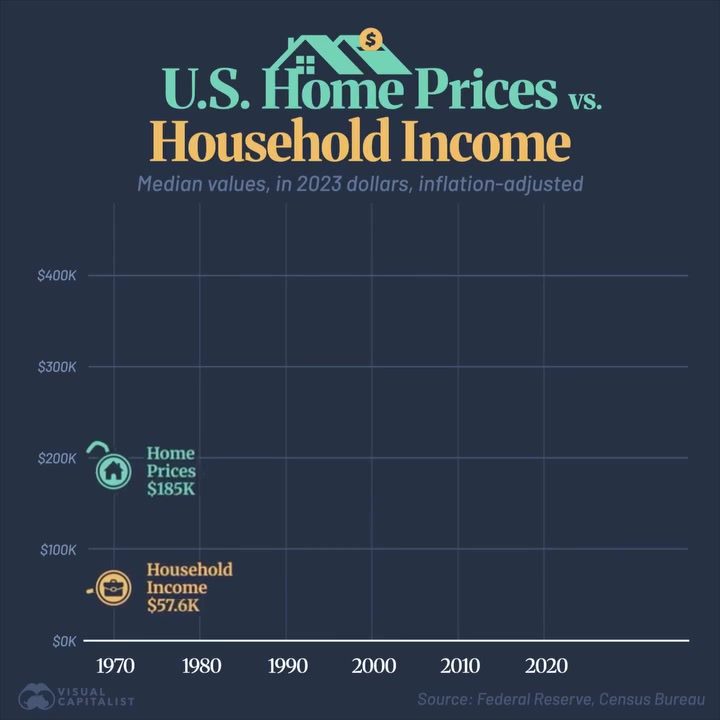
U.S. home prices have skyrocketed, reaching more than five times household incomes, making housing affordability a critical issue. This disparity has evolved significantly since 1967, shaped by various economic factors and market conditions. Understanding the historical trends of U.S. home prices and household income can provide valuable insights into the current state of the housing market and its future trajectory.
Why This Matters
The gap between home prices and household income has widened substantially over the past few decades. This trend has significant implications for homeownership, wealth accumulation, and economic mobility. For many Americans, particularly first-time homebuyers, the dream of owning a home has become increasingly out of reach. Understanding the historical context of this disparity can help policymakers, economists, and individuals make more informed decisions about housing policies, financial planning, and investment strategies.
Historical Trends in Housing Affordability
The Late 1970s: Inflation and the Boomer Effect
The late 1970s marked a pivotal period in the housing market. Inflation soared, and the Baby Boomer generation reached peak home-buying age, driving up demand for housing. As a result, home prices jumped significantly, outpacing income growth. This period set the stage for a long-term trend of rising home prices relative to household income.
The Pre-2008 Housing Bubble
The years leading up to the 2008 financial crisis were characterized by loose lending standards and speculative buying. The housing market experienced a bubble, with prices rising exponentially. This period of rapid price appreciation ended abruptly with the collapse of the housing market in 2008, leading to a severe economic downturn.
The COVID-19 Peak
The COVID-19 pandemic introduced new dynamics to the housing market. Low interest rates, remote work, and tight supply pushed demand to record levels. These factors contributed to a significant spike in home prices, further widening the gap between home prices and household income.
Factors Influencing Housing Affordability
Several key factors have influenced the historical trends in housing affordability. Understanding these factors can provide a clearer picture of the current market and its future prospects.
Economic Conditions
Economic conditions, including inflation, unemployment, and interest rates, play a crucial role in shaping the housing market. For instance, periods of high inflation, like the late 1970s, can drive up home prices. Conversely, economic downturns, such as the 2008 financial crisis, can lead to a sudden drop in home values.
Demographic Shifts
Demographic shifts also impact the housing market. The influx of Baby Boomers into the home-buying market in the 1970s and 1980s drove up demand for housing. Similarly, the millennial generation's entry into the market has influenced current trends.
Policy and Regulation
Government policies and regulations, such as lending standards and housing subsidies, can significantly impact housing affordability. For example, loose lending standards in the pre-2008 period contributed to the housing bubble, while stricter regulations post-2008 aimed to prevent a similar crisis.
Practical Tips for Navigating the Housing Market
Assess Financial Readiness
Before entering the housing market, it's essential to assess your financial readiness. Consider your income, savings, and debt-to-income ratio to determine how much you can afford. Use online calculators and consult with financial advisors to get a clear picture of your financial situation.
Research Local Market Trends
Understanding local market trends can help you make informed decisions. Research historical price trends, inventory levels, and economic indicators in your area. This information can provide insights into whether it's a good time to buy or sell.
Explore Alternative Housing Options
If traditional homeownership is out of reach, consider alternative housing options such as rent-to-own agreements, co-living arrangements, or modular homes. These options can provide more affordable pathways to homeownership.
Important Takeaways
- Historical Trends: Home prices have generally increased over time, but not consistently. Household income has seen more moderate growth compared to home prices.
- Key Periods: Significant events, such as the late 1970s inflation, the pre-2008 housing bubble, and the COVID-19 peak, have shaped the housing market.
- Economic Conditions: Economic factors like inflation, unemployment, and interest rates play a crucial role in housing affordability.
- Demographic Shifts: Changes in demographics, such as the entry of Baby Boomers and millennials into the market, have influenced home prices.
- Policy and Regulation: Government policies and lending standards can impact housing affordability and market stability.
Conclusion
The disparity between U.S. home prices and household income is a complex issue rooted in historical trends and economic factors. Understanding the historical context can help individuals, policymakers, and economists navigate the current housing market and plan for the future. By assessing financial readiness, researching local market trends, and exploring alternative housing options, individuals can make more informed decisions in the ever-changing housing landscape.
Watch the Reel
Questions readers ask
How have U.S. home prices compared to household incomes since the late 1970s?
Since the late 1970s, U.S. home prices have increased at a much faster rate than household incomes. This trend has been influenced by factors such as inflation, changes in mortgage rates, and housing supply. In recent years, home prices have surged to more than five times the median household income, exacerbating the housing affordability crisis.
What impact did the 2008 housing bubble have on home prices and affordability?
The 2008 housing bubble burst led to a significant downturn in home prices in the short term, but the long-term effects have been more nuanced. Post-2008, home prices gradually recovered and have since surged, often outpacing income growth. This has made homeownership less accessible for many, particularly first-time buyers, contributing to the current affordability crisis.
How has the COVID-19 pandemic affected the housing market and affordability?
The COVID-19 pandemic has had a profound impact on the housing market. Initially, it caused a brief slowdown, but it also triggered a surge in demand for single-family homes as people sought more space. This increased demand, coupled with low-interest rates, has driven home prices up, further widening the gap between home prices and household incomes and intensifying affordability challenges.
What are the implications of the widening gap between home prices and household income?
The widening gap between home prices and household income has significant implications for wealth accumulation and economic mobility. For many, owning a home is a primary means of building wealth. As homeownership becomes less affordable, it can limit opportunities for wealth accumulation, perpetuating economic disparities and making it harder for individuals to achieve financial stability.
What were the housing trends in the U.S. in the late 1970s and how do they compare to today?
In the late 1970s, the U.S. housing market was characterized by high-interest rates and relatively stable home prices. The ratio of home prices to household income was much lower than it is today. Today, the housing market is marked by soaring home prices and stagnant income growth, making the current affordability crisis more severe than historical trends.
What are some future trends in the 2023 housing market based on current data?
Future trends in the 2023 housing market are expected to continue the pattern of high home prices relative to incomes. Factors such as limited housing supply, persistent inflation, and shifting demographics will likely influence market conditions. Without significant interventions or policy changes, the affordability crisis is expected to persist, challenging homeownership aspirations for many Americans.
How do current housing trends compare to the pre-2008 housing market?
Current housing trends, marked by rapidly increasing home prices and stagnant income growth, differ significantly from the pre-2008 market. Pre-2008, home prices and incomes were more balanced, and housing affordability was generally better. Today, the imbalance is more pronounced, leading to a more severe affordability crisis.
Recent articles
Fresh deep dives from the latest Reels we unpacked.




Comments
Be the first to comment.