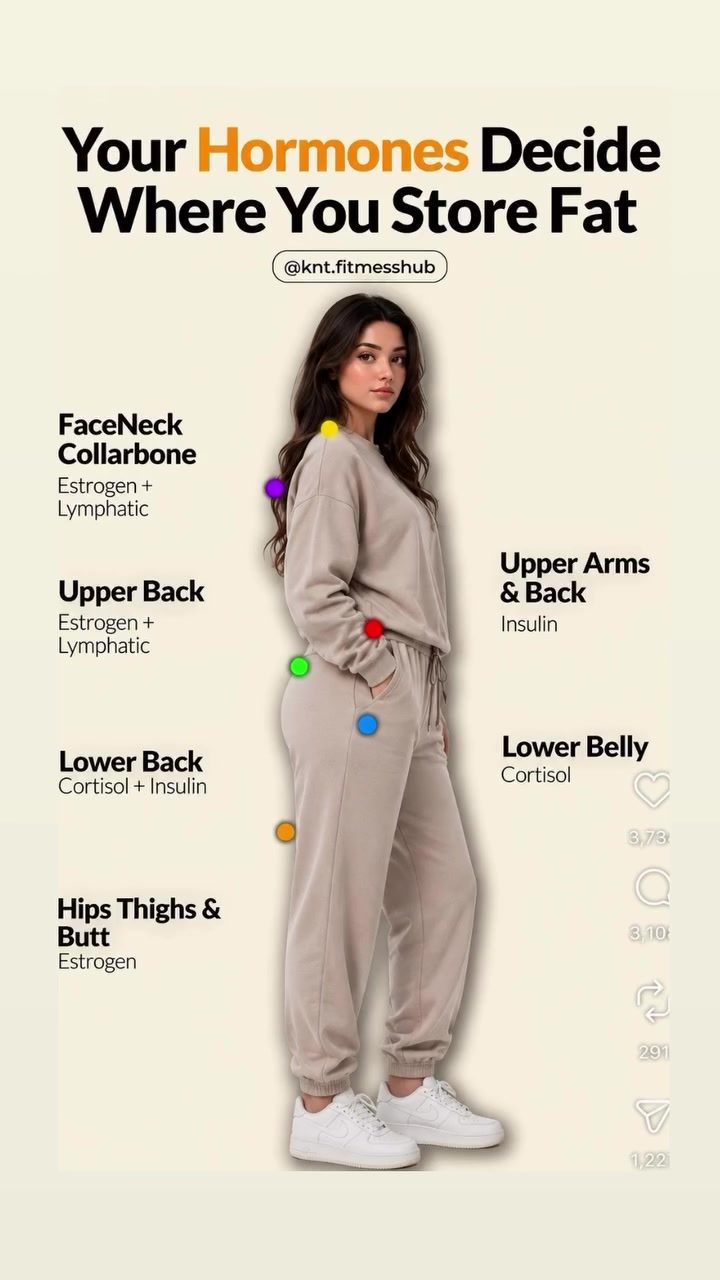
Hormone and Fat Storage
Hormones influence where your body stores fat, but the ways they do so are more complex and less localized than some viral charts suggest. Understanding how hormones—such as estrogen, cortisol, and insulin—affect fat distribution can help clarify some common myths and provide a more accurate picture of how the body works.
Context / Why this matters
The body doesn't store fat in distinct, diagnosable "zones" like “cortisol belly” or “estrogen thighs.” This misunderstanding can lead to ineffective or even harmful attempts at spot reduction. The reality is that fat distribution is influenced by a combination of genetics and overall hormonal balance, and addressing these factors requires a holistic approach.
Understanding Hormonal Influence on Fat Storage
Estrogen
Estrogen is often associated with fat storage in the hips, thighs, and buttocks. This hormone plays a significant role in fat distribution, particularly in areas where women tend to have more subcutaneous fat. However, it's important to note that estrogen's influence is not limited to these areas and can also affect overall fat distribution in the body. Estrogen also works in conjunction with the lymphatic system, which is crucial for fluid balance and waste removal. The interaction between estrogen and the lymphatic system further complicates fat distribution, making it clear that hormonal influence is not as simple as it might seem.
Cortisol
Cortisol, often referred to as the "stress hormone," affects fat storage, particularly in the lower back and belly. Elevated cortisol levels, which can result from chronic stress, can lead to increased fat storage in these areas. This is why stress management is an important aspect of overall health and weight management. Cortisol works in tandem with insulin, another hormone that influences fat storage, particularly in the upper back and arms.
Insulin
Insulin, a hormone that helps regulate blood sugar levels, plays a key role in fat storage. When insulin levels are high, the body is more likely to store fat, particularly in areas like the upper back and arms. Insulin resistance, a condition where the body becomes less responsive to insulin, can lead to increased fat storage and is often associated with conditions like type 2 diabetes. Maintaining healthy insulin levels through diet and exercise is crucial for overall health and fat distribution.
Why Spot Reduction Doesn't Work
The idea of spot reduction—targeting specific areas for fat loss—is a common myth. While it might seem logical to focus on exercises that target specific muscle groups to reduce fat in those areas, the body doesn't work that way. Fat loss occurs uniformly across the body, and targeting specific areas with exercises will only build muscle in those areas, not reduce fat.
The Role of a Small Calorie Deficit
A small calorie deficit is one of the most effective ways to lose fat. By consuming fewer calories than the body burns, you create an energy deficit that forces the body to tap into its fat stores for energy. This approach, combined with strength training, can lead to overall fat loss and muscle gain.
Strength Training
Strength training is essential for building muscle, which in turn boosts metabolism. Engaging in strength training 3–4 times a week can help increase muscle mass, making the body more efficient at burning calories. This approach, combined with a healthy diet, can lead to sustained fat loss and improved overall fitness.
The Importance of Sleep
Getting 7–8 hours of sleep per night is crucial for overall health and weight management. Adequate sleep helps regulate hormones, particularly those involved in appetite and metabolism. Lack of sleep can lead to increased cortisol levels, which can contribute to fat storage and overall weight gain.
Practical Tips for Managing Hormones and Fat Storage
Understanding the role of hormones in fat storage can provide valuable insights into how to manage weight and overall health. Here are some practical tips to help you address the issue:
Addressing Hormonal Imbalances
If you suspect that hormonal imbalances are affecting your fat distribution, it's essential to seek medical help. Conditions like polycystic ovarian syndrome (PCOS) and thyroid disorders can significantly impact hormone levels and fat storage. Working with a healthcare provider to address these issues can lead to more effective and sustainable weight management.
Balancing Hormones Through Lifestyle
A balanced lifestyle that includes regular exercise, a healthy diet, and adequate sleep can help regulate hormone levels. Engaging in activities that reduce stress, such as meditation or yoga, can also help manage cortisol levels, which is crucial for overall health and weight management.
The Role of Nutrition
Nutrition plays a critical role in hormone regulation and fat distribution. Consuming a balanced diet rich in nutrients can help support overall health and regulate hormone levels. Avoiding processed foods, sugars, and unhealthy fats can help reduce inflammation and support healthy hormone function.
Important Takeaways
The influence of hormones on fat storage is complex and multifaceted. Understanding how estrogen, cortisol, and insulin affect fat distribution can help dispel common myths and provide a more accurate picture of how the body works. Maintaining a balanced lifestyle that includes regular exercise, a healthy diet, and adequate sleep is crucial for managing hormones and overall health. Addressing hormonal imbalances through medical intervention, when necessary, can also lead to more effective and sustainable weight management.
Conclusion
While the idea of specific "fat zones" influenced by individual hormones might be appealing, the reality is more nuanced. By focusing on overall health and addressing hormonal imbalances, you can achieve a more balanced and healthy approach to weight management. Understanding the role of hormones in fat storage is just one piece of the puzzle, but it's an essential one for achieving long-term health and wellness.
Watch the Reel
Questions readers ask
How do hormones influence where fat is stored in the body?
Hormones like estrogen, cortisol, and insulin play a significant role in determining fat distribution. However, their effects are complex and not as localized as some believe. For instance, estrogen can influence fat storage in the lower body, while cortisol may affect belly fat, but these hormones work in tandem and are influenced by a variety of factors, including genetics and overall hormonal balance.
Can targeting specific hormones help reduce fat in certain areas, such as the belly or thighs?
Targeting specific hormones to reduce fat in certain areas is not effective. Fat storage is influenced by a combination of factors, and the body does not store fat in distinct, diagnosable 'zones.' A more holistic approach that considers overall hormonal balance and lifestyle factors is necessary for effective weight management.
What role does cortisol play in belly fat accumulation?
Cortisol, often referred to as the 'stress hormone,' can contribute to belly fat accumulation. High cortisol levels, typically triggered by stress, can lead to increased fat storage in the abdominal area. However, it's important to note that cortisol is just one piece of the puzzle, and addressing stress through lifestyle changes can help manage its effects on fat distribution.
How does estrogen affect fat distribution in the body?
Estrogen influences fat distribution by promoting fat storage in the lower body, particularly in the hips and thighs. This hormone plays a significant role in how women store fat, but it's not the sole determinant. Other factors, such as overall hormonal balance and genetics, also contribute to where and how fat is stored in the body.
What is the relationship between insulin and fat storage?
Insulin, a hormone that regulates blood sugar, also plays a crucial role in fat storage. When blood sugar levels are high, the body produces more insulin to manage it. Excess insulin can lead to increased fat storage, particularly in the abdominal area. Balancing blood sugar levels through diet and lifestyle choices can help manage insulin's effects on fat distribution.
Why is it important to address hormonal balance for effective weight management?
Addressing hormonal balance is crucial for effective weight management because hormones significantly influence fat storage and distribution. By understanding and managing hormones like estrogen, cortisol, and insulin, individuals can adopt a more comprehensive approach to health and weight loss, rather than relying on targeted or localized fat loss strategies.
How does the lymphatic system contribute to fat storage and distribution?
The lymphatic system plays a role in maintaining the body's fluid balance and removing waste, including fat molecules. When the lymphatic system is functioning properly, it can help reduce fluid retention and promote healthy fat metabolism. However, the lymphatic system's role in fat storage and distribution is not directly comparable to that of hormones, and more research is needed to fully understand its impact.
Related deep dives
Similar reads based on topic and creator.



Recent articles
Fresh deep dives from the latest Reels we unpacked.




Comments
Be the first to comment.