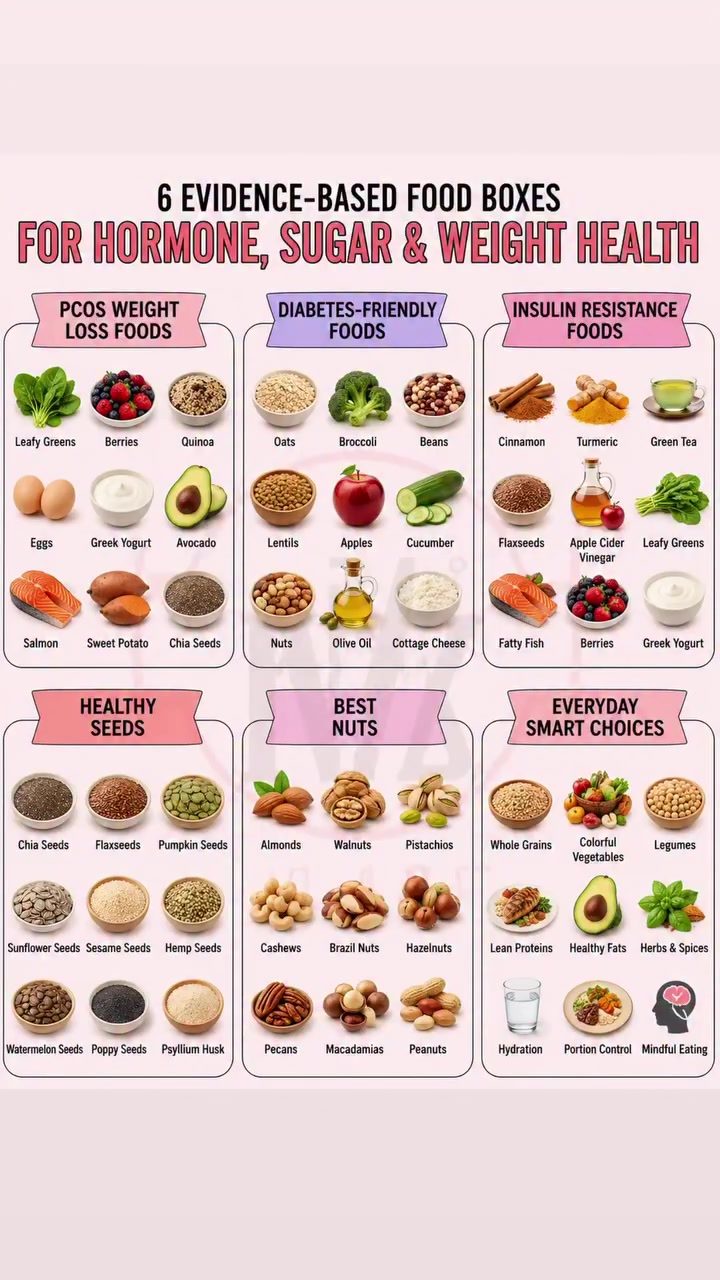
Evidence-Based Food Boxes for Better Health
The foods you consume every day can significantly support various aspects of your health, particularly when it comes to hormone balance, sugar control, and weight management. Not only does the right diet help with conditions like PCOS, diabetes, and insulin resistance, it also promotes overall well-being. A balanced eating pattern, along with regular physical activity, quality sleep, and medical care, can deliver the best results.
Why This Matters
Understanding which foods support specific health goals can help you make informed dietary choices. The following categories provide a framework for selecting foods that promote hormone health, manage sugar levels, and support weight loss. Each category includes foods commonly recommended by registered dietitians and supported by research.
Main Discussion
PCOS Weight-Loss Foods
Polycystic ovary syndrome (PCOS) is a complex hormonal and metabolic disorder that affects many women. Managing PCOS through diet can help with weight loss and improve overall health. Foods that support PCOS weight loss include:
- Leafy Greens: Rich in fiber and nutrients, leafy greens like spinach and kale can help regulate hormones and support weight loss.
- Berries: High in antioxidants, berries can help reduce inflammation and support healthy blood sugar levels.
- Eggs: A great source of protein, eggs can help keep you full and stabilize blood sugar levels.
- Greek Yogurt: High in protein and probiotics, Greek yogurt supports gut health and can aid in weight management.
- Salmon: Rich in omega-3 fatty acids, salmon can help reduce inflammation and support hormone balance.
- Chia Seeds: High in fiber and omega-3 fatty acids, chia seeds can help regulate blood sugar levels and promote satiety.
- Quinoa: A complete protein source, quinoa can help stabilize blood sugar levels and support weight loss.
- Avocado: Rich in healthy fats, avocado can help keep you full and support hormone health.
Diabetes-Friendly Foods
Diabetes management involves maintaining stable blood sugar levels, and a balanced diet plays a crucial role. Foods that support diabetes management include:
- Oats: High in fiber, oats can help regulate blood sugar levels and support heart health.
- Broccoli: Rich in fiber and nutrients, broccoli can help regulate blood sugar levels and support overall health.
- Beans: High in fiber and protein, beans can help stabilize blood sugar levels and promote satiety.
- Lentils: A great source of fiber and protein, lentils can help regulate blood sugar levels and support weight management.
- Apples: High in fiber and antioxidants, apples can help regulate blood sugar levels and support overall health.
- Cucumber: High in water content and fiber, cucumbers can help regulate blood sugar levels and support hydration.
- Olive Oil: Rich in healthy fats, olive oil can help stabilize blood sugar levels and support heart health.
- Cottage Cheese: High in protein, cottage cheese can help keep you full and stabilize blood sugar levels.
Insulin Resistance Foods
Insulin resistance occurs when the body becomes less responsive to insulin, leading to elevated blood sugar levels. Foods that support insulin sensitivity include:
- Cinnamon: Can help improve insulin sensitivity and regulate blood sugar levels.
- Turmeric: Rich in anti-inflammatory properties, turmeric can help improve insulin sensitivity and support overall health.
- Green Tea: High in antioxidants, green tea can help improve insulin sensitivity and support metabolism.
- Flaxseeds: Rich in fiber and omega-3 fatty acids, flaxseeds can help regulate blood sugar levels and improve insulin sensitivity.
- Berries: High in antioxidants, berries can help reduce inflammation and support healthy blood sugar levels.
- Fatty Fish: Rich in omega-3 fatty acids, fatty fish can help reduce inflammation and improve insulin sensitivity.
- Leafy Greens: High in fiber and nutrients, leafy greens can help regulate hormones and support insulin sensitivity.
Healthy Seeds
Seeds are a powerhouse of nutrients and can support various aspects of health. Some of the best seeds for overall well-being include:
- Chia Seeds: High in fiber and omega-3 fatty acids, chia seeds can help regulate blood sugar levels and promote satiety.
- Flaxseeds: Rich in fiber and omega-3 fatty acids, flaxseeds can help reduce inflammation and support heart health.
- Pumpkin Seeds: High in fiber and nutrients, pumpkin seeds can support heart health and improve insulin sensitivity.
- Sunflower Seeds: Rich in healthy fats and vitamins, sunflower seeds can support heart health and reduce inflammation.
- Sesame Seeds: High in fiber and calcium, sesame seeds can support bone health and reduce inflammation.
- Hemp Seeds: Rich in protein and omega-3 fatty acids, hemp seeds can support heart health and reduce inflammation.
Best Nuts
Nuts are a great source of healthy fats, protein, and fiber. Some of the best nuts for overall health include:
- Almonds: Rich in healthy fats and fiber, almonds can support heart health and promote satiety.
- Walnuts: High in omega-3 fatty acids, walnuts can support heart health and reduce inflammation.
- Pistachios: Rich in fiber and protein, pistachios can support weight management and promote satiety.
- Pecans: High in healthy fats and antioxidants, pecans can support heart health and reduce inflammation.
- Hazelnuts: Rich in healthy fats and vitamin E, hazelnuts can support heart health and reduce inflammation.
- Brazil Nuts: High in selenium, Brazil nuts can support thyroid health and reduce inflammation.
Everyday Smart Choices
Incorporating a variety of nutrient-dense foods into your daily diet can support overall health and well-being. Some everyday smart choices include:
- Whole Grains: Rich in fiber and nutrients, whole grains can support heart health and stabilize blood sugar levels.
- Vegetables: High in fiber and nutrients, vegetables can support overall health and reduce inflammation.
- Legumes: A great source of fiber and protein, legumes can support weight management and stabilize blood sugar levels.
- Lean Proteins: Essential for muscle repair and growth, lean proteins can support weight management and promote satiety.
- Healthy Fats: Rich in omega-3 fatty acids, healthy fats can support heart health and reduce inflammation.
- Hydration: Proper hydration is essential for overall health and can support digestion, nutrient absorption, and weight management.
Practical Tips
When incorporating these foods into your diet, remember that portion size and overall eating patterns matter more than any individual food. Here are some practical tips to help you make the most of these recommendations:
- Plan Your Meals: Planning your meals in advance can help you stick to a balanced diet and make healthier choices.
- Stay Hydrated: Proper hydration is crucial for overall health and can support digestion and nutrient absorption.
- Practice Mindful Eating: Pay attention to your body's hunger and fullness cues to avoid overeating.
- Incorporate Variety: Incorporating a variety of nutrient-dense foods into your diet can support overall health and well-being.
- Regular Physical Activity: Regular physical activity, along with a balanced diet, can help support weight management and overall health.
- Quality Sleep: Getting enough quality sleep is essential for overall health and can support weight management and hormone balance.
Important Takeaways
- The foods you eat every day can support your health, but no single food can treat specific health conditions on its own.
- A balanced eating pattern, regular physical activity, quality sleep, and medical care (when needed) work together for the best results.
- Incorporating a variety of nutrient-dense foods into your daily diet can support overall health and well-being.
- Remember that portion size and overall eating patterns matter more than any individual food.
- Planning your meals, staying hydrated, practicing mindful eating, and getting regular physical activity and quality sleep can support your health goals.
Conclusion
Understanding which foods support specific health goals can help you make informed dietary choices. Whether you're looking to support hormone health, manage sugar levels, or promote weight loss, incorporating a variety of nutrient-dense foods into your daily diet can help you achieve your health goals.
Watch the Reel
Questions readers ask
What are the best hormone balancing foods to include in my diet?
Leafy greens, berries, and fatty fish like salmon are excellent for hormone balance. These foods are rich in essential vitamins, minerals, and antioxidants that support hormonal health. For instance, leafy greens contain compounds that aid in estrogen metabolism, while berries provide antioxidants that help reduce inflammation.
Which foods are most effective for managing blood sugar levels?
Foods like chia seeds, leafy greens, and nuts are beneficial for managing blood sugar. These foods have a low glycemic index, which means they break down more slowly, preventing spikes in blood sugar. They also provide fiber and healthy fats, which help maintain steady energy levels.
What foods are recommended for weight loss and why?
Foods such as leafy greens, lean proteins, and Greek yogurt are particularly effective for weight loss. They are high in nutrients and low in calories, which helps to create a caloric deficit. Additionally, these foods promote satiety, which helps to reduce overall calorie intake by keeping you feeling full for longer.
Can a specific diet help manage PCOS symptoms?
Yes, certain foods can help manage PCOS (Polycystic Ovary Syndrome) symptoms. A diet rich in leafy greens, berries, and lean proteins can help balance hormones and manage insulin levels. Specifically, these foods support insulin sensitivity and reduce inflammation, which are key factors in managing PCOS.
What are the benefits of salmon for overall health and weight management?
Salmon is rich in omega-3 fatty acids, which have been shown to support heart health, reduce inflammation, and improve insulin sensitivity. These benefits help to manage blood sugar and promote weight loss. Salmon is also a great source of high-quality protein, which aids in muscle maintenance and satiety.
How can chia seeds help with weight management and blood sugar control?
Chia seeds are high in fiber and healthy fats, which help to slow digestion and keep you feeling full for longer. This promotes satiety and can aid in weight loss. Additionally, chia seeds have a low glycemic index, which helps to manage blood sugar levels by preventing spikes and crashes in energy levels.
How do leafy greens support hormonal health and blood sugar management?
Leafy greens, such as spinach, kale, and collard greens, are rich in vitamins, minerals, and antioxidants. They support hormone health by aiding in the metabolism of hormones and reducing inflammation. Additionally, their low calorie and high fiber content helps to manage blood sugar levels by slowing down digestion and promoting satiety.
Recent articles
Fresh deep dives from the latest Reels we unpacked.




Comments
Be the first to comment.