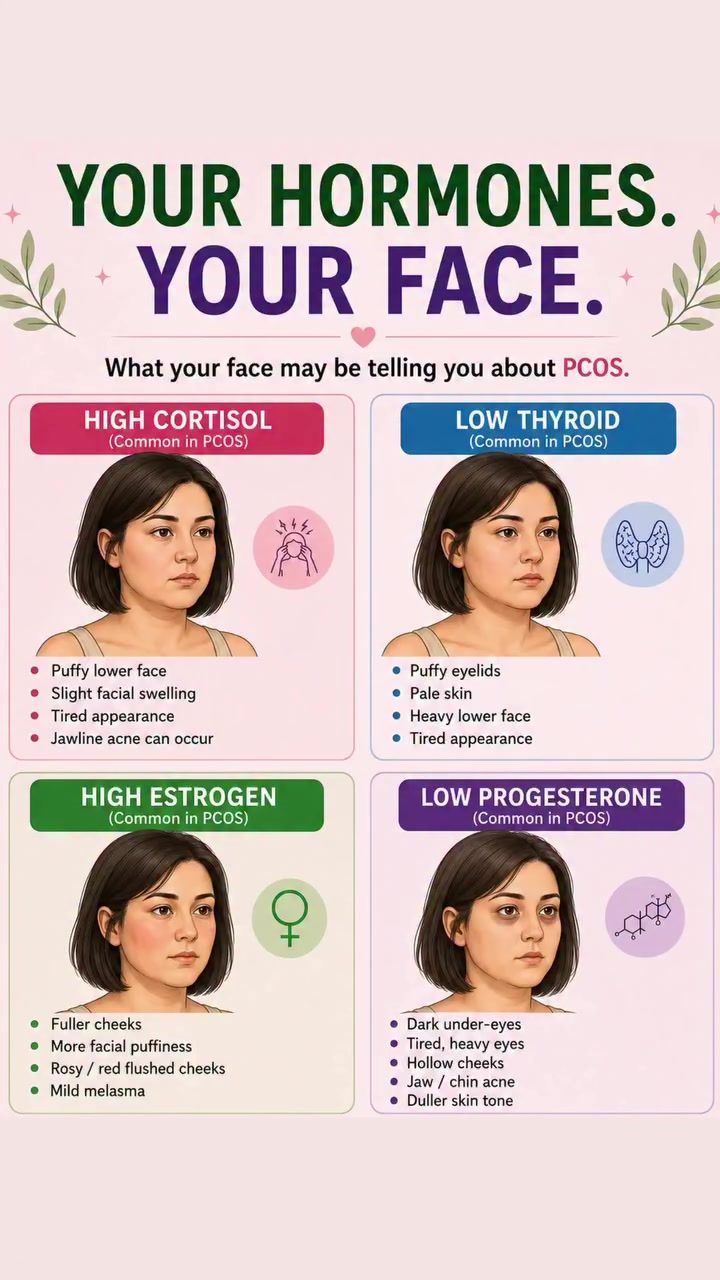
Hormone and Facial Features
Changes in facial appearance can sometimes signal underlying hormonal imbalances. While these changes don't diagnose conditions like Polycystic Ovary Syndrome (PCOS) on their own, understanding the connections can prompt further investigation. Persistent skin issues, facial puffiness, dark circles, or changes in skin texture can sometimes be associated with hormonal imbalances.
Why This Matters
Hormones play a crucial role in regulating various bodily functions, including skin health and facial appearance. Recognizing the signs of hormonal imbalances can lead to early detection and treatment of conditions like PCOS. This is especially important for women who may be experiencing symptoms such as irregular periods, excessive hair growth, acne, weight changes, or difficulty conceiving.
Main Discussion
High Cortisol
Elevated cortisol levels, a hormone often associated with stress, can manifest in several facial features. These include:
- Puffy lower face: Cortisol can cause water retention, leading to a puffy appearance, particularly in the lower part of the face.
- Slight facial swelling: High cortisol levels can result in a general swelling of the face.
- Tired appearance: Chronic stress and high cortisol can lead to a perpetually fatigued look.
- Jawline acne: Stress hormones can stimulate oil production, leading to breakouts along the jawline.
Low Thyroid
A low thyroid function, known as hypothyroidism, can also affect facial appearance. Key indicators include:
- Puffy eyelids: Fluid retention around the eyes is a common sign of low thyroid function.
- Pale skin: Hypothyroidism can lead to a dull or pale complexion.
- Heavy lower face: Similar to high cortisol, low thyroid can cause puffiness, particularly in the lower part of the face.
- Tired appearance: Fatigue is a hallmark symptom of hypothyroidism, which can show on the face.
High Estrogen
High levels of estrogen, a hormone that regulates the menstrual cycle, can cause the following changes:
- Fuller cheeks: Estrogen can lead to water retention, resulting in fuller or puffier cheeks.
- Facial puffiness: Overall puffiness in the face can be a sign of high estrogen levels.
- Rosy/red flushed cheeks: Elevated estrogen can increase blood flow to the face, leading to a flushed appearance.
- Mild melasma: This condition, characterized by dark patches on the skin, can sometimes be exacerbated by high estrogen.
Low Progesterone
Low progesterone levels, which can be associated with menstrual irregularities and infertility, can lead to:
- Dark under-eyes: Low progesterone can cause tiredness and fatigue, which often results in dark circles under the eyes.
- Tired, heavy eyes: This is another symptom of fatigue and low energy levels.
- Hollow cheeks: Progesterone helps in maintaining healthy skin and fat deposits, and its deficiency can lead to a gaunt appearance.
- Jaw/chin acne: Imbalanced hormones can cause breakouts, particularly in the lower part of the face.
- Duller skin tone: Low progesterone can result in a lackluster complexion.
Practical Tips
If you notice any of these changes in your facial appearance, it's important to take the appropriate steps:
Track Symptoms
Keep a record of any persistent symptoms, including skin changes, menstrual irregularities, or other health issues.
Consult a Professional
If you suspect hormonal imbalances, consult a healthcare provider. They can perform a thorough evaluation, including a physical exam and appropriate tests, to determine the underlying cause.
Consider Blood Tests
Blood tests can measure hormone levels and identify any imbalances. These tests are crucial for diagnosing conditions like PCOS and hypothyroidism.
Regular Check-Ups
Regular medical check-ups can help monitor your health and catch any hormonal imbalances early.
Healthy Lifestyle
Maintaining a balanced diet, regular exercise, and adequate sleep can help regulate hormone levels and improve overall health.
Stress Management
Stress can disrupt hormonal balance. Techniques such as meditation, yoga, and mindfulness can help manage stress levels.
Skin Care
While hormonal imbalances can affect skin health, maintaining a good skincare routine can help manage symptoms. Use gentle, non-irritating products and consider consulting a dermatologist for personalized advice.
Important Takeaways
Facial changes can sometimes be a sign of underlying hormonal imbalances, especially in conditions like PCOS. Understanding these connections can prompt further investigation and early treatment.
- Persistent acne, facial puffiness, and skin texture changes can have various causes, including hormonal imbalances.
- Recognizing signs of hormonal imbalance can lead to early detection and treatment of conditions like PCOS.
- High cortisol, low thyroid, high estrogen, and low progesterone can all manifest in distinct facial changes.
- If you notice persistent facial changes, consult a healthcare provider for a proper evaluation.
- Maintaining a healthy lifestyle, managing stress, and regular check-ups can help regulate hormone levels.
Conclusion
While facial changes alone don't diagnose conditions like PCOS, they can serve as important cues to explore further.
Recognizing the potential links between specific facial features and hormonal imbalances can be a step towards better health. If you notice persistent skin issues or changes in your facial appearance, it’s worth considering hormonal imbalances and seeking medical advice. Taking proactive steps, such as tracking symptoms, maintaining a healthy lifestyle, and regular check-ups, can help manage and address these issues effectively.
Watch the Reel
Questions readers ask
What are some common facial features associated with PCOS?
PCOS can manifest in various ways on the face, including hormonal acne, increased facial hair growth, and changes in skin texture. Some individuals may also experience facial puffiness or dark circles under the eyes, which could be related to hormonal imbalances.
How does hormonal acne differ from regular acne?
Hormonal acne often appears as deep, painful cysts or nodules, typically along the jawline, chin, and neck. It tends to flare up around the menstrual cycle and can be more persistent than regular acne, which is often clearer by morning.
Can changes in skin texture indicate a hormonal imbalance?
Yes, changes in skin texture, such as increased oiliness, dryness, or roughness, can sometimes be linked to hormonal imbalances. These changes might prompt further investigation into conditions like PCOS, especially when accompanied by other symptoms.
What should I do if I notice persistent facial puffiness?
Persistent facial puffiness can sometimes be a sign of hormonal imbalances. If you notice this symptom, along with others like irregular periods or excessive hair growth, consult a healthcare professional. They can help determine if PCOS or another condition might be the cause.
How can recognizing facial changes early help in managing PCOS?
Early recognition of facial changes linked to hormonal imbalances can lead to prompt medical intervention. This can help manage PCOS symptoms more effectively, improving overall health and quality of life. Some common PCOS signs to look out for include hormonal acne, increased facial hair, and changes in skin texture.
What are some common medical treatments for hormonal acne in PCOS patients?
PCOS acne treatment often involves a combination of approaches. Hormonal birth control can help regulate the menstrual cycle and reduce acne. Additionally, topical treatments such as retinoids or benzoyl peroxide and oral medications like spironolactone may be prescribed to manage acne symptoms.
Recent articles
Fresh deep dives from the latest Reels we unpacked.




Comments
Be the first to comment.