Housing Price Increases
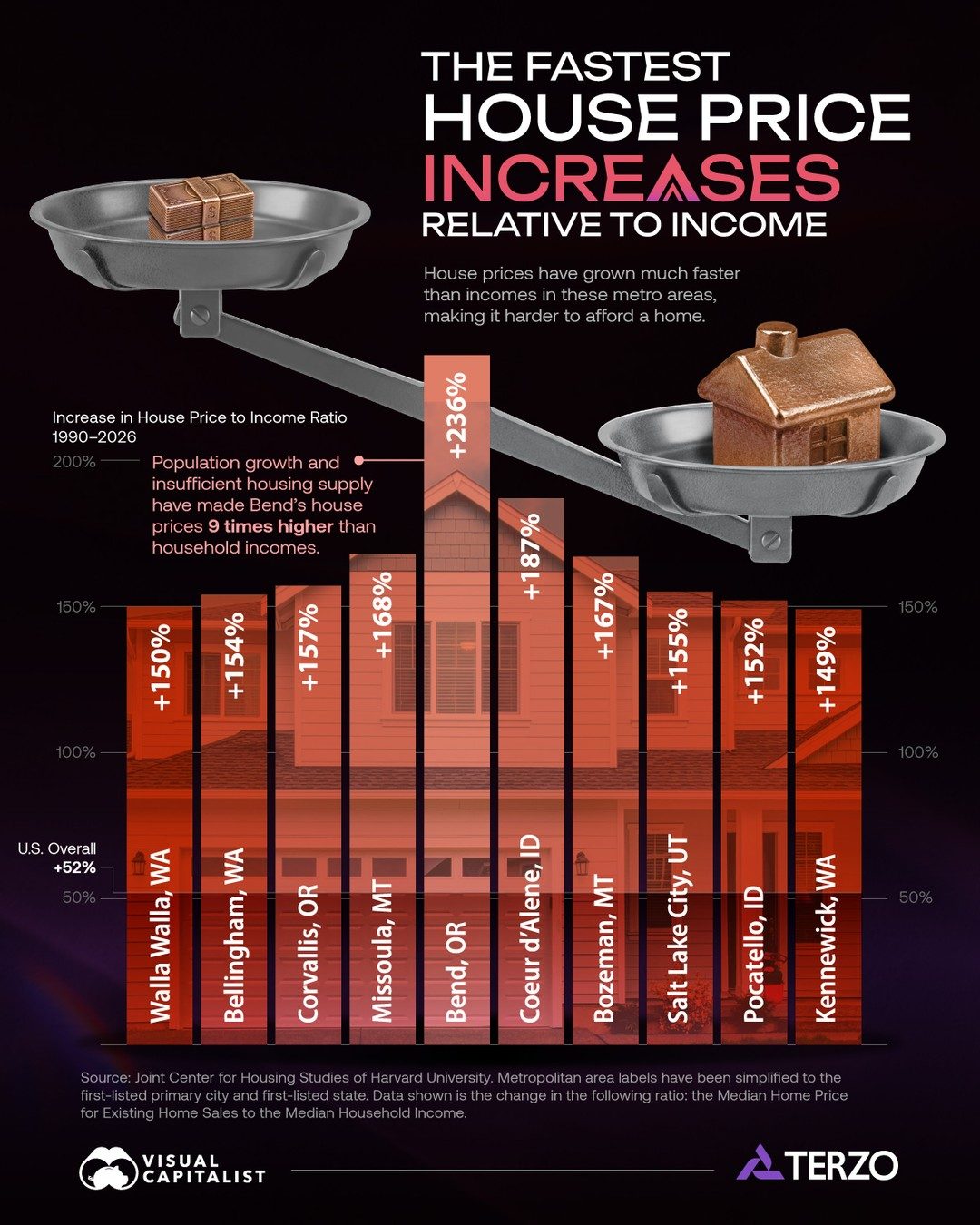
The housing market across the United States has seen significant shifts, with some metro areas experiencing substantial increases in home prices relative to income. This trend has made homeownership more challenging for many residents. Bend, Oregon, has seen the most dramatic increase, with its price-to-income ratio rising by 236% since 1990.
Context / Why This Matters
Understanding the dynamics of housing price increases relative to income is crucial for several reasons. It impacts affordability, influences economic decisions, and shapes the future of communities. Homeownership is a cornerstone of the American Dream, and shifts in housing prices can either make this dream more attainable or push it further out of reach.
Main Discussion
The Biggest Increases
Several metro areas across the U.S. have seen significant jumps in house prices relative to income. Here are some of the standout cities:
- Bend, Oregon: With a jaw-dropping 1687% increase, Bend tops the list. This means that the cost of housing has skyrocketed compared to local incomes, making it one of the least affordable places to live.
- Walla Walla, Washington: This city has seen a 167% increase, making it another hotspot for dramatic housing price hikes.
- Bellingham, Washington: Bellingham follows closely with a 157% increase, posing similar challenges to residents.
- Missoula, Montana: Missoula has experienced a 154% increase, adding to the list of cities where housing affordability is a growing concern.
Infrastructure and Amenities
Many of these cities offer desirable amenities and infrastructure, which can drive up housing prices. Bend, for example, is known for its natural beauty, outdoor activities, and strong local economy. Similarly, Missoula and Bellingham offer a mix of urban and outdoor lifestyles that attract new residents, further fueling demand for housing.
Economic Factors
Economic growth and job opportunities are also significant drivers of housing price increases. Cities with thriving economies and job markets often see an influx of new residents, which can outpace the supply of new housing. This imbalance leads to increased competition and higher prices.
Local Policies and Regulations
Local policies and regulations can also impact housing prices. Zoning laws, construction regulations, and land-use policies can either facilitate or hinder the development of new housing, thereby affecting affordability. Policies that restrict new construction or limit density can drive up prices by limiting supply.
Practical Tips
For those navigating the current housing market, here are some practical tips:
1. Consider Alternative Locations
If you're looking to buy a home in one of these high-price areas, consider nearby, more affordable locations. Even a short commute can make a significant difference in housing costs.
2. Invest in the Future
If you can't afford to buy a home right now, consider investing in other ways. Funds in real estate investment trusts (REITs) or savings accounts can grow over time and eventually help you achieve your homeownership goals.
3. Explore Down Payment Assistance
Many states and local governments offer down payment assistance programs. These can provide financial aid to help first-time buyers or low-income individuals afford a home.
4. Rent Smart
If you're renting, look for areas where rents are more affordable. Living in a slightly less desirable neighborhood can save you money and help you build savings for a future home purchase.
5. Stay Informed
Keeping up with local housing market trends and policy changes can help you make informed decisions. Follow local real estate news, attend community meetings, and stay connected with real estate agents who specialize in your area of interest.
Important Takeaways
The housing market is complex and influenced by a variety of factors. Understanding these dynamics can help potential homebuyers, investors, and policymakers make informed decisions. Whether you're looking to buy a home or understand the broader economic implications, staying informed about housing price increases relative to income is essential.
High housing prices relative to income can make it challenging to afford a home, but with the right strategies, it's possible to navigate this market. Whether through smart location choices, alternative investments, or down payment assistance, there are ways to achieve your homeownership goals.
Conclusion
The housing market is experiencing significant changes, with some metro areas seeing dramatic increases in home prices relative to income. Understanding these trends and their underlying causes can help individuals and communities make informed decisions. By considering alternative locations, investing wisely, and staying informed, you can navigate the current housing market more effectively.
Watch the Reel
Questions readers ask
What is the price-to-income ratio, and why is it important in understanding housing affordability?
The price-to-income ratio is a measure comparing the median home price to the median income in a specific area. It's a crucial metric for understanding housing affordability, as it indicates how much of a typical resident's income would be needed to purchase a median-priced home. A higher ratio suggests that homes are less affordable relative to local income levels.
Which U.S. metro area has seen the most significant increase in home prices relative to income since 1990?
Bend, Oregon, has experienced the most dramatic increase in its price-to-income ratio, with a staggering 236% rise since 1990. This means that home prices in Bend have grown much faster than local incomes, making homeownership increasingly challenging for residents.
How do home price increases impact local communities and economies?
Rapid home price increases can significantly impact local communities and economies. They can lead to gentrification, displacement of long-term residents, and changes in the demographic makeup of neighborhoods. Additionally, high housing costs can strain local budgets, influence economic decisions, and shape the future development of communities.
Which other metro areas besides Bend, Oregon, have seen substantial home price increases relative to income?
Other metro areas that have seen significant home price increases relative to income include Walla Walla, Washington, and Bellingham, Washington. These areas, like Bend, have experienced notable increases in their price-to-income ratios, indicating that home prices have risen faster than local incomes.
What factors contribute to the significant increase in home prices in certain metro areas?
Several factors can contribute to the significant increase in home prices in certain metro areas. These include limited housing supply, high demand driven by population growth or lifestyle preferences, low-interest rates, and investment from buyers looking for profitable returns. Additionally, local economic factors and policy decisions can influence housing affordability.
How can understanding the dynamics of housing price increases help potential homebuyers?
Understanding the dynamics of housing price increases can help potential homebuyers make informed decisions. It allows them to assess the affordability of homes in specific areas, compare different markets, and plan for future costs. This knowledge can also guide buyers in negotiating prices and considering alternative locations.
Recent articles
Fresh deep dives from the latest Reels we unpacked.




Comments
Be the first to comment.