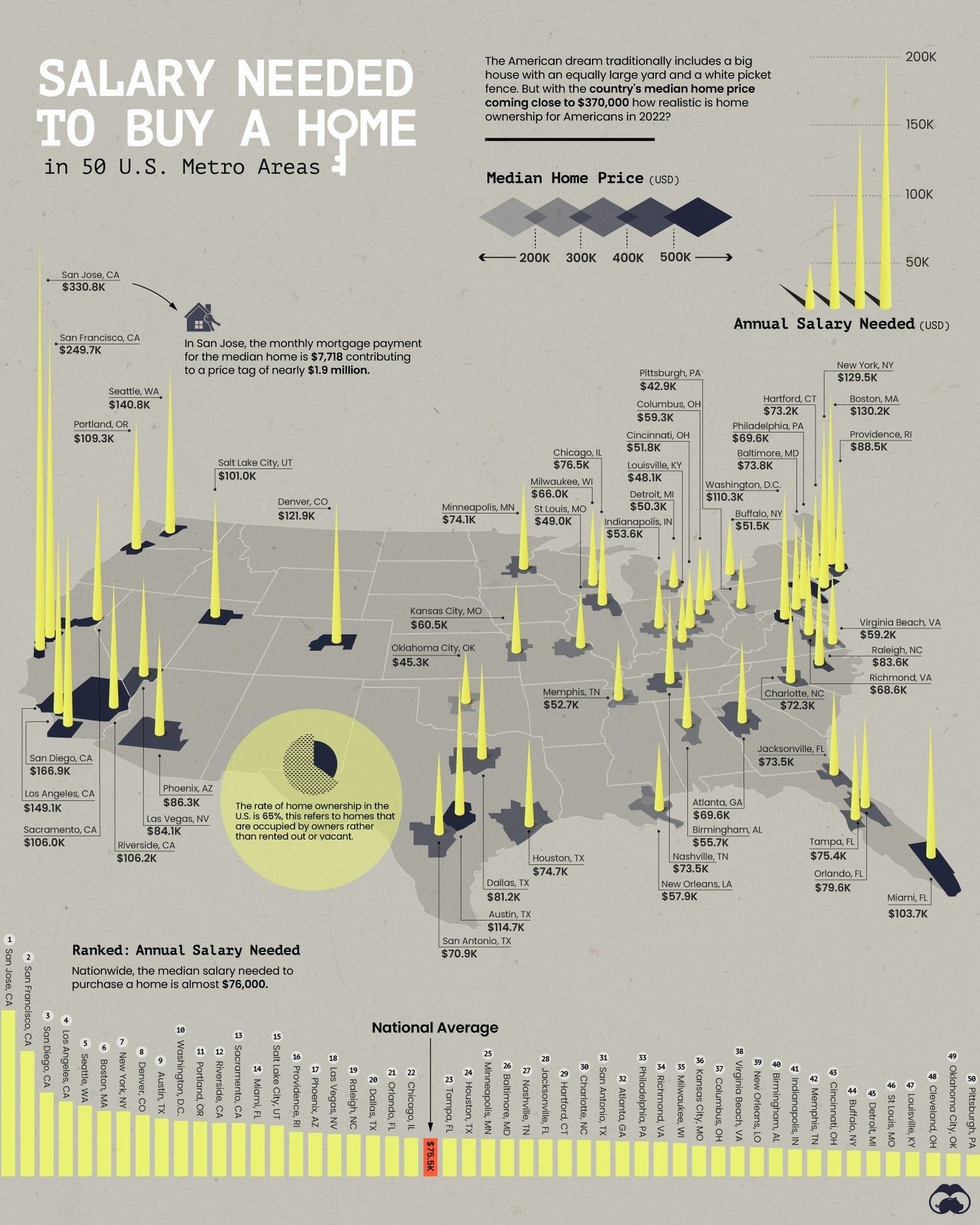
Home affordability in the United States varies greatly depending on location, with some cities requiring six-figure salaries for homeownership while others need much less. This disparity underscores the importance of considering local housing markets when planning to buy a home.
Why This Matters
Understanding home affordability is crucial for anyone looking to purchase a home. The cost of living, job market, and local economic conditions all play significant roles in determining whether homeownership is realistic. Comparing the median home prices and the corresponding annual salaries needed to afford homes in different cities can provide valuable insights for prospective buyers. This information helps individuals make informed decisions about where to live and work, as it directly impacts their financial stability and quality of life.
Key Factors Affecting Home Affordability
Median Home Prices
The median home price is a key indicator of affordability. As of 2022, the national median home price in the United States approaches $370,000. This figure varies widely across different regions, with coastal cities and major metropolitan areas typically having higher prices. For example, in San Francisco, the median home price is $1.9 million, while in Pittsburgh, it is significantly lower at $330,300.
Annual Salary Requirements
The annual salary needed to afford a home is directly tied to the median home price. In cities with high home prices, buyers generally need higher salaries to qualify for mortgages and cover living expenses. For instance, San Francisco requires an annual salary of $330,300 to afford a home, while Pittsburgh requires just $42,900. This disparity highlights the vast differences in affordability across the country.
Economic Influences
Economic factors such as inflation, job growth, and interest rates also impact home affordability. Inflation, for example, raises the cost of goods and services, making it harder for people to save for a down payment or afford monthly mortgage payments. Interest rates, on the other hand, can significantly affect mortgage costs, making homes more or less affordable based on current rates.
City-by-City Breakdown
High-Cost Cities
San Francisco, San Jose, and New York City are among the least affordable cities in the U.S. In San Francisco, the median home price is $1.9 million, requiring an annual salary of $330,300 to afford a home. San Jose follows closely with a median home price of $1.9 million and an annual salary requirement of $249,700. New York City is not far behind, with a median home price of $1.3 million and an annual salary requirement of $130,200.
Mid-Range Cities
Cities like Seattle, Los Angeles, and Boston fall into the mid-range category. In Seattle, the median home price is $1.03 million, requiring an annual salary of $103,300 to afford a home. Los Angeles has a median home price of $1.9 million requiring a salary of $192,800. Boston's median home price is $1.295 million and requires an annual salary of $129,500.
Affordable Cities
Cities like Pittsburgh, Cleveland, and Indianapolis offer more affordable housing options. In Pittsburgh, the median home price is $330,300, requiring an annual salary of $42,900. Cleveland requires an annual salary of just over $45,000 to afford a home, making it one of the most affordable major cities in the U.S. Indianapolis has a median home price of $53,100, and an annual salary of $53,100.
Practical Tips for Buyers
Navigating home affordability requires careful planning and consideration. Here are some practical tips to help potential buyers:
Assess Your Financial Situation
Before starting the home-buying process, assess your financial situation. This includes evaluating your income, savings, and debt-to-income ratio. Understanding your financial capabilities will help you determine a realistic budget for your home purchase and avoid potential financial pitfalls later.
Research Local Housing Markets
Researching the local housing market is essential for understanding home affordability in your desired area. Look at median home prices, property taxes, and other related costs. Websites and tools can provide data on local housing markets, helping you make informed decisions about where to buy.
Consider Down Payment and Closing Costs
Down payments and closing costs are significant expenses in the home-buying process. Saving for a down payment and budgeting for closing costs can help you avoid financial strain. Aim to save at least 20% of the home's purchase price for the down payment, if possible. Closing costs typically range from 2% to 5% of the loan amount.
Explore Mortgage Options
Exploring different mortgage options can help you find the best fit for your financial situation. Fixed-rate mortgages and adjustable-rate mortgages are common choices, each with its own advantages and disadvantages. Consider consulting with a mortgage broker or financial advisor to understand the options available to you.
Important Takeaways
Location Matters
Location is a crucial factor in home affordability. The cost of living, job market, and local economic conditions can significantly impact the affordability of homes in different regions. Researching these factors can help you make informed decisions about where to buy a home.
Plan Ahead
Planning ahead is essential for navigating home affordability. Assessing your financial situation, researching local housing markets, and saving for a down payment and closing costs can help you make informed decisions. Exploring different mortgage options can also help you find the best fit for your financial situation.
Stay Informed
Staying informed about economic factors such as inflation, job growth, and interest rates can help you understand the current housing market and make informed decisions. Keeping an eye on these factors and how they impact home affordability can help you make the best choices for your financial future.
Conclusion
Home affordability is a complex issue influenced by various factors, including median home prices, annual salary requirements, and economic influences. Understanding these factors and their impact on home affordability can help prospective buyers make informed decisions about where to live and work. By assessing your financial situation, researching local housing markets, and planning ahead, you can navigate home affordability and achieve your dream of homeownership.
Watch the Reel
Questions readers ask
How is home affordability calculated in the 50 U.S. cities list?
Home affordability is typically calculated by determining the annual salary needed to afford the median home price in a city. This is often based on the 28/36 rule, where a house payment, including mortgage, taxes, and insurance, should not exceed 28% of gross monthly income, and total debt should not exceed 36%.
What are the most and least affordable cities for homeownership?
The most affordable cities for homeownership generally have lower median home prices. Cities like Detroit, Michigan, and Cleveland, Ohio, often rank high for affordability. Conversely, cities like San Jose, California, and New York, New York, are often the least affordable, with high median home prices requiring substantial salaries for homeownership.
What factors should I consider besides salary when buying a home?
Besides salary, consider the local job market, cost of living, and economic conditions. These factors can influence your ability to afford and maintain a home. For example, a city with a high cost of living may require a higher salary, even if the median home price is lower.
How can I find the best cities to buy a home within my budget?
To find the best cities to buy a home within your budget, research the median home prices and the corresponding annual salary needed in different cities. Websites and real estate platforms often provide lists of the top 50 affordable cities, complete with home buying infographics and detailed reports.
Why is home affordability important for new buyers?
Home affordability is important for new buyers because it helps determine the realistic home buying options. It allows new buyers to make informed decisions, such as choosing cities with lower median home prices and better job opportunities, which can make homeownership more attainable.
What is the significance of the annual salary needed for home buying?
The annual salary needed for home buying is a crucial factor in determining whether homeownership is financially feasible. It helps buyers compare the cost of living and housing markets across different cities, and understand if their income level can support a home purchase in their desired location.
How does the cost of living affect home affordability?
The cost of living affects home affordability by influencing the total expenses beyond the mortgage. Higher costs of living, such as utilities, groceries, and transportation, can reduce the amount of money available for a mortgage payment. Therefore, a city with a high cost of living may require a higher annual salary to afford a home, even if the median home price is relatively low.
Recent articles
Fresh deep dives from the latest Reels we unpacked.




Comments
Be the first to comment.