Price Changes Over Time
Price changes in the United States over the past two decades have shown a significant divergence across various categories. Understanding these shifts is crucial for both consumers and policymakers alike. The Consumer Price Index (CPI) serves as a key indicator of how inflation impacts the economy, but the real-world experience of inflation is often felt at the point of purchase. This article delves into the price changes of various goods and services from 2000 to 2020, highlighting the discrepancies and providing context for these economic forces.
Why this Matters
Inflation affects everyone, from the individual shopper to the policy-making elite. The CPI provides a broad overview, but the reality of price changes is more nuanced. For example, while some items have become more affordable, others have seen steep increases. This discrepancy matters because it influences budgeting, savings, and overall financial planning. For instance, understanding that college tuition has risen significantly can help students and families plan better for educational expenses.
Main Discussion
Overall Price Increases
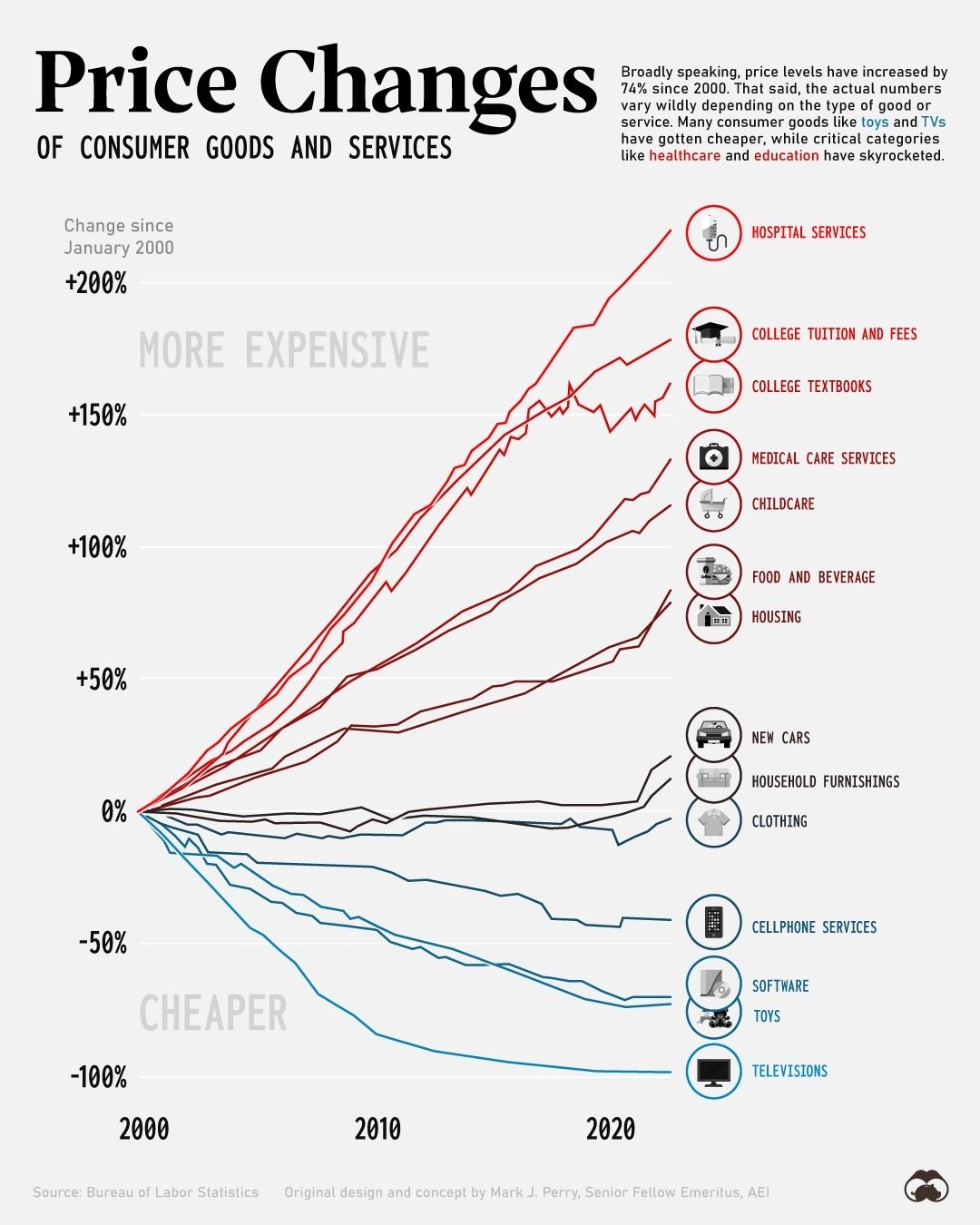
Broadly speaking, price levels in the U.S. have increased by 74% since 2000. This figure, however, masks substantial variation depending on the type of good or service. While some consumer goods have become cheaper, essential services have skyrocketed. This disparity highlights the need for a more granular understanding of price changes.
Healthcare and Education
Healthcare and education are two sectors that have seen some of the most dramatic price increases. Hospital services, college tuition, and fees, medical care services, and childcare have all increased by more than 200% since 2000. This steep rise can be attributed to several factors, including advances in medical technology, increased demand for healthcare services, and administrative costs. Similarly, the cost of college tuition has surged due to factors like reduced state funding, increased demand, and the rising cost of operating educational institutions.
Food and Housing
Food and beverage prices, along with housing costs, have increased by approximately 150% since 2000. These increases are significant because they are essential to daily living. Higher housing costs can leave families with less disposable income, forcing them to tighten their budgets in other areas. Similarly, food and beverage inflation can lead to changes in consumption habits, with consumers often seeking more affordable alternatives.
Consumer Goods
On the other hand, certain consumer goods have actually become cheaper. Televisions, toys, and software have seen price decreases of around 50% since 2000. This is largely due to advancements in technology and manufacturing processes, which have made these goods more affordable. For example, the cost of televisions has plummeted as LED and OLED technologies have become more prevalent and cheaper to produce.
Other Notable Changes
Other categories, such as new cars, household furnishings, and clothing, have experienced moderate price increases of around 50-150%. This range reflects the varied impact of inflation on different sectors of the economy. For instance, the cost of new cars has risen due to advancements in automotive technology and safety features, while clothing costs have fluctuated due to changes in fashion trends and consumer demand.
Practical Tips
- Budget Planning: Use this information to adjust your budget. For example, allocate more funds for healthcare and education if you anticipate these costs to rise.
- Invest Wisely: Consider investing in sectors that are seeing stable or decreasing prices, such as technology and consumer electronics.
- Save for Major Expenses: If you're planning to buy a new car or pay for college, start saving early to account for potential price increases.
- Seek Affordable Alternatives: For essentials like food and housing, look for cost-effective options to manage your budget better.
Important Takeaways
Price changes over the past two decades have been complex, with significant variations across different categories. While some goods and services have become more affordable, essential services like healthcare and education have seen substantial price increases. Being informed about these changes can help consumers make better financial decisions and adapt to the evolving economic landscape. Understanding these price divergences is crucial for both individual financial planning and broader economic policy.
Conclusion
The price changes from 2000 to 2020 tell a multifaceted story about the U.S. economy. From the steep rise in healthcare and education costs to the declining prices of certain consumer goods, these shifts reflect broader economic trends and technological advancements. By understanding these changes, consumers can better navigate their financial decisions and prepare for future economic shifts.
Watch the Reel
Questions readers ask
Why have some goods and services become cheaper in the US over the past 20 years?
Several factors have contributed to this trend, including technological advancements, increased global competition, and improvements in manufacturing processes. For instance, the price of electronics and toys have decreased significantly due to mass production and innovation.
What are the main drivers behind the increasing cost of healthcare in the US?
The cost of healthcare in the US has been influenced by factors such as advancements in medical technology, an aging population, increased demand for services, and administrative costs. Additionally, the complexity of the healthcare system and the high cost of prescription drugs have also contributed to this trend.
How can understanding historical price fluctuations help with household budgeting?
By examining how prices have changed over time, households can make more informed decisions about their spending and savings. This knowledge can help in allocating funds more effectively, anticipating future price increases, and planning for long-term financial goals.
What is the Consumer Price Index (CPI) and why is it important for understanding US inflation?
The CPI is a measure that examines the weighted average of prices of a basket of consumer goods and services, such as transportation, food, and medical care. It's important because it provides a broad overview of inflation trends, helping policymakers, businesses, and consumers understand the cost of living and make informed decisions. However, it may not capture all the nuances of individual price changes.
How can I track the price changes of specific goods and services in the US?
To track price changes of specific goods and services, you can use the Bureau of Labor Statistics' website, which provides detailed data on various categories within the CPI. Additionally, many online retailers and financial websites offer price tracking tools for specific products, helping you monitor fluctuations in real-time.
Why have healthcare and education seen dramatic price increases in the US?
The dramatic increases in healthcare and education costs are due to a combination of factors. For healthcare, these include increased demand for services, advancements in medical technology, and complex administrative systems. For education, rising costs are linked to factors such as reduced state funding, increased operational expenses, and a greater demand for services, like online learning infrastructure.
Recent articles
Fresh deep dives from the latest Reels we unpacked.




Comments
Be the first to comment.