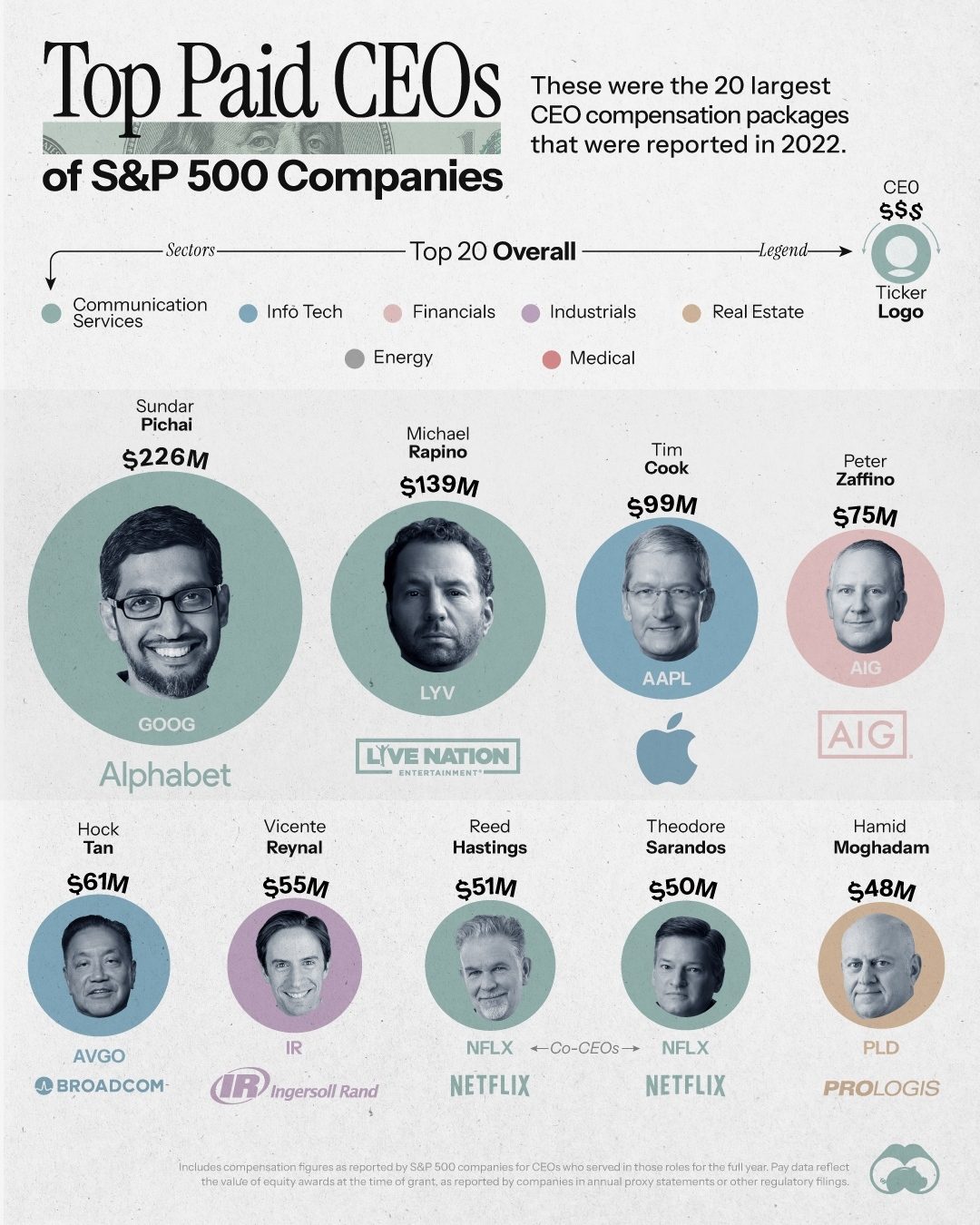
Top Paid CEOs of S&P 500 Companies
The compensation packages of CEOs leading the world's most valuable companies, particularly those listed on the S&P 500, often reach multi-million-dollar figures. These executives play crucial roles in shaping the direction and success of their organizations, which are benchmarks for the U.S. stock market. But what exactly do these compensation packages include, and how are they affected by stock market fluctuations?
Why This Matters
The compensation of CEOs at S&P 500 companies is a significant indicator of corporate success and market performance. Understanding the components of these compensation packages can provide insights into the performance expectations and incentives for top executives. Additionally, knowing how these payments fluctuate with market conditions can offer a broader perspective on the financial health of the companies and the broader economy.
Main Discussion
Compensation Breakdown
CEO compensation typically includes a mix of base salary, bonuses, stock awards, and other perks. However, the structure and size of these packages can vary widely depending on the company's performance, market conditions, and individual achievement. For instance, Sundar Pichai, CEO of Alphabet (GOOG), earned $226 million in 2022, while Michael Rapino of Live Nation Entertainment (LYV) received $55 million. These figures indicate the diversity and scale of compensation within the S&P 500.
The breakdown of CEO compensation often includes:
- Base Salary: The fixed component of the CEO's compensation, which is typically a smaller portion of the total package.
- Bonuses: Performance-based rewards that can vary significantly based on the company’s financial results and other predetermined metrics.
- Stock Awards: Equity grants that can include restricted stock units (RSUs) or stock options, which align the CEO's interests with those of shareholders.
- Other Compensation: This can include benefits like retirement plans, personal use of company aircraft, and other perks.
Sector-Specific Compensation
The compensation packages can also vary by sector. For example:
-
Communication Services: This sector includes companies like Alphabet (GOOG) and Live Nation Entertainment (LYV). The CEOs in this sector often receive significant compensation due to the high-value nature of their businesses and the strategic decisions they make.
-
Information Technology (Info Tech): Companies like Alphabet and Netflix (NFLX) are part of this sector. Tech CEOs often receive substantial stock awards, reflecting the high market valuations and growth potential of tech companies.
-
Industrials: This sector includes companies like American Airlines (AAL) and Boeing (BA). Industrial CEOs may receive more performance-based bonuses and stock awards tied to operational excellence and market performance.
-
Real Estate: Companies like Equity Residential (EQR) and American Tower (AMT) fall under this sector. Real estate CEOs may receive compensation tied to property values and market conditions.
Fluctuations in Compensation
CEO compensation is not static; it can increase or decrease based on various factors, including stock market performance. For example, if a company's stock price rises significantly, the value of the CEO's stock awards may also increase. Conversely, during market downturns, the value of these awards can decline. This dynamic underscores the role of market conditions in determining the final compensation received by CEOs.
Notable Examples
Tim Cook, CEO of Apple (AAPL), earned $99 million in 2022, while Peter Zaffino of AIG earned $75 million, and Reed Hastings of Netflix (NFLX) took home $50 million. These figures highlight the significant financial rewards for top executives in the tech and financial sectors, reflecting their companies' market performance and strategic importance.
Practical Tips
For Investors
When evaluating a company, it’s essential to look beyond the headline compensation figures. Consider the structure of the compensation package and how it aligns with the company's goals. Performance-based bonuses and stock awards can be indicators of strong alignment between the CEO's interests and those of the shareholders.
For Job Seekers
Understanding the compensation structure in different sectors can provide valuable insights for job seekers aiming to work in high-performing companies. For instance, roles within the tech sector may offer more equity-based compensation, while industrial roles might focus more on operational bonuses.
For Regulators
Regulators should monitor the compensation structures to ensure they are fair and aligned with the company's performance. This oversight can help maintain transparency and prevent excessive risk-taking by executives.
Important Takeaways
- Compensation Structure: CEO compensation packages are complex, often including base salary, bonuses, stock awards, and other benefits. Understanding these components is crucial for a holistic view of executive pay.
- Sector Influence: Compensation can vary significantly by sector, reflecting the unique challenges and opportunities within each industry.
- Market Fluctuations: CEO compensation is influenced by market conditions, with stock awards and bonuses often tied to the company's financial performance and market valuations.
Conclusion
The multi-million-dollar compensation packages of S&P 500 CEOs reflect the high stakes and strategic importance of their roles. These packages are carefully designed to align executive interests with those of the shareholders and the broader market. By delving into the components and fluctuations of these compensation structures, stakeholders can gain a deeper understanding of the financial landscape and the incentives driving corporate leadership.
Watch the Reel
Questions readers ask
Who were the highest-paid CEOs in the S&P 500 in 2022?
The highest-paid CEOs in the S&P 500 in 2022 included Timur Kalkaev, Timothy Cook, and Robert J. Kotick. These executives earned tens of millions of dollars from their compensation packages.
What components typically make up the compensation packages of S&P 500 CEOs?
The compensation packages of S&P 500 CEOs usually include a combination of base salary, bonuses, stock awards, and other benefits. These components are designed to align the interests of the CEO with the long-term success of the company.
How do stock market fluctuations affect CEO compensation?
Stock market fluctuations can significantly impact CEO compensation, particularly the value of stock awards. When the stock market performs well, the value of these awards can increase, leading to higher overall compensation. Conversely, poor market performance can decrease the value of stock awards.
Which industries had the highest-paid CEOs in 2022?
The tech industry, in particular, had some of the highest-paid CEOs in 2022. Executives in this sector often benefit from substantial stock awards due to the high valuation of tech companies, which contributes to their high compensation packages.
Why are CEO compensation packages structured the way they are?
CEO compensation packages are structured to provide a balance between guaranteed pay and performance-based incentives. This structure aims to motivate CEOs to drive company performance and shareholder value, aligning their personal financial success with the company's overall success.
Recent articles
Fresh deep dives from the latest Reels we unpacked.




Comments
Be the first to comment.