Horror Movie Box Office Revenue
Horror movies have been a staple of cinema since the early 1900s, with Hollywood producing iconic films like Frankenstein (1931), Dracula (1931), and The Mummy (1932). The genre has evolved significantly, branching into sub-genres such as slasher films and supernatural horror. This evolution has not only diversified the content but has also contributed to the genre's enduring popularity and financial success.
Why This Matters
Understanding the box office performance of horror movies provides insight into audience preferences and the genre's enduring appeal. It also highlights the economic impact of horror films on the film industry. By examining the top-grossing horror movies, we can identify trends and patterns that have contributed to their success.
Main Discussion
The Evolution of Horror
Horror movies have undergone a remarkable transformation since their inception. The early classics, such as Frankenstein and Dracula, relied heavily on atmospheric storytelling and special effects. As the genre evolved, new sub-genres emerged, each with its unique characteristics and appeal.
Classic Horror (1930s-1960s)
The classic horror era was dominated by Universal Studios, which produced iconic films like Frankenstein, Dracula, and The Mummy. These movies set the foundation for modern horror, focusing on iconic monsters and gothic settings. The horror genre gained significant traction during this period, cementing its place in cinematic history.
Modern Horror (1970s-Present)
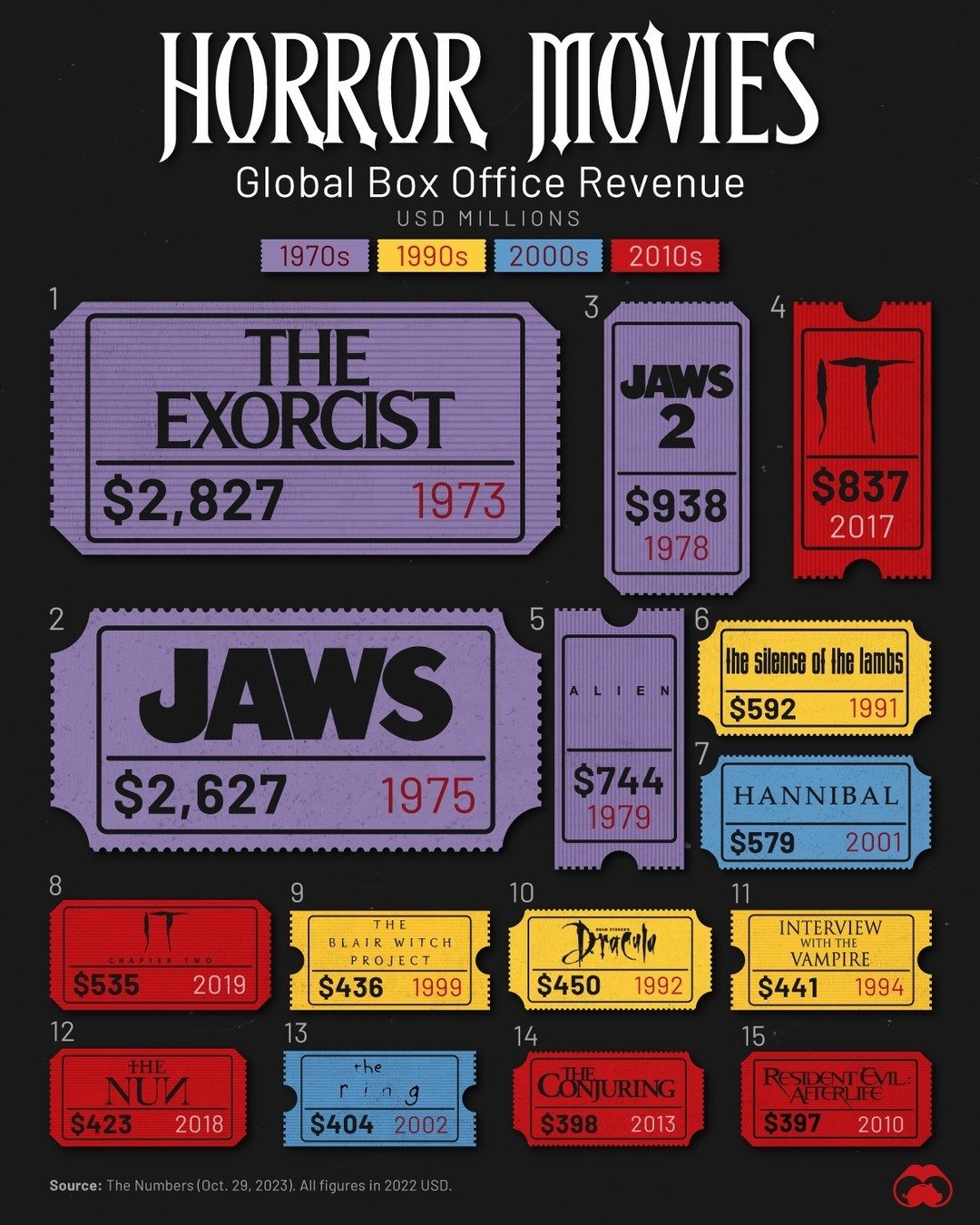
The 1970s marked a turning point for horror movies, with the release of groundbreaking films like The Exorcist (1973) and Jaws (1975). These movies introduced new levels of intensity and psychological terror, captivating audiences and achieving unprecedented box office success. The Exorcist, for instance, grossed a staggering $2,827 million, making it one of the highest-grossing horror movies of all time. Similarly, Jaws generated $2,627 million, demonstrating the immense appeal of horror and thriller elements.
Iconic Horror Movies and Their Revenue
The success of horror movies can be attributed to several factors, including compelling storylines, memorable characters, and innovative filmmaking techniques. Here are some of the top-grossing horror movies and their box office revenue:
1970s
- The Exorcist (1973): $2,827 million
- Jaws (1975): $2,627 million
- Alien (1979): $744 million
- The Blair Witch Project (1999): $436 million
- Halloween (1978): $938 million
1990s
- The Silence of the Lambs (1991): $579 million
- Dracula (1992): $404 million
- Interview with the Vampire (1994): $441 million
2000s
- Resident Evil: Afterlife (2010): $397 million
- IT (2019): $435 million
- The Blair Witch Project (1999): $436 million
2010s
- The Conjuring (2013): $398 million
Practical Tips
For horror movie enthusiasts and industry professionals alike, understanding the elements that contribute to a film's success can be invaluable. Here are some practical tips to consider:
Storytelling and Character Development
A compelling story and well-developed characters are essential for a successful horror movie. Audiences are drawn to stories that keep them on the edge of their seats and characters that evoke strong emotional responses.
Visual and Audio Effects
The visual and audio effects play a crucial role in creating a terrifying atmosphere. Horror movies that effectively use suspense, jump scares, and sound design can leave a lasting impact on viewers.
Marketing and Distribution
Effective marketing and distribution strategies can significantly boost a horror movie's box office revenue. Creating a strong promotional campaign, leveraging social media, and targeting the right audience can help generate buzz and attract more viewers.
The Role of Sub-Genres
Exploring different sub-genres within the horror genre can attract a wider audience. For instance, supernatural horror, slasher films, and psychological thrillers cater to different preferences, ensuring that there is something for everyone.
Important Takeaways
The horror genre has proven to be a consistently successful and resilient part of the film industry. Its enduring appeal is evident in the box office revenues of some of the highest-grossing horror movies. By understanding the evolution of horror, the elements that contribute to a film's success, and the importance of sub-genres, we can gain valuable insights into what makes horror movies so captivating and profitable.
Conclusion
Horror movies have come a long way since their early beginnings, evolving into a diverse and thriving genre. The top-grossing horror movies demonstrate the genre's enduring appeal and provide valuable insights into audience preferences and the industry's trends. Whether you're a horror movie enthusiast or an industry professional, understanding the factors that contribute to a film's success can be instrumental in appreciating and creating compelling horror content.
Watch the Reel
Questions readers ask
What is the significance of ranking horror movies by box office revenue?
Ranking horror movies by box office revenue helps identify the most commercially successful films in the genre. This ranking provides insights into audience preferences and the financial impact of horror films on the industry, highlighting trends that contribute to their success.
Which decades have produced the most notable horror movies in terms of revenue?
The 1970s, 1990s, 2000s, and 2010s have all produced significant horror movies in terms of revenue. Decades like the 1970s saw films like 'The Exorcist,' while the 1990s brought 'Scream' and 'The Sixth Sense,' the 2000s 'Saw', and the 2010s witnessed the success of 'It' and 'Get Out'.
Are there any recurrent themes or elements in the highest-grossing horror movies?
The highest-grossing horror movies often share common themes and elements, such as supernatural occurrences, psychological thrills, and iconic villains. Films like 'The Exorcist' and 'The Conjuring' series often revolve around demonic possessions and hauntings, while others like 'Halloween' and 'Friday the 13th' focus on slasher narratives.
How do the top 15 highest-grossing horror movies reflect audience preferences?
The top 15 highest-grossing horror movies reflect a variety of audience preferences, from classic horror with enduring appeal to modern thrillers with innovative narratives. The list includes a mix of sub-genres, such as psychological horror, supernatural horror, and slasher films, catering to diverse tastes and ensuring sustained popularity in the horror genre.
Which horror movies from the past have maintained their popularity and revenue over time?
Iconic horror movies from the past, such as 'The Exorcist' (1973) and 'Halloween' (1978), have maintained their popularity and revenue over time. These films have not only achieved significant box office success but have also left lasting cultural impacts, inspiring numerous sequels, remakes, and adaptations.
What trends can be identified from the list of all-time highest-grossing horror movies?
Trends from the list of all-time highest-grossing horror movies include the enduring popularity of classic franchises, the resurgence of supernatural themes, and the influence of modern horror on audience preferences. Additionally, the list shows a shift towards more diverse and inclusive storytelling in recent years, appealing to a broader audience.
Recent articles
Fresh deep dives from the latest Reels we unpacked.




Comments
Be the first to comment.