European Income Tax Rates: A Comprehensive Overview
Personal income tax rates in Europe vary significantly, reflecting each country's unique priorities and economic policies. This variation often correlates with the extent of social welfare programs and the level of competitiveness a nation aims to achieve. Let's delve into the top personal income tax rates across European countries.
Context / Why This Matters
Understanding the personal income tax rates in Europe is crucial for several reasons. It provides insight into how each country allocates resources, funds social welfare programs, and fosters economic competitiveness. For individuals and businesses, this information can be pivotal when considering relocation or investment opportunities. Additionally, it sheds light on the broader economic and social policies that shape European societies.
Main Discussion
Highest and Lowest Rates
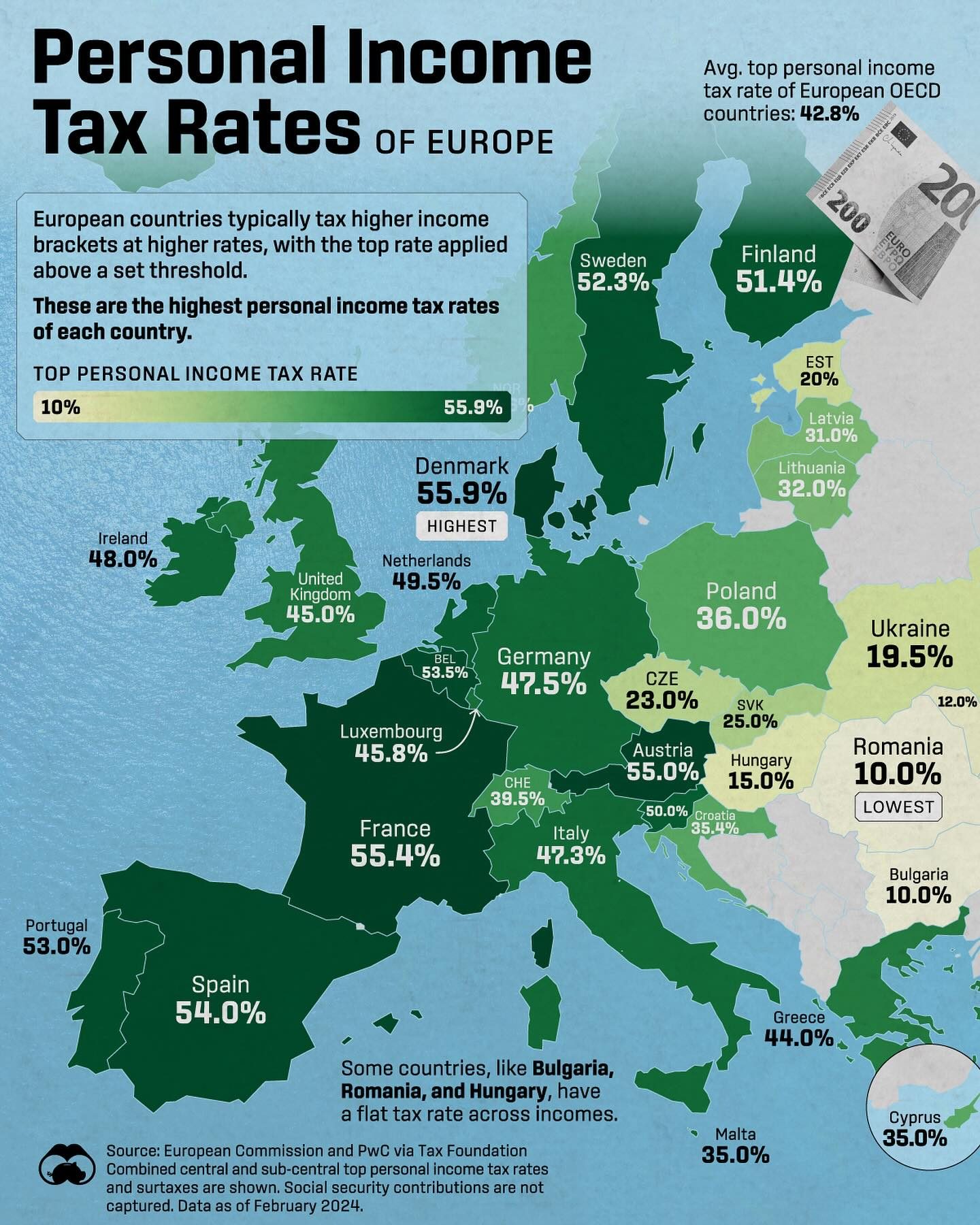
The highest personal income tax rates in Europe are found in Denmark, with top earners facing a rate of 55.9%. This is followed closely by Sweden at 52.3% and Finland at 51.4%. These high rates often fund extensive social welfare programs, including healthcare, education, and social security. On the other end of the spectrum, Bulgaria and Cyprus have the lowest top income tax rates, both at 10.0%. These lower rates can make these countries more attractive for businesses and individuals looking to optimize their tax liabilities.
Top Personal Income Tax Rates Across Europe
To get a more comprehensive view, let's look at some of the top personal income tax rates across various European countries:
- Denmark: 55.9%
- Ireland: 55.9%
- Sweden: 52.3%
- Finland: 51.4%
- Netherlands: 49.5%
- Belgium: 50.0%
- Germany: 47.46%
- France: 45.0%
- Austria: 55.0%
- Slovenia: 50%
These rates reflect a range of economic and social policies. Countries with higher tax rates tend to invest more in public services, whereas those with lower rates may prioritize fiscal competitiveness and attract foreign investment.
Practical Tips
Understanding the Data
When examining European income tax rates, it's important to consider the following:
- Data Source: The information provided is based on data from the European Commission and PwC via the Tax Foundation, as of February 2024. This ensures the data is up-to-date and reliable.
- Inclusions and Exclusions: The data includes combined central and sub-central top personal income tax rates and surtaxes but does not capture social security contributions. This distinction is crucial for understanding the total tax burden.
- Context Matters: High tax rates do not necessarily mean a higher overall tax burden. For instance, some countries may have lower overall tax rates but higher social security contributions.
Planning Your Finances
If you're considering moving to or investing in Europe, here are some practical tips:
- Research Beyond Tax Rates: While tax rates are important, they are just one part of the equation. Consider the overall cost of living, quality of life, and the specific social welfare programs offered.
- Seek Professional Advice: Consulting with a tax advisor or financial planner who specializes in international tax law can provide tailored advice and strategies to navigate the complexities of European tax systems.
Important Takeaways
Variation in Tax Rates
The variation in top personal income tax rates across Europe highlights the diverse economic and social policies in the region. Higher rates often correlate with robust social welfare systems, while lower rates may prioritize competitiveness and attract investment.
Data Reliability
Relying on accurate and up-to-date data from authoritative sources like the European Commission and PwC via the Tax Foundation is essential for making informed decisions.
Beyond Tax Rates
While tax rates are a critical factor, they should be considered alongside other economic indicators and personal or business goals. Understanding the broader economic and social context can provide a more comprehensive view.
Conclusion
The landscape of European income tax rates is complex and multifaceted. High tax rates in countries like Denmark and Sweden fund extensive social welfare programs, while lower rates in Bulgaria and Cyprus prioritize competitiveness. Understanding these variations can help individuals and businesses make informed decisions about relocation, investment, and financial planning.
Watch the Reel
Questions readers ask
Which European country has the highest personal income tax rate?
Denmark has the highest top personal income tax rate in Europe, standing at 55.9%. This rate is significantly higher than the majority of other European countries and reflects Denmark's extensive social welfare programs.
How do high income tax rates in Europe impact social welfare programs?
High income tax rates, such as those in Denmark and Sweden, allow countries to fund extensive social welfare programs. These programs can include healthcare, childcare, and public infrastructure, which contribute to a high standard of living for residents.
What is the lowest personal income tax rate in Europe?
Bulgaria has the lowest top personal income tax rate in Europe, at 10%. This lower rate can make Bulgaria an attractive destination for businesses and high-earning individuals looking to optimize their tax liabilities.
How do European tax rates influence relocation decisions?
European tax rates can significantly influence where individuals and businesses choose to relocate. Lower tax rates may attract new residents and investments, while higher rates can deter them, depending on the broader economic and social benefits offered by a country.
Which European countries have the top 5 highest personal income tax rates in Europe for 2024?
As of 2024, Denmark, Sweden, Austria, Belgium and France have the highest top personal income tax rates. The rates are 55.9%, 57.19%, 55.0%, 50.0% and 45.0% respectively.
How is the financial landscape influenced by European income tax rates for businesses?
European income tax rates can shape the financial landscape for businesses by affecting their operational costs and profitability. Countries with lower tax rates may attract more businesses, while those with higher rates might see businesses relocate or invest in tax planning strategies to mitigate their liabilities.
Recent articles
Fresh deep dives from the latest Reels we unpacked.




Comments
Be the first to comment.