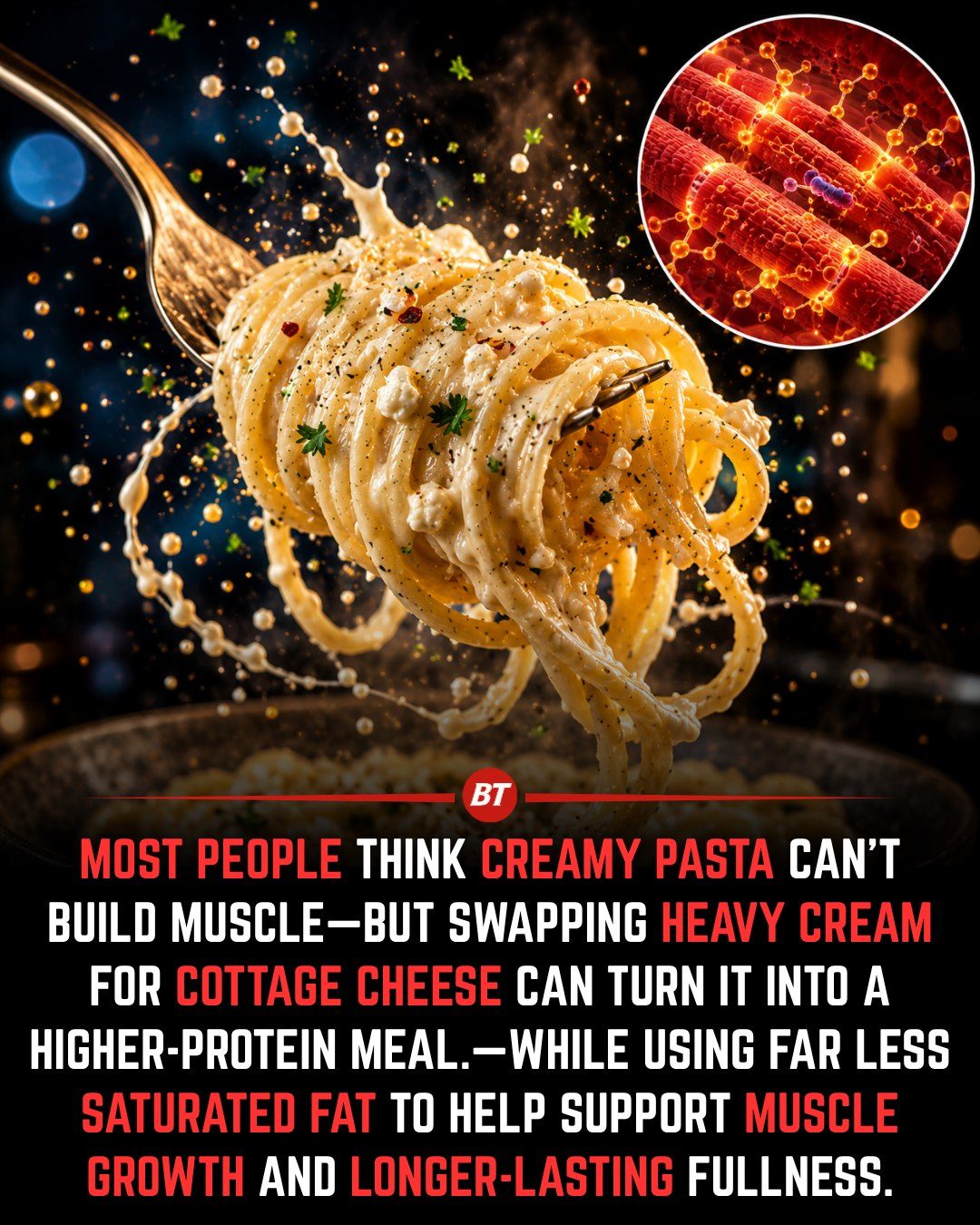
Healthy Pasta with a Protein Boost
The idea of a creamy pasta dish might not immediately evoke images of a high-protein meal. However, making a simple swap in your pasta recipe can significantly boost its protein content and reduce saturated fat. By blending cottage cheese into your pasta sauce instead of heavy cream, you can create a velvety, high-protein sauce that supports muscle growth and keeps you feeling full for longer periods. The swap not only enhances the nutritional value of your meal but also maintains the creamy texture you love in pasta dishes.
Why This Matters
Saturated fat has long been associated with cardiovascular health issues. Reducing its intake can help improve overall health and well-being. Meanwhile, increasing protein intake can aid in building and repairing muscles, especially important for those engaging in regular resistance training. Cottage cheese offers a nutrient-dense alternative to heavy cream, providing high-quality proteins as well as key nutrients like calcium, phosphorus, selenium, and vitamin B12.
Main Discussion
The Benefits of Cottage Cheese in Pasta Sauce
Cottage cheese is a powerhouse of protein, containing both casein and whey proteins. These two high-quality proteins provide all nine essential amino acids your body needs to build and repair muscle tissue. Additionally, cottage cheese is lower in saturated fat compared to heavy cream, making it a healthier option for those watching their fat intake. Once blended, cottage cheese becomes a smooth and creamy base for your pasta sauce, indistinguishable from traditional cream-based sauces in terms of texture.
Nutritional Comparison
Heavy cream is known for its rich, velvety texture, but it also contains a substantial amount of saturated fat and very little protein. Cottage cheese, on the other hand, offers a much healthier nutritional profile. By swapping 1 cup of heavy cream with 1 cup of low-fat cottage cheese, you can increase the protein content of your pasta dish by up to five times. This simple substitution not only supports muscle growth but also helps you feel satisfied for a longer duration after a meal, thanks to the slow digestion properties of protein.
Nutritional Content
Protein does more than just aid in muscle growth; it also slows down digestion, which helps you stay fuller for longer. This makes cottage cheese an excellent choice for those looking to manage their weight or maintain a balanced diet. Cottage cheese is also rich in essential vitamins and minerals. For instance, it contains calcium and phosphorus, which are vital for bone health, as well as selenium and vitamin B12, which play crucial roles in various physiological functions.
Research Support
Research published in the American Journal of Clinical Nutrition has consistently shown that higher-protein meals, particularly those incorporating resistance training, increase feelings of fullness and help preserve lean muscle mass. By using cottage cheese in your pasta sauce, you can create a meal that not only satisfies your taste buds but also supports your overall health and fitness goals.
Recipes and Tips for Making the Swap
To create a creamy, high-protein pasta sauce, blend 1 cup of low-fat cottage cheese with garlic, a splash of pasta water, your favorite seasonings, and a little Parmesan. Toss this sauce with hot pasta for a delicious and nutritious meal. You can experiment with different herbs and spices to enhance the flavor profile, ensuring that the sauce remains both healthy and delicious.
Practical Tips
- Use Low-Fat Cottage Cheese: Opt for low-fat or non-fat cottage cheese to keep the saturated fat content low while still enjoying a creamy texture.
- Blend Thoroughly: Ensure that the cottage cheese is blended until smooth to achieve a velvety consistency similar to heavy cream.
- Add Flavor: Enhance the flavor of your sauce with garlic, herbs, and Parmesan cheese. These additions will elevate the taste without compromising the nutritional benefits.
- Experiment with Variations: Try different kinds of pasta and vegetable pairings to keep your meals interesting and nutritious. The versatility of this sauce allows for a wide range of culinary possibilities.
Important Takeaways
- Swapping heavy cream for cottage cheese in pasta sauce significantly boosts protein content and reduces saturated fat, making the dish more supportive of muscle growth and fullness.
- Cottage cheese provides high-quality proteins, essential amino acids, and key nutrients like calcium, phosphorus, selenium, and vitamin B12.
- The creamy texture of cottage cheese-based sauce is easily achieved with simple blending techniques, making it a seamless substitute for heavy cream.
- High-protein meals are crucial for muscle repair and maintaining a balanced diet, especially for those engaged in resistance training.
- Cottage cheese-based pasta sauce can be customized with various flavors and ingredients, providing a versatile and nutrient-rich meal option.
Conclusion
By incorporating cottage cheese into your pasta sauce, you can transform a classic creamy pasta dish into a high-protein, low-saturated-fat meal. This simple swap not only enhances the nutritional value of your pasta but also keeps you fuller for longer. With its velvety texture and rich flavor, this cottage cheese-based sauce is an excellent choice for anyone looking to enjoy a healthier, more protein-packed pasta dish.
Watch the Reel
Questions readers ask
Can I use low-fat cottage cheese for this recipe?
Yes, you can use low-fat cottage cheese to further reduce the saturated fat content in your pasta dish. It will still provide a creamy texture and a good amount of protein, making it a healthy choice for those watching their fat intake.
How does cottage cheese compare to heavy cream in terms of calories?
Cottage cheese is lower in calories and saturated fat compared to heavy cream. For instance, 100 grams of heavy cream contains around 300 calories and 30 grams of saturated fat, while the same amount of cottage cheese has only around 98 calories and 1.8 grams of saturated fat. By making this switch, you can significantly reduce the calorie and fat content of your meal while still enjoying a creamy sauce.
What are some additional benefits of using cottage cheese in pasta dishes?
Cottage cheese is rich in casein protein, which is digested slowly and helps in muscle repair and growth. It also contains vital nutrients like calcium, vitamin B12, and phosphorus. By incorporating it into your pasta, you add a nutritional boost to the recipe.
Can I add other ingredients to the cottage cheese sauce for added flavor?
Absolutely! You can enhance the flavor of your cottage cheese sauce by adding herbs, garlic, or even a splash of lemon juice. Blending in some cooked vegetables, like spinach or roasted red peppers, can also boost the nutritional content and add depth of flavor to your sauce.
Will using cottage cheese in my pasta sauce change the taste significantly?
The taste of cottage cheese in your pasta sauce is subtle and won’t drastically alter the flavor profile. Blending the cottage cheese until smooth ensures that the texture remains creamy and velvety, much like a traditional cream-based sauce. You might notice a slight tanginess, but it can be balanced with other seasonings and ingredients.
How can I ensure my cottage cheese sauce is smooth and creamy?
To achieve a smooth and creamy texture, blend the cottage cheese thoroughly until it is completely smooth. You can use a blender or food processor for the best results. Adding a small amount of pasta water or milk can also help achieve the desired consistency and enhance the creaminess of the sauce.
Related deep dives
Similar reads based on topic and creator.




Recent articles
Fresh deep dives from the latest Reels we unpacked.




Comments
Be the first to comment.