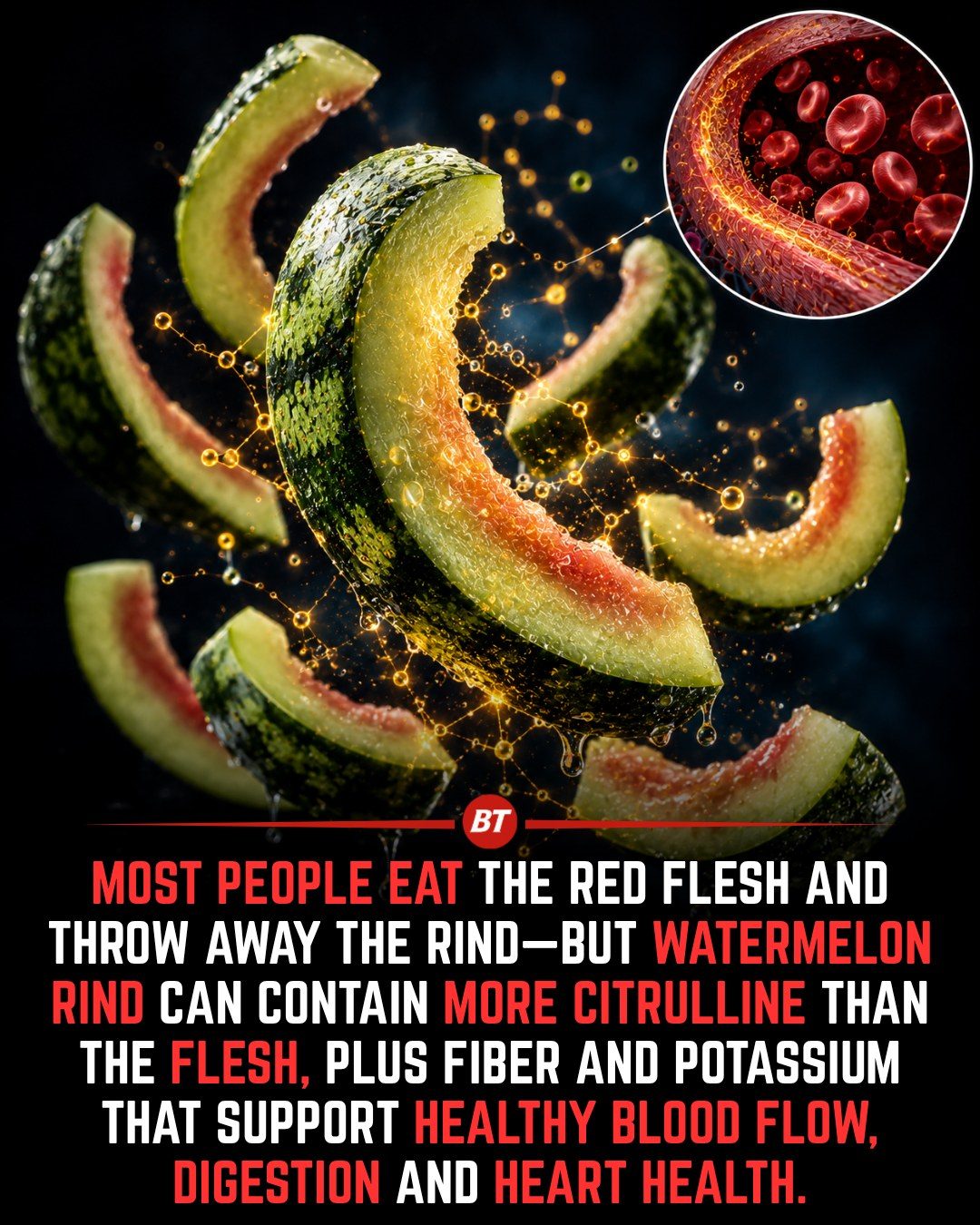
Watermelon Rind Benefits
Watermelon is a summer staple, beloved for its juicy, sweet flesh. However, the rind—often discarded as waste—holds more nutritional value than many realize. The pale green-and-white rind, sandwiched between the sweet flesh and the tough outer skin, is packed with beneficial plant compounds, including citrulline, fiber, and potassium. This makes it far more valuable than most people realize, and using it in creative ways can enhance both your health and your cooking repertoire.
Why This Matters
Food waste is a significant global issue, and much of it comes from discarding edible parts of fruits and vegetables. By understanding the benefits of the watermelon rind, you can reduce waste and add nutrients to your diet. The rind contains more citrulline than the flesh. Citrulline is an amino acid that the body can convert into arginine, which in turn helps produce nitric oxide. Nitric oxide plays a crucial role in relaxing blood vessels, improving circulation, and regulating blood pressure. Additionally, the rind's fiber supports digestion and feeds beneficial gut bacteria, while its potassium content aids in muscle function, nerve signaling, and maintaining healthy blood pressure.
Citrulline: The Powerhouse Amino Acid
What is Citrulline?
Citrulline is an amino acid found in the watermelon rind, and it has some pretty impressive health benefits. Unlike many other amino acids, citrulline is not used by the body to build proteins. Instead, it plays a vital role in the urea cycle, which helps remove ammonia from the body. More importantly, the body can convert citrulline into arginine, another amino acid that helps produce nitric oxide. Nitric oxide is a molecule that relaxes blood vessels, improving circulation and aiding in blood pressure regulation. Studies have shown that supplementing with citrulline can improve exercise performance, reduce fatigue, and even enhance endurance.
Citrulline in Watermelon Rind
The watermelon rind contains more citrulline than the flesh, and some studies suggest that it may have higher concentrations of this amino acid than the red part of the fruit. Research published in the Journal of Chromatography A, Nutrients, and the Journal of Food Science has found that watermelon rind contains meaningful amounts of citrulline, which can be easily absorbed by the body. The exact amount of citrulline in the rind can vary depending on the variety of the watermelon and its growing conditions. However, the general consensus is that the rind is a valuable source of this beneficial amino acid.
Fiber: Supporting Digestion and Gut Health
The Importance of Fiber
Fiber is an essential component of a healthy diet, supporting digestion and feeding beneficial gut bacteria. The watermelon rind is a good source of dietary fiber, which the sweet flesh contains in lesser amounts. Consuming adequate fiber can help prevent constipation, maintain healthy blood sugar levels, and even support weight management. Additionally, fiber plays a crucial role in promoting a healthy gut microbiome, which is essential for overall health and well-being.
Fiber in Watermelon Rind
The watermelon rind's fiber content adds nutritional value to this often-discarded part of the fruit. By incorporating the rind into your diet, you can increase your fiber intake and support your digestive health. The rind's fiber content can help keep you feeling full and satisfied, making it an excellent addition to meals and snacks. Moreover, the fiber in the watermelon rind can help feed beneficial gut bacteria, promoting a healthy gut microbiome.
Potassium: Essential for Heart Health and Muscle Function
The Role of Potassium
Potassium is an essential mineral that plays a crucial role in various bodily functions, including muscle function, nerve signaling, and maintaining healthy blood pressure. Adequate potassium intake is necessary for overall health and well-being. The watermelon rind is a good source of potassium, making it a valuable addition to a balanced diet.
Potassium in Watermelon Rind
The watermelon rind contains potassium, which contributes to normal muscle function, nerve signaling, and healthy blood pressure. By incorporating the rind into your diet, you can increase your potassium intake and support your heart health. The potassium in the watermelon rind can help counteract the effects of sodium, promoting a healthy balance of electrolytes in the body. Additionally, the potassium in the rind can help support muscle function, making it an excellent addition to a post-workout snack or meal.
Creative Uses for Watermelon Rind
Culinary Ideas
Watermelon rind has a mild flavor that lends itself well to a variety of culinary applications. Here are some creative ways to incorporate the rind into your meals and snacks:
- Stir-Fries: Finely chop the rind and add it to stir-fries for extra crunch and nutrition.
- Pickles: Make watermelon rind pickles by slicing the rind and fermenting it in a brine solution.
- Slaws: Grate the rind and mix it with other vegetables to create a refreshing slaw.
- Smoothies and Juices: Blend the rind with fruits and vegetables to make a nutritious smoothie or juice.
- Pasta: String the rind into noodles, like zoodles, for a refreshing summer pasta dish.
Preparation Tips
Before using the watermelon rind, it's essential to wash the fruit thoroughly and remove the tough outer green skin. The white and pale green inner rind is the part you want to use. You can also experiment with different cooking methods, such as grilling, roasting, or sautéing, to bring out unique flavors and textures.
Practical Tips
Storing Watermelon Rind
To maximize the shelf life of watermelon rind, store it in an airtight container in the refrigerator for up to three days. Alternatively, you can freeze the rind for up to three months, making it a convenient addition to smoothies, juices, or stir-fries.
Selecting the Right Watermelon
When choosing a watermelon, look for one that is heavy for its size and has a dull, rather than shiny, rind. The watermelon should produce a hollow sound when tapped, indicating that it is ripe and juicy. Additionally, check the underside of the watermelon for a creamy yellow or orange spot, which is a sign of ripeness.
Important Takeaways
The watermelon rind is a nutritional powerhouse that often goes to waste. It contains more citrulline, fiber, and potassium than the flesh, making it a valuable addition to a balanced diet. Incorporating the rind into your meals and snacks can support healthy blood flow, digestion, and heart health. Additionally, the mild flavor of the rind lends itself well to a variety of culinary applications, from stir-fries and pickles to smoothies and juices.
Conclusion
The next time you slice into a juicy watermelon, don't be so quick to discard the rind. This often-overlooked part of the fruit is packed with beneficial plant compounds, including citrulline, fiber, and potassium. By incorporating the rind into your diet, you can support your health, reduce waste, and add variety to your meals. With a little creativity, the watermelon rind can become a delicious and nutritious addition to your favorite dishes.
Watch the Reel
Questions readers ask
What are the primary nutrients found in watermelon rind?
Watermelon rind is notably rich in citrulline, an amino acid that supports heart health and muscle function. It also contains high amounts of fiber and potassium, which are essential for digestive health and maintaining electrolyte balance.
How can watermelon rind benefit my digestion?
The high fiber content in watermelon rind aids in promoting regular bowel movements and preventing constipation. This makes it a useful addition to the diet for maintaining good digestive health.
Can eating watermelon rind improve circulation?
Yes, the citrulline in watermelon rind is converted to arginine in the body, which helps produce nitric oxide. Nitric oxide is a compound that promotes vasodilation, or the widening of blood vessels, thereby improving blood flow and circulation.
What are some creative ways to incorporate watermelon rind into my diet?
Watermelon can be used in a variety of dishes, such as stir-fries, pickles, or even smoothies. For a simpler approach, you can rinse, peel off the outer green skin, and add the pale green rind to salads or blend into juices.
Is the rind of a watermelon more nutritious than the flesh?
While both the flesh and the rind of a watermelon offer health benefits, the rind contains more citrulline and fiber, making it a more nutritious part of the fruit, especially for supporting heart health, muscle function, and digestion.
How does the potassium in watermelon rind support overall health?
Potassium is a crucial electrolyte that helps regulate fluid balance, nerve signals, and muscle contractions. Including watermelon rind in your diet can contribute to your daily potassium intake, supporting overall bodily functions.
Are there any known health benefits of watermelon rind for muscle function?
Yes, the citrulline in watermelon rind has been shown to enhance nitric oxide production, which can improve blood flow to muscles. This increased blood flow can help reduce muscle soreness and improve recovery after exercise.
Related deep dives
Similar reads based on topic and creator.




Recent articles
Fresh deep dives from the latest Reels we unpacked.




Comments
Be the first to comment.