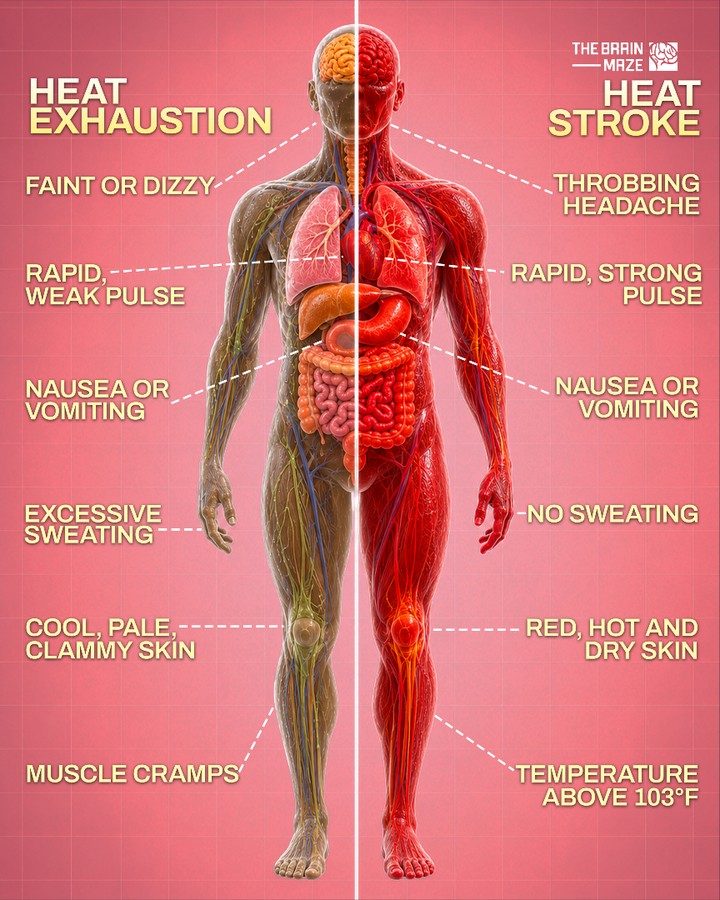
Heat Exhaustion vs. Heat Stroke
Heat-related illnesses, like heat exhaustion and heat stroke, are serious conditions that can occur during hot weather or intense physical activity. Both conditions are marked by an abnormally high body temperature, but heat stroke is far more severe and potentially life-threatening. Understanding the differences between these two conditions is crucial for prompt and appropriate action.
Context / Why this matters
As temperatures rise, especially during summer or in regions with hot climates, the risk of heat-related illnesses increases. Heat exhaustion and heat stroke are the two most common heat-related conditions, and they can affect anyone, from athletes to those simply outdoors on a hot day. In severe cases, heat stroke can lead to permanent organ damage or even death if not treated promptly. Therefore, it's essential to recognize the symptoms and act swiftly to prevent serious complications.
Main discussion
Heat exhaustion and heat stroke differ in their severity, symptoms, and required interventions. The following sections breakdown the unique aspects of each.
Symptoms of heat exhaustion
Heat exhaustion occurs when the body overheats and cannot cool down properly, often due to prolonged exposure to high temperatures or intense physical activity. Symptoms of heat exhaustion typically include:
- Faintness or dizziness
- Rapid, weak pulse
- Excessive sweating
- Cool, pale, clammy skin
- Nausea or vomiting
- Muscle cramps
These symptoms indicate that the body is struggling to regulate its temperature effectively. If not addressed, heat exhaustion can progress to heat stroke, which is far more dangerous.
Symptoms of heat stroke
Heat stroke is a severe medical emergency characterized by a body temperature above 103°F (39.4°C). Unlike heat exhaustion, heat stroke occurs when the body's temperature regulation system fails completely. Symptoms of heat stroke include:
- Throbbing headache
- Rapid, strong pulse
- Nausea or vomiting
- Lack of sweating
- Red, hot, and dry skin
- Changes in consciousness, such as confusion, disorientation, or loss of consciousness
- High fever (temperature above 103°F)
These symptoms are indicative of a medical emergency. Heat stroke can lead to permanent organ damage, including brain damage, and even death if not treated immediately.
Key differences
| Symptoms | Heat Exhaustion | Heat Stroke |
|---|---|---|
| Pulse | Rapid, weak | Rapid, strong |
| Sweating | Excessive | No sweating |
| Skin condition | Cool, pale, clammy | Red, hot, and dry |
| Temperature | Below 103°F (39.4°C) | Above 103°F (39.4°C) |
| Brain function | Normal | Altered or changes in brain function |
Understanding these differences is crucial for recognizing the severity of the condition and taking appropriate action.
Practical tips
Prevention
Preventing heat-related illnesses is key. Here are some practical tips to stay safe in hot weather:
- Stay hydrated: Drink plenty of fluids, even if you don't feel thirsty. Water and electrolyte-replenishing drinks are essential.
- Dress appropriately: Wear light, loose-fitting clothing that allows for better airflow and helps evaporate sweat.
- Avoid peak sun hours: Stay indoors during the hottest part of the day, typically between 11 a.m. and 3 p.m.
- Use sunscreen: Protect your skin from the sun's harmful rays to prevent dehydration and heat-related illnesses.
- Take breaks: If you're engaging in physical activity, take frequent breaks to rest and hydrate.
Immediate action
If you or someone else experiences symptoms of heat exhaustion or heat stroke, take the following steps:
- Move to a cooler area: Get out of the sun and into a shaded or air-conditioned space.
- Hydrate: Drink water or an electrolyte-replacement beverage.
- Cool down: Use a cool cloth or damp towel to lower body temperature. For heat stroke, consider immersing the person in a cool bath or wrapping them in wet towels.
- Seek medical attention: Heat stroke is a medical emergency. Call for immediate assistance and get the person to a hospital if necessary.
Important takeaways
- Recognize the symptoms: Understanding the differences between heat exhaustion and heat stroke is crucial for taking appropriate action.
- Act quickly: Heat stroke is a medical emergency that requires immediate attention. Do not delay seeking medical help.
- Prevent heat-related illnesses: Stay hydrated, dress appropriately, and avoid peak sun hours to minimize the risk of heat-related conditions.
Conclusion
Heat exhaustion and heat stroke are serious conditions that can occur during hot weather or intense physical activity. While heat exhaustion is generally less severe, heat stroke is a medical emergency that requires immediate attention. By understanding the symptoms and taking preventive measures, you can stay safe and healthy in hot weather. Always prioritize hydration, appropriate clothing, and rest to minimize the risk of heat-related illnesses.
Watch the Reel
Questions readers ask
What are the initial signs of heat exhaustion?
The first signs of heat exhaustion often include excessive sweating, dizziness, lightheadedness, and nausea. Other symptoms may include rapid pulse, muscle cramps, and clammy, moist skin. If you experience these symptoms, it is important to cool down and hydrate immediately.
How can you differentiate between heat exhaustion and heat stroke?
Heat exhaustion and heat stroke are both marked by high body temperatures, but heat stroke is more severe. Heat exhaustion may involve symptoms such as dizziness, nausea, and excessive sweating, while heat stroke symptoms include a throbbing headache, body temperature above 103°F, and hot, dry skin. Heat stroke is a medical emergency and requires immediate professional care.
What should you do if someone is experiencing heat exhaustion?
If someone is showing signs of heat exhaustion, help them move to a cooler location, have them lie down, and elevate their feet slightly. Encourage them to drink cool fluids, and apply cool, wet cloths to their skin to help lower their body temperature. Monitor their condition closely and seek medical assistance if symptoms worsen or do not improve.
What steps should be taken if you suspect someone has heat stroke?
If you suspect someone has heat stroke, call emergency services immediately. While waiting, move the person to a cooler area, remove excess clothing, and use cool water or ice packs to lower their body temperature. Do not give them anything to drink. Heat stroke is a life-threatening condition that requires urgent medical intervention.
Can heat exhaustion be prevented and if so, how?
To prevent heat exhaustion, stay hydrated by drinking plenty of fluids, avoid unnecessary physical exertion during hot weather, and wear light, breathable clothing. Take frequent breaks in the shade or a cooler location, and be aware of your body's response to heat, stopping activity if you feel dizzy, nauseous, or excessively sweaty.
What are the most common symptoms of a high body temperature?
Common symptoms of a high body temperature, which can be indicative of heat exhaustion or heat stroke, include dizziness, profuse sweating, nausea, vomiting, rapid pulse, and muscle cramps. In heat stroke, symptoms may also include a throbbing headache, confusion, and hot, dry skin. High body temperatures require immediate attention, especially when accompanied by other symptoms.
Related deep dives
Similar reads based on topic and creator.

Recent articles
Fresh deep dives from the latest Reels we unpacked.




Comments
Be the first to comment.