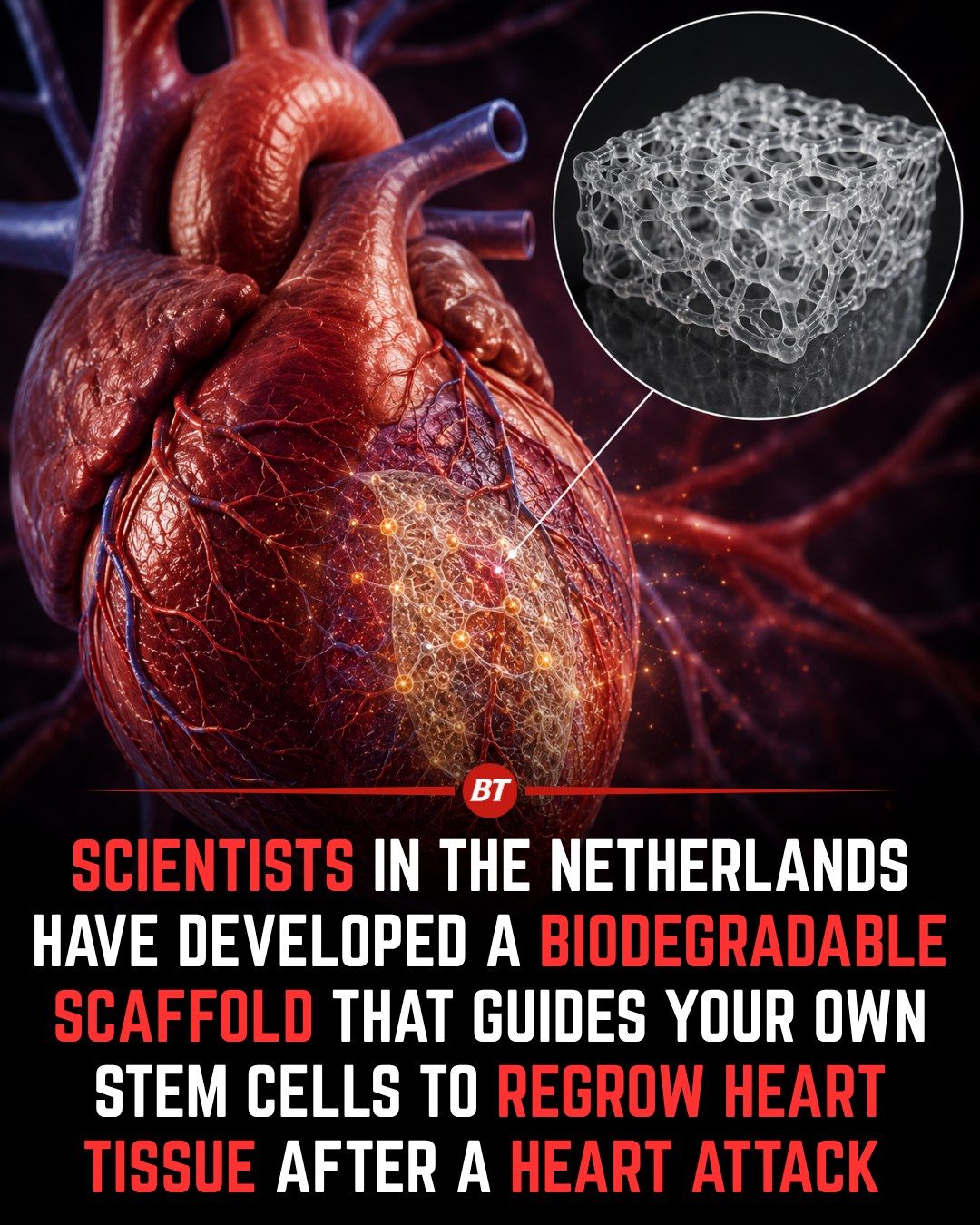
Stem Cell Heart Regeneration: A Breakthrough in Cardiac Repair
Heart disease remains one of the leading causes of death worldwide, with heart attacks being a significant contributor. Traditionally, heart muscle damage from a heart attack was considered permanent because the heart has a limited ability to regenerate. However, recent advancements in regenerative medicine are challenging this notion, offering new hope for patients.
Context / Why this matters
In the Netherlands, scientists have made a groundbreaking discovery in the field of heart regeneration. They have developed a biodegradable scaffold that guides the body's own stem cells to regrow heart tissue, significantly advancing our understanding of cardiac repair.
This innovative technology serves as a temporary framework that assists in the body's natural healing processes. The scaffold is designed to dissolve over time, leaving behind newly regenerated heart tissue. This approach not only prevents further damage but also aims to restore some of the heart's lost function by promoting the growth of healthy tissue where scar tissue would normally form.
Main discussion
The Biodegradable Scaffold: A Temporary Framework for Regeneration
The biodegradable scaffold developed by Dutch researchers is a pioneering advancement in regenerative medicine. Unlike traditional implants, this scaffold is not meant to be a permanent fixture. Instead, it acts as a temporary scaffold, providing structural support and guiding the body's repair processes. As the body's own stem cells are attracted to the scaffold, they are encouraged to regenerate healthy heart tissue.
The scaffold's biodegradable nature ensures that it gradually dissolves over time, leaving behind the newly formed heart tissue. This unique property allows for natural integration with the existing heart tissue, minimizing the risk of rejection or complications.
Stem Cells and Heart Regeneration
Stem cells play a pivotal role in the body's natural healing and repair processes. In the context of heart regeneration, these cells are particularly crucial. The biodegradable scaffold developed by the Dutch researchers leverages the body's own stem cells to promote healing and tissue regeneration. By attracting stem cells to the damaged areas of the heart, the scaffold supports the formation of new blood vessels and the growth of healthy heart tissue.
The Role of Stem Cells in Tissue Regeneration
The ability of stem cells to differentiate into various types of cells makes them invaluable in tissue regeneration. When applied to heart regeneration, these cells can transform into cardiac cells, supporting the formation of new heart tissue. This process is further aided by the biodegradable scaffold, which creates an environment conducive to healing and tissue regeneration.
Moreover, the scaffold's ability to support new blood vessel formation is crucial for the survival and functionality of the newly regenerated tissue. This holistic approach to heart regeneration not only addresses the immediate damage but also enhances the overall healing process, promoting long-term heart health.
Preclinical Studies and Future Prospects
Preliminary studies have shown promising results, with the biodegradable scaffold successfully attracting stem cells and promoting heart tissue regeneration in preclinical models. These findings highlight the potential of this technology in transforming the way heart attacks are treated, moving from a focus on damage prevention to active tissue repair and functional restoration.
Researchers are optimistic about the future of this technology, envisioning a world where heart attacks no longer result in permanent scar tissue. By harnessing the body's natural healing abilities and guiding stem cells to regenerate heart tissue, this breakthrough could significantly improve the quality of life for millions of heart attack survivors.
Practical tips
Understanding the Regenerative Process
To fully appreciate the potential of this technology, it is essential to understand the regenerative process involved. The biodegradable scaffold acts as a temporary framework, attracting stem cells to the damaged areas of the heart. These stem cells then differentiate into cardiac cells, promoting the growth of new, healthy heart tissue.
The scaffold's biodegradable nature ensures that it gradually dissolves over time, leaving behind the newly formed tissue. This process not only supports the regeneration of heart tissue but also minimizes the risk of complications associated with permanent implants.
The Importance of Early Intervention
Early intervention is crucial in the context of heart attacks and regenerative medicine. The sooner the biodegradable scaffold can be applied to the damaged areas of the heart, the better the chances of successful tissue regeneration. This emphasizes the importance of prompt medical attention and the implementation of advanced technologies in cardiac care.
Important takeaways
The development of a biodegradable scaffold that guides the body's own stem cells to regrow heart tissue represents a significant breakthrough in the field of regenerative medicine. This technology offers a new approach to heart regeneration, moving beyond damage prevention to active tissue repair and functional restoration.
The scaffold's ability to support new blood vessel formation and promote the growth of healthy heart tissue underscores its potential in transforming post-heart attack care. As research continues to advance, the integration of this technology into standard medical practices could lead to improved outcomes for millions of heart attack survivors worldwide.
The future of heart regeneration lies in harnessing the body's natural healing abilities and guiding stem cells to promote tissue repair. The biodegradable scaffold developed by Dutch researchers exemplifies this innovative approach, offering new hope for patients and pushing the boundaries of what is possible in regenerative medicine.
Conclusion
The development of a biodegradable scaffold that guides the body's own stem cells to regrow heart tissue is a groundbreaking advance in the field of regenerative medicine. This technology offers a new approach to heart regeneration, focusing on active tissue repair and functional restoration. As research continues to advance, the integration of this innovative technology into standard medical practices could significantly improve outcomes for heart attack survivors. The future of heart regeneration looks promising, with ongoing efforts to harness the body's natural healing abilities and promote tissue repair on a larger scale.
Watch the Reel
Questions readers ask
How does the biodegradable scaffold help in heart tissue repair?
The scaffold acts as a temporary framework that guides the body's own stem cells to the damaged heart tissue. It promotes the growth of new heart cells, helping to regenerate the damaged tissue and restore heart function. Over time, the scaffold degrades, leaving behind healthy, functional heart tissue.
What makes the Dutch heart research significant for heart attack recovery?
The Dutch research is significant because it offers a new approach to heart attack recovery by using the body's own stem cells to regenerate heart tissue. Traditionally, heart muscle damage from a heart attack was considered permanent. This breakthrough challenges that notion and provides new hope for patients.
How does the biodegradable heart scaffold support the natural heart healing process?
The biodegradable scaffold supports the natural healing process by providing a structure for the body's stem cells to infiltrate and form new heart tissue. As the scaffold degrades, it allows the newly formed tissue to integrate seamlessly with the existing heart muscle, promoting functional recovery.
Can the biodegradable scaffold be used for other forms of heart disease treatment besides heart attacks?
While the current research focuses on heart attack recovery, the potential applications of the biodegradable scaffold could extend to other forms of heart disease. The technology's ability to promote heart tissue regeneration and restore function makes it a promising avenue for various forms of heart disease treatment.
What role do stem cells play in heart regeneration?
Stem cells play a crucial role in heart regeneration by differentiating into new heart cells, replacing the damaged tissue. The biodegradable scaffold developed by Dutch scientists guides these stem cells to the site of injury, facilitating the repair process and enhancing the heart's ability to heal itself.
How does the heart regeneration process work with the biodegradable scaffold?
The heart regeneration process involves the scaffold being implanted into the damaged heart tissue. The scaffold then attracts and guides the body's own stem cells to the site, promoting the growth of new heart cells. As the new tissue forms, the scaffold gradually degrades, leaving behind healthy, functional heart tissue.
What are the potential long-term benefits of using a biodegradable scaffold for heart repair?
The long-term benefits of using a biodegradable scaffold for heart repair include improved heart function, reduced risk of further heart damage, and enhanced quality of life for patients. By promoting natural healing and regenerating heart tissue, this approach offers a promising solution for those suffering from heart disease.
Related deep dives
Similar reads based on topic and creator.
Recent articles
Fresh deep dives from the latest Reels we unpacked.



Comments
Be the first to comment.