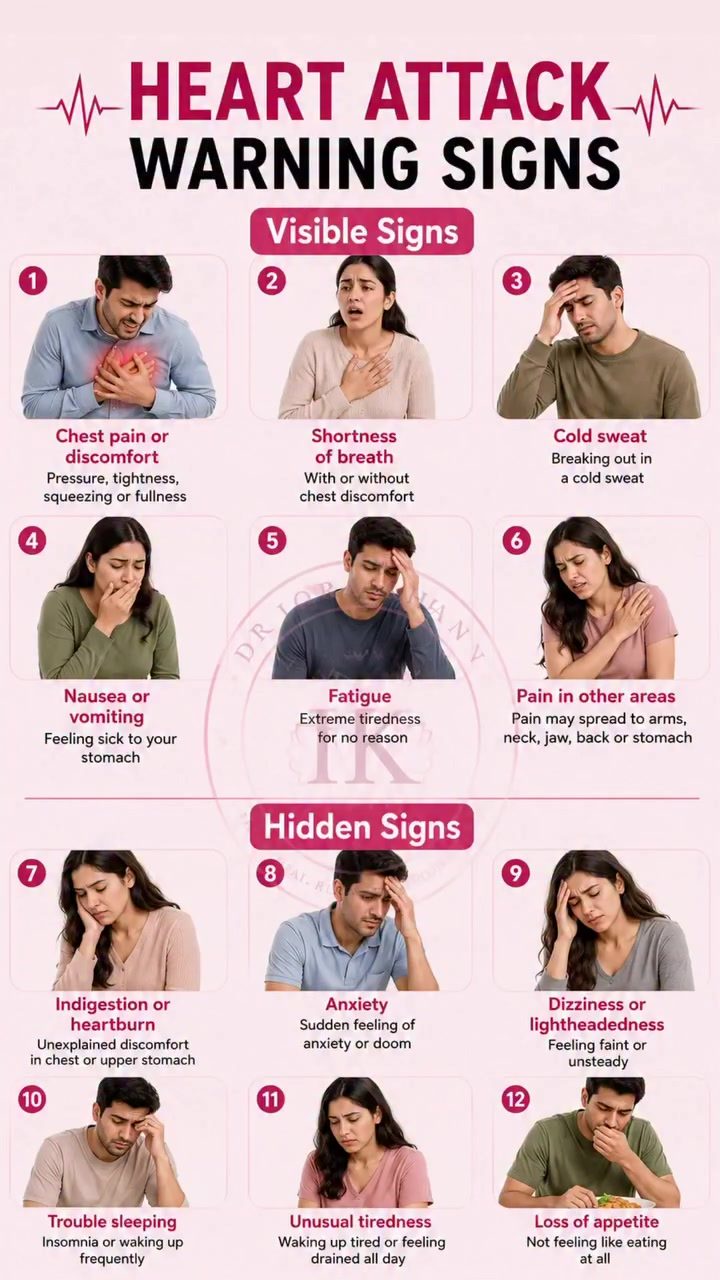
Heart Attack Warning Signs
Recognizing the signs of a heart attack is crucial for timely intervention and saving lives. Heart attacks don't always start with severe chest pain; symptoms can vary, especially in women, older adults, and people with diabetes. Understanding these signs can make a significant difference in outcome.
Why this matters
Heart disease is a leading cause of death worldwide, and prompt recognition of heart attack symptoms is essential for survival. Early intervention can save heart muscle and lives, making it vital to be aware of the various warning signs. These signs can be subtle or manifest differently in various groups, highlighting the importance of staying informed.
Main discussion
Heart attack symptoms can be categorized into visible and hidden signs. Recognizing both types is important for quick and effective action.
Visible Signs
Visible signs are often the first indicators of a heart attack and include:
-
Chest Pain or Discomfort: This can feel like pressure, tightness, squeezing, or fullness in the chest. It may last for a few minutes or go away and come back. The discomfort can be severe or mild, and it is important to note that not all chest pain is a heart attack, but it should never be ignored.
-
Shortness of Breath: This can occur with or without chest discomfort. It might feel like you can't get enough air, or you might be breathing rapidly and deeply.
-
Cold Sweat: Breaking out in a cold sweat, often accompanied by clammy skin, can be a sign of a heart attack. This symptom can occur even if you are not exerting yourself.
Hidden Signs
Hidden signs are less obvious and can be easily overlooked. These include:
-
Indigestion or Heartburn: Unexplained discomfort in the chest or upper stomach can sometimes indicate a heart attack, particularly in women and older adults.
-
Anxiety: A sudden feeling of anxiety or doom can sometimes be a sign of a heart attack, especially when it is accompanied by other symptoms.
-
Trouble Sleeping: Unusual tiredness or trouble sleeping can be signs of a heart attack, especially when coupled with other symptoms. This can manifest as feeling unusually tired or having trouble staying asleep.
-
Loss of Appetite: This can feel like an unexplained and sudden lack of appetite. This symptom can be subtle but important, as it can indicate a more serious issue when combined with other signs.
Practical Tips
Recognizing the signs of a heart attack is just the first step. Knowing what to do next is equally important. The following guidelines can help you respond effectively:
-
Get Medical Help Immediately: If you experience any of the visible or hidden signs of a heart attack, seek immediate medical attention. Call your local emergency services, especially if the symptoms are sudden, severe, or last more than a few minutes. Early treatment can save heart muscle and lives.
-
Stay Calm and Call for Help: If someone else is experiencing symptoms, stay calm and call for help. If possible, assist the person in finding a comfortable position while waiting for medical help. Do not try to drive the person to the hospital unless absolutely necessary, as this can put both lives at risk.
-
Do Not Ignore Symptoms: Even if symptoms seem mild or pass quickly, do not ignore them. It is better to seek medical help and be checked out, as early intervention can prevent more severe complications.
Important Takeaways
Recognizing the signs of a heart attack is crucial for prompt and effective intervention. Understanding the visible and hidden signs can save lives, especially in women, older adults, and people with diabetes. The following points are essential to remember:
- Recognize Visible Signs: Chest pain, shortness of breath, and cold sweat are clear indicators of a potential heart attack.
- Pay Attention to Hidden Signs: Indigestion, anxiety, trouble sleeping, and loss of appetite can also be signs of a heart attack, especially when accompanied by other symptoms.
- Act Immediately: If you or someone else experiences these symptoms, seek medical help immediately.
- Stay Informed and Vigilant: Awareness of these signs can make a significant difference in outcome, so share this information with friends and family. It can literally save a life.
Conclusion
Awareness of heart attack warning signs is a critical aspect of heart health. By understanding the visible and hidden signs, you can act swiftly and seek the necessary medical help. Sharing this knowledge with others can create a community of vigilant individuals who are prepared to respond effectively in case of a heart attack. Stay informed, stay vigilant, and prioritize your heart health.
Watch the Reel
Questions readers ask
What are the most common visible signs of a heart attack?
The most common visible signs of a heart attack include chest discomfort or pressure, shortness of breath, and breaking out in a cold sweat. These symptoms are often sudden and can be quite intense, making them hard to ignore. However, it's important to note that not everyone experiences these symptoms in the same way.
Can heart attacks occur without chest pain?
Yes, heart attacks can occur without chest pain, especially in women, older adults, and people with diabetes. Other symptoms, such as shortness of breath, nausea, or lightheadedness, might be present instead. It's crucial to recognize these atypical signs and seek immediate help.
What are some hidden symptoms of a heart attack?
Hidden symptoms of a heart attack can include indigestion, anxiety, fatigue, and dizziness. These symptoms might be dismissed as minor or unrelated to a heart attack, but prompt recognition is key to seeking immediate help and improving outcomes.
How do heart attack symptoms differ in women and older adults?
In women and older adults, heart attack symptoms can be more subtle and varied. Instead of severe chest pain, they might experience shortness of breath, fatigue, nausea, or discomfort in the back, jaw, or neck. Being aware of these differences can help in identifying a heart attack and acting swiftly to get help.
What should I do if I suspect someone is having a heart attack?
If you suspect someone is having a heart attack, call emergency services immediately. While waiting for help, assist the person to a comfortable position, loosen any tight clothing, and if they are conscious and coherent, give them an aspirin if available. Stay with the person and monitor their symptoms until help arrives.
How can I differentiate between heart attack symptoms and angina?
Angina is often described as a squeezing or pressure sensation in the chest, typically brought on by physical exertion or stress and relieved with rest. Heart attack symptoms, on the other hand, can include chest pain, shortness of breath, nausea, and a feeling of impending doom. If you experience symptoms of a heart attack, seek immediate help, even if you're unsure.
Why are heart attacks in people with diabetes often silent or atypical?
People with diabetes may experience silent or atypical heart attacks due to nerve damage, which can alter or diminish the body's ability to sense pain. This makes it crucial for individuals with diabetes to be aware of other symptoms, such as shortness of breath, nausea, or fatigue, and seek immediate help if they occur.
Recent articles
Fresh deep dives from the latest Reels we unpacked.




Comments
Be the first to comment.