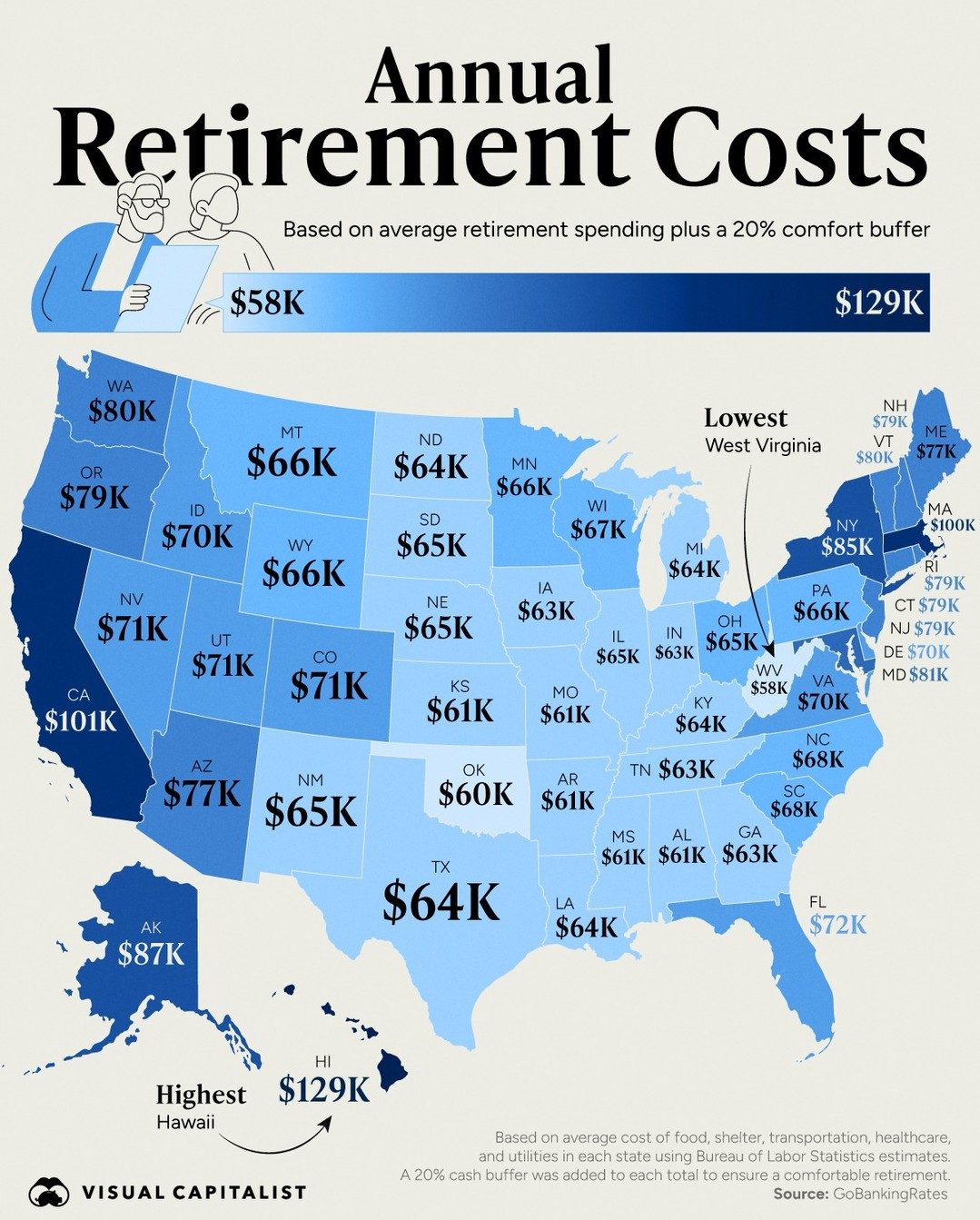
Retirement Costs by State
Retiring comfortably in the U.S. comes with a wide range of costs, depending on where you choose to settle. Hawaii tops the list as the most expensive state, requiring around $129,000 per year, while West Virginia offers the most affordable retirement at approximately $64,000 annually. These figures highlight the significant variation in retirement expenses across different states. This article delves into the factors influencing these costs and provides a comprehensive overview of retirement expenses nationwide.
Why This Matters
Understanding the cost of retirement by state is crucial for effective financial planning. Retirement expenses can vary widely due to differences in housing, healthcare, taxes, and the overall cost of living. By examining these costs, retirees can make informed decisions about where to live, how to budget, and what lifestyle to expect. This information is particularly valuable for those who want to ensure a comfortable retirement without financial strain.
Factors Influencing Retirement Costs
Housing
Housing is often the most significant expense in retirement. The cost of housing varies greatly by state, with states like Hawaii and California having some of the highest housing costs in the country. In contrast, states like West Virginia and Mississippi offer more affordable housing options. Retirees should consider not only the purchase price or rent but also property taxes, insurance, and maintenance costs.
Healthcare
Healthcare expenses are another major factor in retirement planning. States with higher healthcare costs can significantly impact a retiree's budget. Factors such as the availability and cost of health insurance, prescription drugs, and medical services play a crucial role. States with higher healthcare costs may necessitate a larger retirement savings or supplemental insurance to cover medical expenses.
Taxes
Taxes can also impact retirement costs. Some states have higher income tax rates, property taxes, or sales taxes, which can increase the overall cost of living. States with lower taxes, such as Florida and Texas, may be more attractive to retirees looking to minimize their tax burden. It's essential to understand the tax implications of choosing a retirement location.
Cost of Living
The overall cost of living, including groceries, utilities, and transportation, can vary significantly by state. States with a higher cost of living may require a larger retirement budget to maintain a comfortable lifestyle. Conversely, states with a lower cost of living can offer more affordable options for retirees. Understanding these differences can help retirees make informed decisions about where to settle.
Annual Retirement Costs by State
High-Cost States
Several states stand out for their high retirement costs. Hawaii, with an estimated annual retirement cost of $129,000, is the most expensive. This high cost is driven by factors such as high housing prices, expensive healthcare, and a higher cost of living. Other states with high retirement costs include:
- California: Known for its beautiful landscapes and mild climate, California's high housing prices and cost of living make it an expensive state for retirement.
- New York: With high housing prices, especially in urban areas, and a higher cost of living, New York requires a significant budget for retirement.
- Alaska: While Alaska offers unique advantages such as no state income tax, it has a high cost of living and limited healthcare options, making it an expensive choice for retirement.
Low-Cost States
On the other end of the spectrum, several states offer more affordable retirement options. West Virginia has the lowest estimated annual retirement cost at $64,000. Other low-cost states include:
- Mississippi: With a lower cost of living and affordable housing, Mississippi is an attractive option for retirees on a budget.
- Arkansas: Similar to Mississippi, Arkansas offers a lower cost of living and more affordable housing options, making it a cost-effective choice for retirement.
- Oklahoma: With a lower cost of living and affordable healthcare, Oklahoma is another state that offers a more affordable retirement.
Mid-Range States
Many states fall in the mid-range of retirement costs, offering a balance between affordability and quality of life. These states provide a variety of options for retirees, depending on their preferences and budget. Examples include:
- Colorado: While Colorado has a higher cost of living in urban areas, it offers a more affordable option in rural areas. The state's natural beauty and outdoor recreation opportunities make it a popular choice for retirees.
- Texas: With no state income tax and a relatively lower cost of living, Texas is an attractive option for retirees. The state offers a range of housing options and a diverse landscape.
- Georgia: With a lower cost of living and no state income tax on Social Security benefits, Georgia is a cost-effective retirement destination. The state offers a mild climate and a mix of urban and rural living options.
Practical Tips for Retirement Planning
Research Thoroughly
Before making a decision, thoroughly research the costs associated with retiring in a specific state. Look into housing prices, healthcare costs, taxes, and the overall cost of living. This research will help you make an informed decision about where to retire.
Consider All Expenses
Retirement planning should consider all expenses, including housing, healthcare, taxes, and the cost of living. By understanding these costs, you can create a more accurate budget and ensure a comfortable retirement.
Seek Professional Advice
Consulting with a financial advisor can provide valuable insights and guidance on retirement planning. A professional can help you navigate the complexities of retirement finances and make informed decisions.
Plan for Unforeseen Expenses
It's essential to plan for unexpected expenses, such as medical emergencies or home repairs. Having a buffer in your retirement savings can help cover these costs and ensure financial stability.
Important Takeaways
Retiring comfortably in the U.S. requires careful planning and consideration of various factors. Understanding the cost of retirement by state is crucial for effective financial planning. Factors such as housing, healthcare, taxes, and the overall cost of living can significantly impact retirement expenses. By researching these costs and seeking professional advice, retirees can make informed decisions about where to settle and how to budget for a comfortable retirement.
Conclusion
Retiring comfortably in the U.S. involves significant financial planning and consideration of various factors. By understanding the cost of retirement by state, retirees can make informed decisions about where to live, how to budget, and what lifestyle to expect. Factors such as housing, healthcare, taxes, and the overall cost of living play a crucial role in determining retirement expenses. By thoroughly researching these costs and seeking professional advice, retirees can create a comprehensive retirement plan and ensure a comfortable lifestyle.
Watch the Reel
Questions readers ask
What are the primary factors that make Hawaii the most expensive state for retirement?
The high cost of living in Hawaii is primarily due to increased housing costs, healthcare expenses, and state taxes. These factors contribute to the total annual retirement expenses, making it essential for retirees to carefully plan their finances.
How does the annual retirement cost in Hawaii compare to other states?
Retirement in Hawaii can be nearly double the cost of retiring in the most affordable states such as West Virginia. With expenses reaching $129,000, Hawaii's annual retirement costs are significantly higher than the national average, making it the most expensive state for retirees.
What are some key considerations for retirees when evaluating the cost of healthcare in Hawaii?
Healthcare costs in Hawaii are high due to the state's remote location, which can drive up the cost of medical services and insurance. Retirees should factor in these expenses when planning their budget, as healthcare can be a significant portion of their annual retirement costs.
How do housing costs in Hawaii affect retirement planning?
Housing in Hawaii is notoriously expensive, with high property prices and rental costs. Retirees need to account for these substantial housing expenses when budgeting for retirement, as they can significantly impact the overall cost of living.
Which state offers the most affordable retirement in the U.S.?
West Virginia is the most affordable state for retirement, with annual expenses averaging around $64,000. This is significantly lower than the national average and makes it an attractive option for retirees looking to minimize their living costs.
What role do taxes play in the overall cost of retirement in Hawaii?
Hawaii's tax structure, including state income tax and property taxes, can add a significant burden to retirees' finances. Retirees should be aware of these tax implications and plan accordingly, as they can affect the overall affordability of living in Hawaii.
Recent articles
Fresh deep dives from the latest Reels we unpacked.




Comments
Be the first to comment.