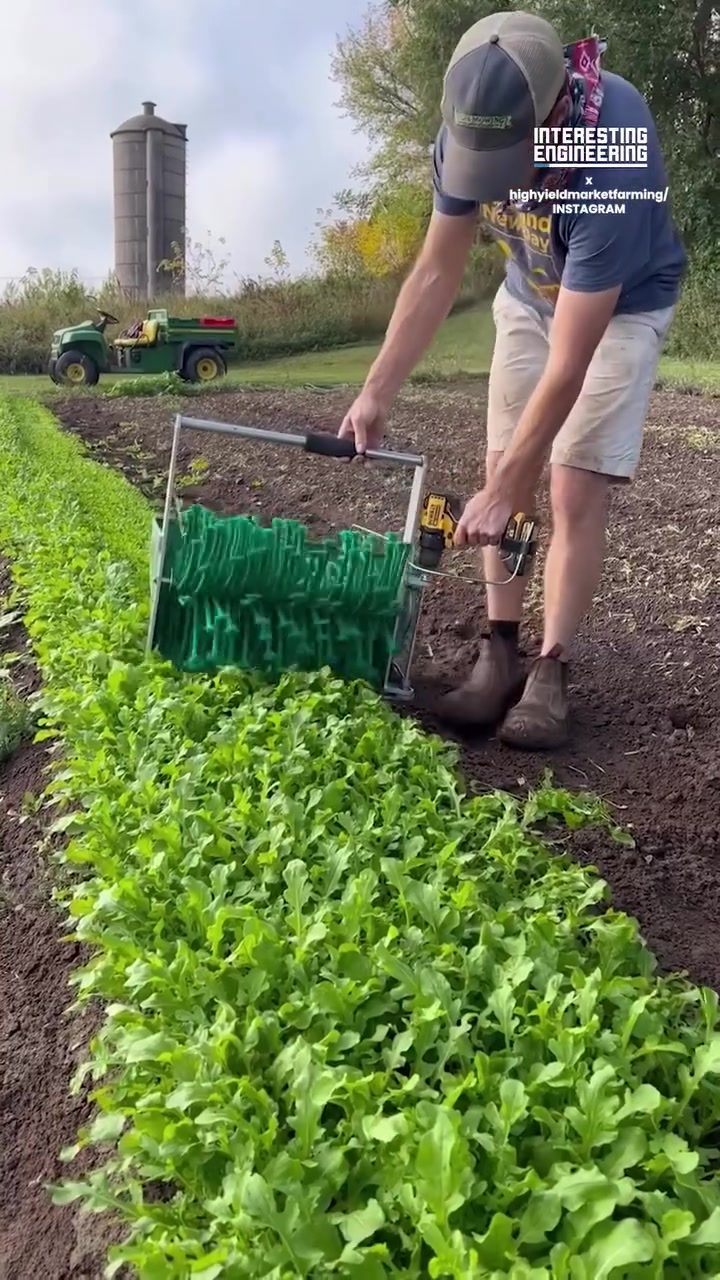
Market Farming Tools: Revolutionizing Baby Kale and Arugula Harvesting
The art and science of farming are evolving, and nowhere is this more evident than in the innovative tools being developed to streamline the harvest. Baby kale and arugula are two crops in high demand due to their versatility and health benefits. However, harvesting these crops traditionally involves laborious work with knives, which can be time-consuming and fatiguing. Modern farming tools are changing this landscape, offering rapid, efficient, and cost-effective solutions.
A specialized transplanting tool has been developed to help farmers achieve this. The tool demonstrates a specialized transplanting tool, automates the process of planting seedlings, and collects seedlings in a crate for later use. Transplanting seedlings is an integral part of crop management, and this automated tool enhances the overall efficiency of the process.
Why This Matters
The demand for fresh, high-quality produce like baby kale and arugula continues to grow, driven by consumer preferences for healthy, nutrient-rich foods. For farmers, this demand presents an opportunity and a challenge. Meeting the increasing demand requires more efficient and scalable harvesting methods to maintain profitability and sustainability. Harvesting baby kale and arugula traditionally involves significant manual labor, which can be both time-consuming and costly. This is where specialized tools come into play, offering solutions that can dramatically reduce the time and labor required, ultimately benefiting both farmers and consumers.
The key to success in modern farming is efficiency. Automating the transplanting process is a game-changer for farmers. Farmers can focus more on strategic tasks and less on repetitive, labor-intensive work, thereby increasing productivity and ensuring consistent crop quality. The innovative transplanting tool demonstrates how technology can be harnessed to achieve this goal. By collecting seedlings in a crate for later use, the tool optimizes the storage process and allows for more organized and efficient planting.
Main Discussion
The Rise of Specialized Farming Tools
Specialized farming tools are transforming the way crops are harvested and managed. These tools are designed to automate repetitive tasks, reduce labor costs, and improve overall efficiency. For instance, the transplanting tool mentioned above can handle hundreds of seedlings in minutes, a task that would otherwise take hours of manual effort.
Efficiency and Consistency
One of the standout features of this specialized tool is its ability to produce hundreds of clean, uniform bags of baby kale and arugula in minutes. This consistency is crucial for meeting market demand and ensuring that the quality of the produce remains high. By automating the harvesting process, the tool eliminates the variability often associated with manual labor, leading to more predictable and reliable yields.
Scalability and Sustainability
Harvesting tools that can scale production without compromising on quality are essential for modern farming. Farmers need to meet increasing demand while maintaining sustainability. By using a tool that reduces labor hours and minimizes the use of knives, farmers can significantly lower their operational costs and reduce fatigue. This not only benefits the farmers but also contributes to a more sustainable farming practice, reducing waste and conserving resources.
The Future of Harvesting Tools
Innovations in farming tools are not stopping at transplanting and harvesting. The future holds even more advanced tools that can further automate various aspects of farming, from seeding to harvesting. Automation in farming is about more than efficiency; it's about creating a sustainable and profitable model that can support the growing demand for fresh, high-quality produce.
Practical Tips
If you're a farmer looking to upgrade your methods, here are a few tips to consider:
Evaluate Your Needs
Before investing in any new tool, evaluate your specific needs. Identify the areas where you need the most efficiency gains. For instance, if transplanting and harvesting are your biggest time consumers, consider tools that can automate these processes. Automating these processes will help you streamline your operations, reduce labor costs, and improve overall productivity.
Invest in Quality
When investing in new farming equipment, don't skimp on quality. Low-quality tools may save you money upfront but can lead to higher maintenance costs and downtime in the long run. Opt for tools from reputable manufacturers who offer warranties and after-sale support.
Training and Adaptation
Introducing new tools to your farming operations requires training and adaptation. Ensure that your workers are well-versed in using the new equipment. Proper training will help maximize the efficiency gains and minimize errors. Training your workers will also ensure that they can identify and address any issues that may arise with the new tools, enhancing overall productivity.
Sustainable Practices
When adopting new tools, consider their impact on sustainability. Tools that reduce labor and conserve resources are not only good for your bottom line but also for the environment. Always look for ways to integrate sustainable practices into your farming operations, reducing waste and conserving resources.
Important Takeaways
Harnessing Technology for Efficiency
The key takeaway is the importance of harnessing technology for efficiency. Specialized farming tools, such as the transplanting tool, are transforming the way crops are managed, making the process faster, more efficient, and more cost-effective.
Balancing Quality and Quantity
Another crucial aspect is balancing quality and quantity. With the right tools, farmers can scale their production without compromising on the quality of the produce. This ensures that the demand for high-quality, nutrient-rich crops like baby kale and arugula is met consistently.
The Role of Automation
Automation is playing a pivotal role in modern farming. By automating repetitive tasks, farmers can focus on strategic planning and management, leading to more sustainable and profitable operations.
Sustainable Farming
Sustainability is an essential consideration for modern farming. Tools that reduce labor, conserve resources, and minimize waste are crucial for long-term viability and sustainability. Implementing these tools ensures that farmers can meet growing demand while maintaining ecological balance.
Future Prospects
The future of farming is bright, with continuous innovations in tools and technologies. Staying updated with these advancements and integrating them into your operations can help you stay competitive and sustainable in the long run.
Conclusion
Harvesting tools that automate the process of planting, transplanting, and harvesting seedlings are revolutionizing the way crops are managed. These tools offer significant benefits in terms of efficiency, consistency, and sustainability. As the demand for fresh, high-quality produce continues to grow, adopting innovative farming tools will be crucial for farmers to meet the challenge and thrive. Emphasizing sustainable practices and leveraging technology can help achieve a balanced, efficient, and profitable farming model.
Watch the Reel
Questions readers ask
What are the main advantages of using automated harvesting tools for baby kale and arugula?
Automated harvesting tools significantly reduce the need for manual labor, making the process faster and less fatiguing. These tools also increase efficiency, allowing farmers to meet the growing demand for these crops more effectively, and can help lower long-term costs by reducing the requirements of manual labor.
How do these specialized tools work in the harvesting process?
These tools automate key aspects of the harvesting process. For instance, a specialized transplanting tool can handle planting seedlings and collecting them into crates, streamlining the workflow and minimizing the need for manual intervention.
What impacts do these tools have on farming efficiency?
By automating repetitive tasks, these tools free up farmers' time, allowing them to focus on other critical aspects of their operations. This leads to a more efficient use of resources and higher overall productivity. The tools also help ensure a more consistent and reliable harvest, which is particularly important for crops like baby kale and arugula, which have high demand.
Are these tools suitable for small-scale farmers or primarily for larger operations?
While larger operations may see more significant benefits due to the scale of their operations, these tools can still be highly advantageous for small-scale farmers. They help reduce labor costs and increase efficiency, making them a valuable investment for farmers of all sizes. Additionally, many models are designed to be compact and affordable, catering to smaller operations.
Can these tools be used for other crops besides baby kale and arugula?
While these tools are specifically designed for baby kale and arugula, the underlying technology can often be adapted for other crops with similar harvesting requirements. Many farmers find that the principles behind these tools can be applied to other delicate produce, making them a versatile addition to any farming operation.
What are the cost implications of investing in these automated harvesting tools?
The initial investment in automated tools can be substantial, but the long-term savings on labor costs and increased efficiency often justify the expense. Many farmers find that the tools pay for themselves over time through increased productivity and reduced labor needs. Additionally, there are often financing options and government incentives available to help offset the upfront costs.
Recent articles
Fresh deep dives from the latest Reels we unpacked.




Comments
Be the first to comment.